Interactive Tool

Compare Volcanoes Side by Side

Line up any 2–4 of the world's 1,740 volcanoesand see how they differ on type, height, eruption history and explosive power. Every figure is drawn straight from the Smithsonian Global Volcanism Program record — no estimates, no forecasts. You're comparing Vesuvius, Etna below; change either side to compare any volcanoes you like.

Pick 2–4 volcanoes to compare side by side. Your selection is saved in the page URL, so you can bookmark or share the exact comparison.

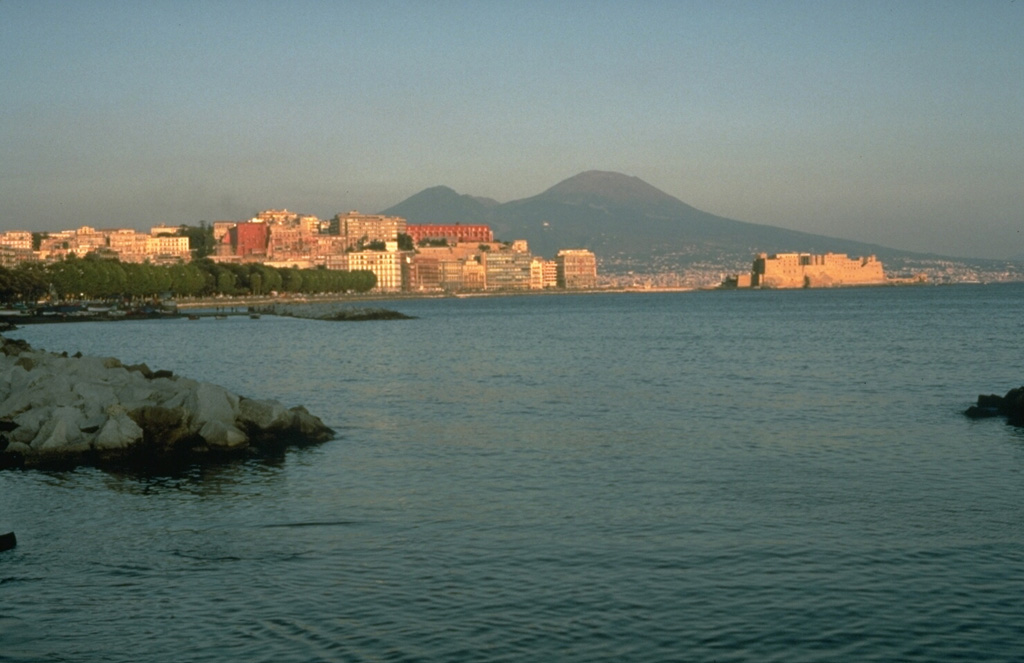
Vesuvius volcano in Italy
Vesuvius

Italy·Stratovolcano

One of the world's most noted volcanoes, Vesuvius (Vesuvio) forms a dramatic backdrop to the Bay of Naples. The active cone was constructed within a large caldera of the older Monte Somma edifice, thought to have formed incrementally beginning about 17,000 years ago. The Monte Somma caldera wall has channeled lava flows and pyroclastic flows primarily to the south and west. Eight major explosive eruptions have taken place in the last 17,000 years, often accompanied by large pyroclastic flows and surges, such as during the 79 CE Pompeii eruption. Intermittent eruptions since 79 CE were followed by a period of frequent long-term explosive and effusive eruptions between 1631 and 1944. The large 1631 eruption produced pyroclastic flows that reached as far as the coast and caused great destruction. Many towns are located on the flanks, and several million people live within areas that could be affected by eruptions.

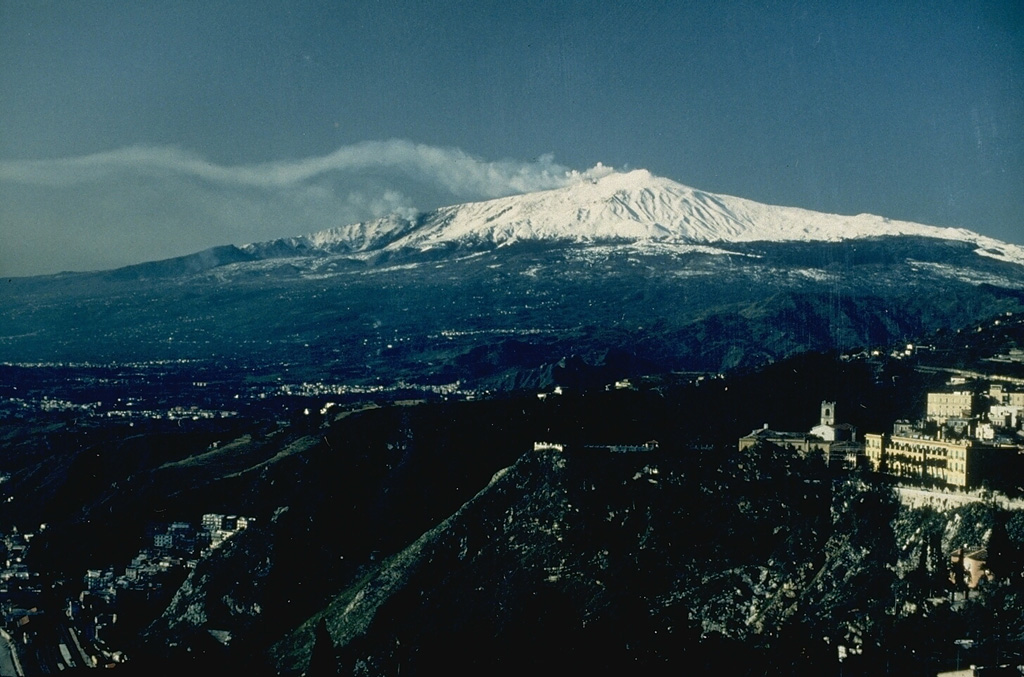
Etna volcano in Italy
Etna

Italy·Stratovolcano(es)

Mount Etna, towering above Catania on the island of Sicily, has one of the world's longest documented records of volcanism, dating back to 1500 BCE. Historical lava flows of basaltic composition cover much of the surface of this massive volcano, whose edifice is the highest and most voluminous in Italy. The Mongibello stratovolcano, truncated by several small calderas, was constructed during the late Pleistocene and Holocene over an older shield volcano. The most prominent morphological feature of Etna is the Valle del Bove, a 5 x 10 km caldera open to the east. Two styles of eruptive activity typically occur, sometimes simultaneously. Persistent explosive eruptions, sometimes with minor lava emissions, take place from one or more summit craters. Flank vents, typically with higher effusion rates, are less frequently active and originate from fissures that open progressively downward from near the summit (usually accompanied by Strombolian eruptions at the upper end). Cinder cones are commonly constructed over the vents of lower-flank lava flows. Lava flows extend to the foot of the volcano on all sides and have reached the sea over a broad area on the SE flank.

MetricVesuviusEtna
TypeStratovolcanoStratovolcano(es)
LocationItaly · European Volcanic RegionsItaly · European Volcanic Regions
Summit elevation1,281 m · 4,203 ft3,357 m · 11,014 ft
Tectonic settingSubduction zone / Continental crust (> 25 km)Subduction zone / Continental crust (> 25 km)
Dominant rockPhono-tephrite / Tephri-phonoliteTrachybasalt / Tephrite Basanite
Recorded eruptions61170
Largest recorded eruptionVEI 5VEI 5
Large (VEI 4+) eruptions133
Eruption record spans6,940 BCE – 1,913 CE6,190 BCE – 2,022 CE
Last known eruption1944 CE2025 CE
Coordinates40.82, 14.4337.75, 15.00
Explore

Highlighted values mark the leading volcano on that row. Elevation, type and location are from the Smithsonian GVP volcano record; eruption counts and VEI figures are computed from that volcano's full eruption list. Figures describe the recorded past only and do not forecast future activity. Tour links are affiliate links.

Height at a glance

Vesuvius1,281 m
Etna3,357 m

How their eruptions compare in size

Each volcano's Volcanic Explosivity Index “fingerprint” shows how its recorded eruptions break down by size. Two volcanoes can have erupted a similar number of times yet have completely different fingerprints — one dribbling lava, the other capable of rare, violent blasts.

Vesuvius

Eruption-Size Fingerprint

How Vesuvius's 60 size-rated eruptions break down by Volcanic Explosivity Index. Select a bar to see what that size means.

Volcanic Explosivity Index (VEI)
330 eruptions (50%)

Severe — plumes of 3–15 km with regional ashfall and pyroclastic flows.

Of Vesuvius's 60 size-rated eruptions on record, the most common was VEI 3 (30 of 60, 50%). Its record is centred on moderate explosive eruptions (VEI 2–3), with larger events far rarer. The largest on record reached VEI 5.

Based on the Smithsonian GVP eruption record. This describes Vesuvius's past eruptions only — it does not predict future activity. What is the VEI? · Most explosive volcanoes

Etna

Eruption-Size Fingerprint

How Etna's 122 size-rated eruptions break down by Volcanic Explosivity Index. Select a bar to see what that size means.

Volcanic Explosivity Index (VEI)
268 eruptions (56%)

Explosive — ash plumes reaching 1–5 km, localized impact.

Of Etna's 122 size-rated eruptions on record, the most common was VEI 2 (68 of 122, 56%). Its record is centred on moderate explosive eruptions (VEI 2–3), with larger events far rarer. The largest on record reached VEI 5.

Based on the Smithsonian GVP eruption record. This describes Etna's past eruptions only — it does not predict future activity. What is the VEI? · Most explosive volcanoes

Popular comparisons

How to compare volcanoes

No single number makes one volcano “bigger” or “more dangerous” than another — it depends on what you measure. A broad shield volcano like Mauna Loa dwarfs most peaks by volume yet erupts gently, while a steep stratovolcano like Vesuvius is far smaller but erupts explosively. This tool puts the meaningful metrics side by side — type, summit elevation, how many eruptions are on record, the largest size reached on the Volcanic Explosivity Index, and the most recent known eruption — so the contrast is obvious at a glance.

Reading the rows together tells the real story. A high eruption count with a low peak VEI is the signature of a frequently-active but gentle volcano; a low count with a high peak VEI marks one that erupts rarely but catastrophically. To see which volcanoes have the largest explosive records overall, browse the most explosive volcanoes ranking, or watch what is happening now on the active volcanoes tracker.

Continue exploring