About Suphan Dagi
Suphan Dagi is a stratovolcano rising to 4,033 meters (13,232 feet) in Turkiye's Arabia-Central Asia Volcanic Regions. No historical eruptions have been recorded, though the volcano is classified based on geological evidence of past activity. The volcano has produced 1 recorded eruption.
Geography & Climate
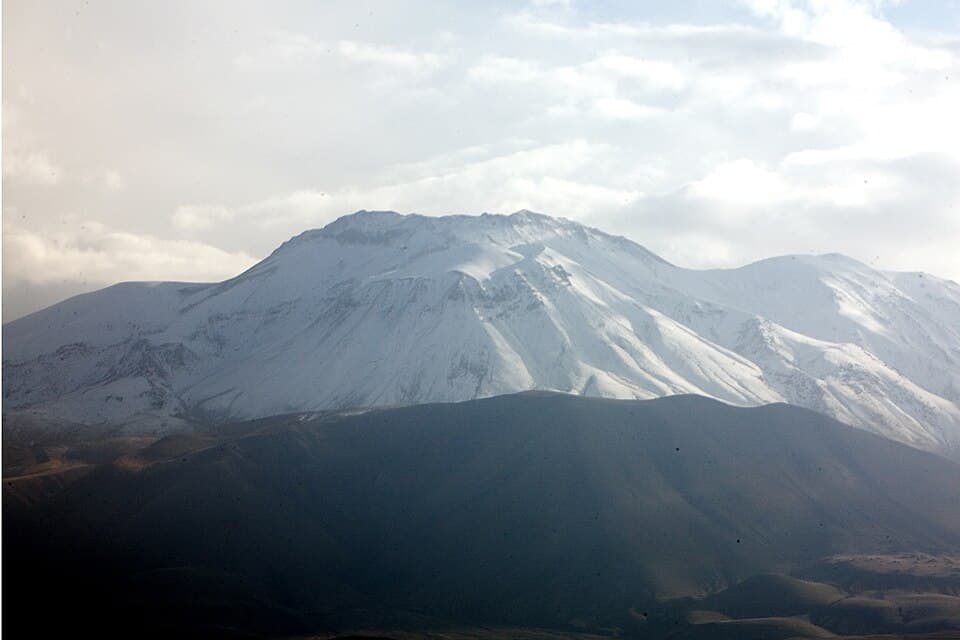
Suphan Dagi is located in Turkiye, within the Central Anatolian Volcanic Province of the broader Arabia-Central Asia Volcanic Regions. Situated at 38.93° N, 42.83° E in the Northern Hemisphere, the volcano lies within a temperate climate zone. Standing at 4,033 meters above sea level, Suphan Dagi towers above the alpine zone, where vegetation gives way to bare rock, snow, and ice for much of the year. The high elevation means the upper slopes experience significantly colder temperatures than surrounding lowlands. The volcanic landform is characterized as a composite, which describes the physical shape and structure of the volcanic edifice as observed from the surface.
Eruption History Summary
Suphan Dagi has 1 recorded eruption in the geological database, spanning from 8050 BCE to 8050 BCE.
GVP Reference Summary
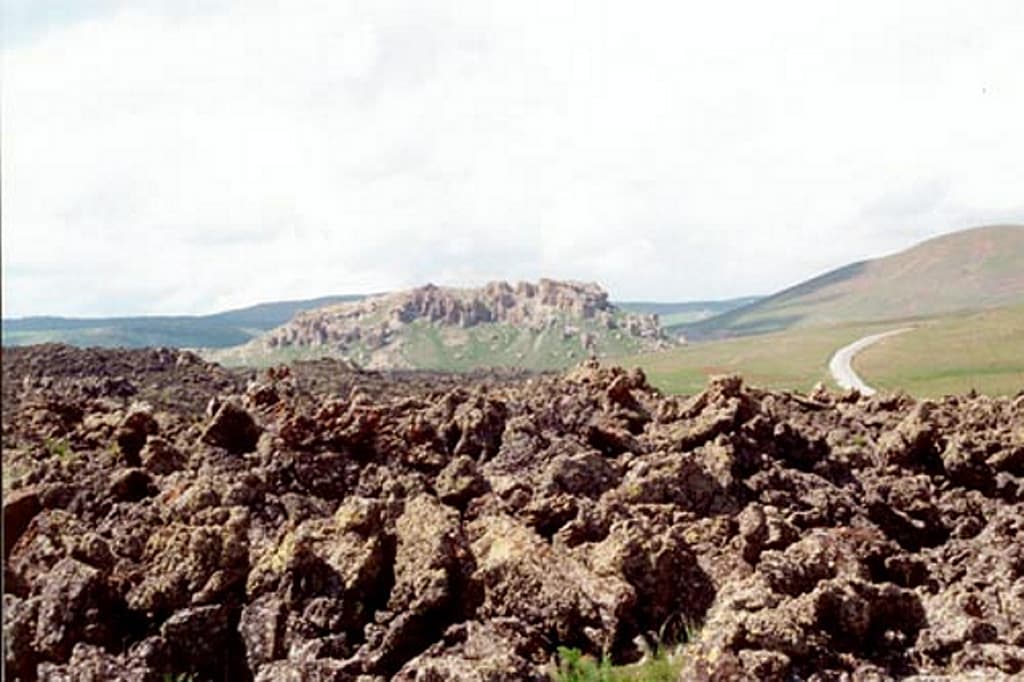
Süphan Dagi is a basaltic-to-rhyolitic stratovolcano located immediately north of Lake Van with a glacial icecap on the summit. Andesitic-dacitic lava flows alternated with fluid basaltic flows, followed by construction of a large lava dome over the central vent. The flanks have numerous lava domes and pyroclastic cones erupted along radial and circumferential fissures, particularly on the N, S, and E sides. Voluminous basaltic lava flows traveled as far as 30 km from the summit. Although Yilmaz et al. (1998) reported that there had been a basaltic eruption about 10,000 years ago, Ozdemir and Gulec (2013) made no mention of any activity that recent; based on previous K-Ar studies and new Ar-Ar dating work, they found an activity range of 760,000-60,000 years ago. Dacitic and rhyolitic domes in the summit crater followed all lava flows and pyroclastic deposits from the main cone, with one dated at 64 +/- 14 ka. The 1.5-km-wide, low-rimmed Aygir Gölü maar was formed on the lower S flank, and represents the most recent activity (undated), characterized by a phreatomagamtic eruption and related deposits.
— Smithsonian Institution, Global Volcanism Program
1 Recorded Eruption
| Year | VEI | Type | Area |
|---|---|---|---|
| 8050 BCE | — | Uncertain Eruption | — |
Real-Time Data
Frequently Asked Questions About Suphan Dagi
Is Suphan Dagi an active volcano?+
Suphan Dagi is not currently classified as active. Its activity evidence is listed as "unknown." No recorded eruptions have been documented. However, no volcano is ever considered permanently extinct.
When did Suphan Dagi last erupt?+
The most recent recorded eruption of Suphan Dagi occurred in 8050 BCE. The eruption was classified as a "Uncertain Eruption." Suphan Dagi has 1 recorded eruption in total.
How high is Suphan Dagi?+
Suphan Dagi has a summit elevation of 4,033 meters (13,232 feet) above sea level. At 4,033 meters, it stands taller than Mount Rainier (4,392m) and is among the world's major volcanic peaks.
What type of volcano is Suphan Dagi?+
Suphan Dagi is classified as a Stratovolcano. Stratovolcanoes (also called composite volcanoes) are steep, conical volcanoes built up by many layers of hardened lava, tephra, and volcanic ash. They are among the most common and dangerous types, known for explosive eruptions.
Where is Suphan Dagi located?+
Suphan Dagi is located in Turkiye, in the Arabia-Central Asia Volcanic Regions. More specifically, it lies within the Central Anatolian Volcanic Province. Its exact coordinates are 38.931° latitude, 42.833° longitude.
Is it safe to visit Suphan Dagi?+
Suphan Dagi can generally be visited, but as with any volcano, visitors should check local conditions and any advisory notices before traveling. Turkiye may have specific regulations for accessing volcanic areas. Guided tours are often the safest and most informative way to experience a volcano.