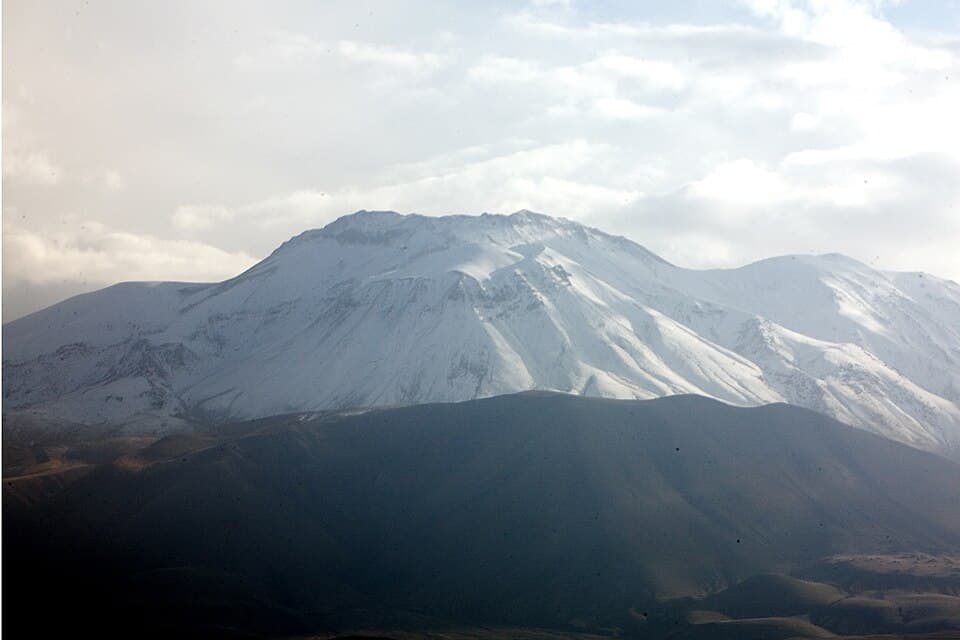
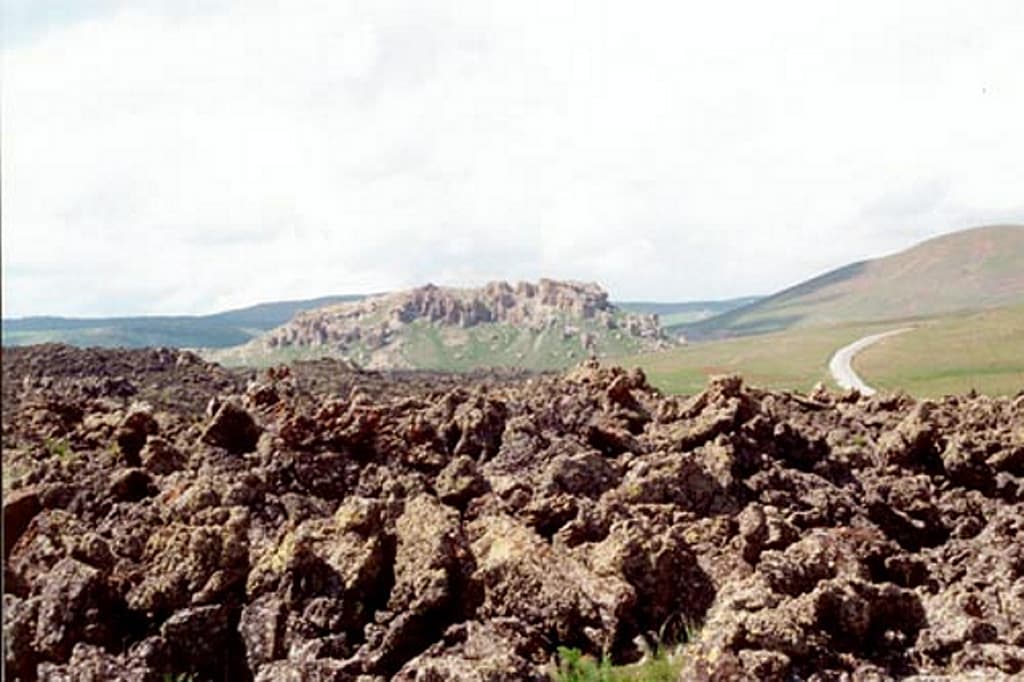
About Nemrut Dagi
Nemrut Dagi is a stratovolcano rising to 2,948 meters (9,672 feet) in Turkiye's Arabia-Central Asia Volcanic Regions. Its last known eruption was in 1650 CE. The volcano has produced 27 recorded eruptions.
Geography & Climate
Nemrut Dagi is located in Turkiye, within the Central Anatolian Volcanic Province of the broader Arabia-Central Asia Volcanic Regions. Situated at 38.65° N, 42.23° E in the Northern Hemisphere, the volcano lies within a temperate climate zone. At 2,948 meters above sea level, Nemrut Dagi rises above the surrounding terrain into montane or subalpine conditions. The elevation creates distinct ecological zones along its flanks, from forested lower slopes to exposed rocky terrain near the summit. The volcanic landform is characterized as a composite, which describes the physical shape and structure of the volcanic edifice as observed from the surface.
Geological Context
Nemrut Dagi is an intraplate volcano, meaning it formed away from any plate boundary. These volcanoes are often powered by hotspots — plumes of abnormally hot mantle material rising from deep within the Earth. Hotspot volcanoes like Nemrut Dagi tend to produce effusive eruptions with lava flows that can be relatively predictable, giving nearby communities in Turkiye more time to prepare. However, they can also produce explosive phases, particularly when magma interacts with groundwater. The dominant rock type is rhyolite, a silica-rich volcanic rock associated with highly viscous magma. Rhyolitic eruptions can be extremely explosive and are responsible for some of the largest volcanic events in Earth's history, including supervolcanic caldera-forming eruptions. The high silica content traps dissolved gases, building enormous pressure that can lead to catastrophic explosive releases.
Eruption History Summary
Nemrut Dagi has 27 recorded eruptions in the geological database, spanning from 9950 BCE to 1692 CE. With an average interval of roughly 431 years between eruptions over a span of 11,642 years, this is one of the more frequently active volcanoes in the database. This persistent activity suggests a robust and well-supplied magma system beneath the volcano.
Significance
Its 27 recorded eruptions make it one of the most prolific volcanoes in our database, reflecting a persistent and well-documented eruptive history that has provided volcanologists with extensive data for understanding eruption patterns and forecasting future activity.
GVP Reference Summary
Nemrut Dagi is the westernmost of a group of volcanoes near Lake Van in eastern Anatolia and the only one that has erupted in historical time. It contains a 9 x 5 km caldera partially filled on its western side by a caldera lake. Post-caldera volcanism, of basaltic to rhyolitic composition, initially occurred along the caldera rim and floor. Pyroclastic flows and the emission of glassy obsidian lava flows accompanied construction of lava domes within the caldera; later activity formed a series of cinder cones and lava domes erupted along N-S-trending fissures on the northern flank. The most recent activity has been concentrated along a NNW-trending fissure cutting the eastern caldera floor and extending beyond the north caldera rim; nearly two dozen cinder cones and lava domes were constructed on the caldera floor. Ash layers in Lake Van document numerous Holocene eruptions, and an eruption in 1441 CE from a N-flank fissure involved compositionally bimodal lava flows.
— Smithsonian Institution, Global Volcanism Program
27 Recorded Eruptions
| Year | VEI | Type | Area |
|---|---|---|---|
| 1692 | — | Uncertain Eruption | — |
| 1650 | — | Confirmed Eruption | East flank (Lake Van) |
| 1597 | — | Confirmed Eruption | — |
| 1441 | — | Confirmed Eruption | North flank (Nemrut Boynu) |
| 1402 | — | Confirmed Eruption | — |
| 1111 | — | Confirmed Eruption | East flank (Lake Van) |
| 531 BCE | — | Confirmed Eruption | — |
| 657 BCE | — | Confirmed Eruption | — |
| 787 BCE | — | Confirmed Eruption | — |
| 1396 BCE | — | Confirmed Eruption | — |
| 1662 BCE | — | Confirmed Eruption | — |
| 4055 BCE | — | Confirmed Eruption | — |
| 4321 BCE | — | Confirmed Eruption | — |
| 4615 BCE | — | Confirmed Eruption | — |
| 4849 BCE | — | Confirmed Eruption | — |
| 4938 BCE | — | Confirmed Eruption | — |
| 5085 BCE | — | Confirmed Eruption | — |
| 5152 BCE | — | Confirmed Eruption | — |
| 5242 BCE | — | Confirmed Eruption | — |
| 5320 BCE | — | Confirmed Eruption | — |
| 5745 BCE | — | Confirmed Eruption | — |
| 6213 BCE | — | Confirmed Eruption | — |
| 6471 BCE | — | Confirmed Eruption | — |
| 7087 BCE | — | Confirmed Eruption | — |
| 7579 BCE | — | Confirmed Eruption | — |
| 7769 BCE | — | Confirmed Eruption | — |
| 9950 BCE | — | Confirmed Eruption | — |
Real-Time Data
Frequently Asked Questions About Nemrut Dagi
Is Nemrut Dagi an active volcano?+
Nemrut Dagi is classified as active based on credible evidence of past eruptions. Although its last known eruption was in 1650 CE, volcanologists consider it capable of erupting again.
When did Nemrut Dagi last erupt?+
The most recent recorded eruption of Nemrut Dagi occurred in 1692 CE. The eruption was classified as a "Uncertain Eruption." Nemrut Dagi has 27 recorded eruptions in total.
How high is Nemrut Dagi?+
Nemrut Dagi has a summit elevation of 2,948 meters (9,672 feet) above sea level. At 2,948 meters, it is comparable in height to many significant mountain peaks and stands well above the tree line.
What type of volcano is Nemrut Dagi?+
Nemrut Dagi is classified as a Stratovolcano. Stratovolcanoes (also called composite volcanoes) are steep, conical volcanoes built up by many layers of hardened lava, tephra, and volcanic ash. They are among the most common and dangerous types, known for explosive eruptions.
Where is Nemrut Dagi located?+
Nemrut Dagi is located in Turkiye, in the Arabia-Central Asia Volcanic Regions. More specifically, it lies within the Central Anatolian Volcanic Province. Its exact coordinates are 38.654° latitude, 42.229° longitude.
Is it safe to visit Nemrut Dagi?+
Nemrut Dagi can generally be visited, but as with any volcano, visitors should check local conditions and any advisory notices before traveling. Turkiye may have specific regulations for accessing volcanic areas. Guided tours are often the safest and most informative way to experience a volcano.