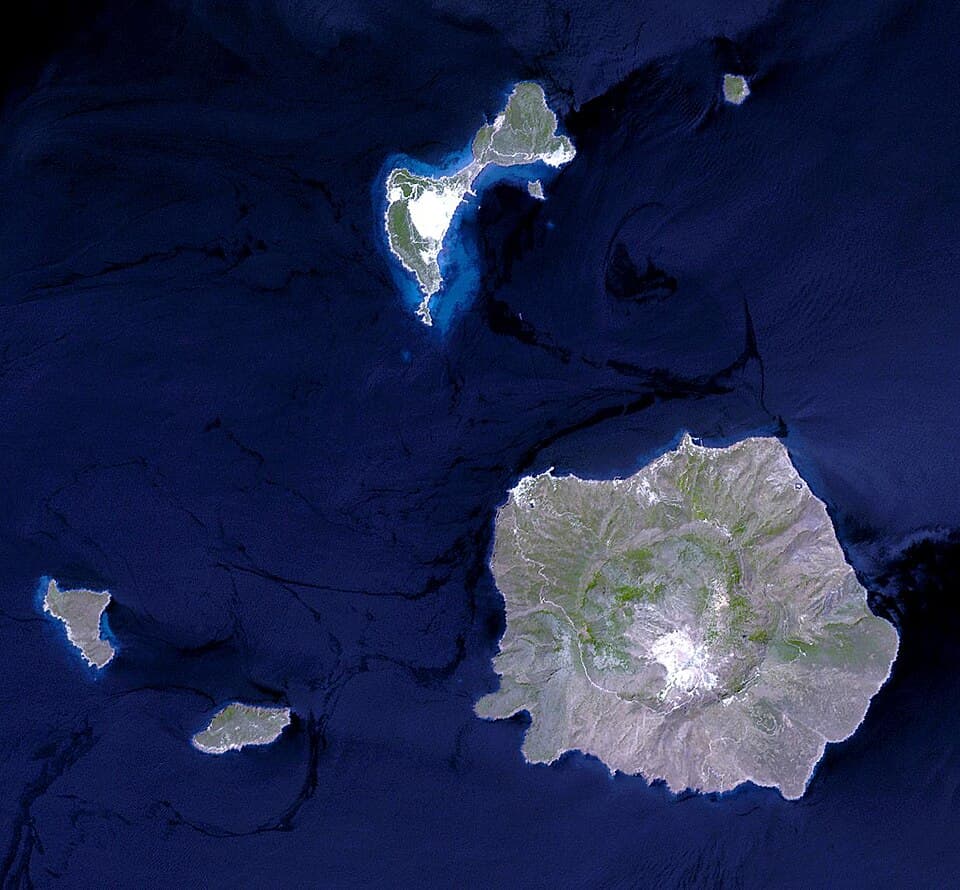
About Kos
Kos is a caldera(s) rising to 430 meters (1,411 feet) in Greece's European Volcanic Regions. No historical eruptions have been recorded, though the volcano is classified based on geological evidence of past activity.
Geography & Climate
Kos is located in Greece, within the Hellenic Volcanic Arc of the broader European Volcanic Regions. Situated at 36.85° N, 27.25° E in the Northern Hemisphere, the volcano lies within a temperate climate zone. At just 430 meters above sea level, Kos is a relatively low-elevation volcanic feature. Despite its modest height, it remains an active geological formation with the same underlying magmatic processes as its taller counterparts. The volcanic landform is characterized as a caldera, which describes the physical shape and structure of the volcanic edifice as observed from the surface.
GVP Reference Summary
The island of Kos is dominantly non-volcanic but contains Miocene to Pleistocene volcanic centers. The Kamari caldera is of mid-Pleistocene age and contains the 1.0-0.55 million year old, post-caldera Zini lava dome. The formation of a large caldera deposited the widespread Kos Plateau Tuff (erupted about 160,000 years ago), which covers much of the western half of Kos and originated from a source between Kos and Nisyros islands. The caldera dimensions are uncertain, but may extend as much as 20 km from Kefalos Bay in SW Kos Island to Nisyros Island. Remnants of the pre-eruption stratovolcano are preserved on the islets of Pachia and Pyrgousa and as submarine volcanic rocks on Nisyros. Kos was included in the Catalog of Active Volcanoes of the World (Georgalas, 1962) based on its geothermal activity. Several solfatara fields are present, including Vromotopos at Kefalos Isthmus on the western side of the island and a group of thermal areas at the eastern side of Kos. Thermal activity consists of weak hydrogen sulfide emission, sulfur deposits, and two hot springs along the SE coast.
— Smithsonian Institution, Global Volcanism Program
0 Recorded Eruptions
No eruption records available for Kos.
Real-Time Data
Frequently Asked Questions About Kos
Is Kos an active volcano?+
Kos is not currently classified as active. Its activity evidence is listed as "unknown." No recorded eruptions have been documented. However, no volcano is ever considered permanently extinct.
How high is Kos?+
Kos has a summit elevation of 430 meters (1,411 feet) above sea level. At 430 meters, it is a relatively low-elevation volcano.
What type of volcano is Kos?+
Kos is classified as a Caldera(s). Caldera(s) volcanoes have distinct geological characteristics that set them apart from other volcanic types.
Where is Kos located?+
Kos is located in Greece, in the European Volcanic Regions. More specifically, it lies within the Hellenic Volcanic Arc. Its exact coordinates are 36.852° latitude, 27.251° longitude.
Is it safe to visit Kos?+
Kos can generally be visited, but as with any volcano, visitors should check local conditions and any advisory notices before traveling. Greece may have specific regulations for accessing volcanic areas. Guided tours are often the safest and most informative way to experience a volcano.

