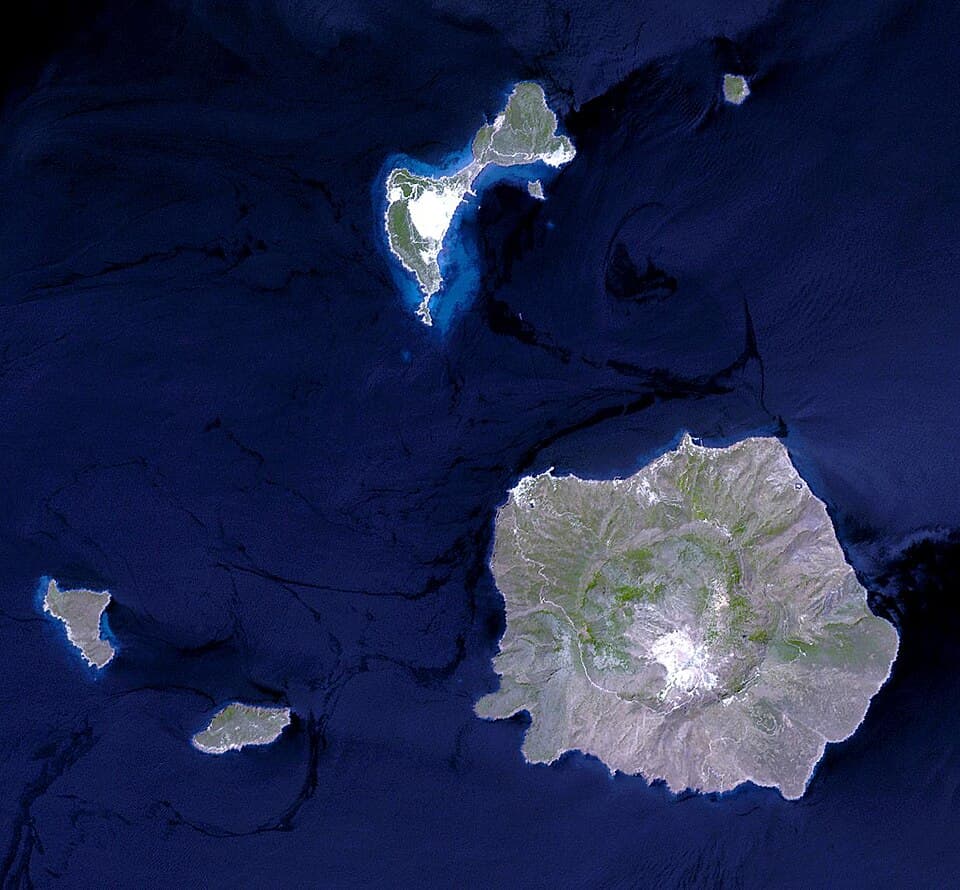
About Yali
Yali is a lava dome(s) rising to 180 meters (591 feet) in Greece's European Volcanic Regions. No historical eruptions have been recorded, though the volcano is classified based on geological evidence of past activity.
Geography & Climate
Yali is located in Greece, within the Hellenic Volcanic Arc of the broader European Volcanic Regions. Situated at 36.67° N, 27.12° E in the Northern Hemisphere, the volcano lies within a temperate climate zone. At just 180 meters above sea level, Yali is a relatively low-elevation volcanic feature. Despite its modest height, it remains an active geological formation with the same underlying magmatic processes as its taller counterparts. The volcanic landform is characterized as a composite, which describes the physical shape and structure of the volcanic edifice as observed from the surface.
GVP Reference Summary
Yali, a small crescent-shaped island between the N coast of Nisyros and the SW coast of Kos islands, consists of rhyolitic obsidian domes and pumice deposits. It lies within the inferred location of the large submarine caldera associated with the eruption of the voluminous Kos Plateau Tuff, about 160,000 years ago, which produced extensive ignimbrites that cover much of the western half of Kos island and which produced a caldera of uncertain dimensions but one that could extend from Kefalos Bay on the SW side of Kos to Nisyros. Yali is oriented NNE-SSW and contains two distinct segments connected by a narrow isthmus formed of modern reef sediments. The SW part of the island consists primarily of a layered pumice-fall unit about 200 m thick; the NE part contains rhyolitic obsidian lava flows of similar thickness. Pumice deposits overlie soils containing pottery and Neolithic obsidian artifacts (Keller, 1982), but radiometric tephra dates are all older than 30,000 years.
— Smithsonian Institution, Global Volcanism Program
0 Recorded Eruptions
No eruption records available for Yali.
Real-Time Data
Frequently Asked Questions About Yali
Is Yali an active volcano?+
Yali is not currently classified as active. Its activity evidence is listed as "unknown." No recorded eruptions have been documented. However, no volcano is ever considered permanently extinct.
How high is Yali?+
Yali has a summit elevation of 180 meters (591 feet) above sea level. At 180 meters, it is a relatively low-elevation volcano.
What type of volcano is Yali?+
Yali is classified as a Lava dome(s). Lava domes are mounds of viscous lava that pile up around a volcanic vent. They grow by expansion from within and can collapse to produce dangerous pyroclastic flows.
Where is Yali located?+
Yali is located in Greece, in the European Volcanic Regions. More specifically, it lies within the Hellenic Volcanic Arc. Its exact coordinates are 36.667° latitude, 27.122° longitude.
Is it safe to visit Yali?+
Yali can generally be visited, but as with any volcano, visitors should check local conditions and any advisory notices before traveling. Greece may have specific regulations for accessing volcanic areas. Guided tours are often the safest and most informative way to experience a volcano.

