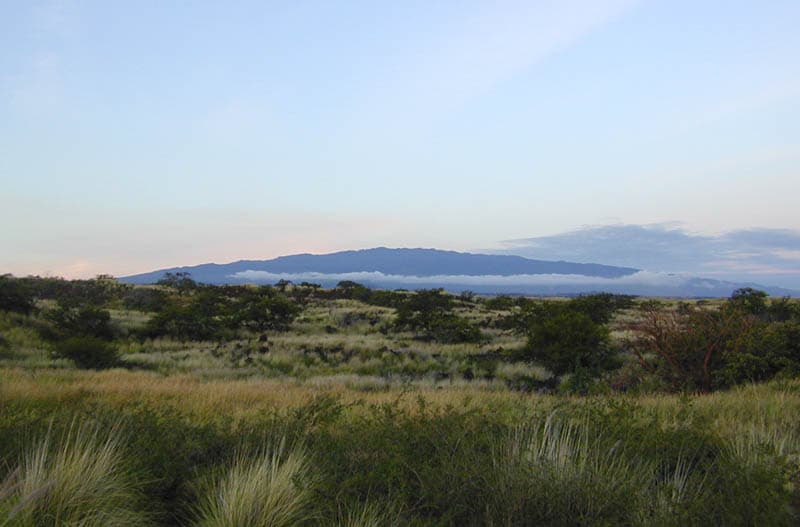
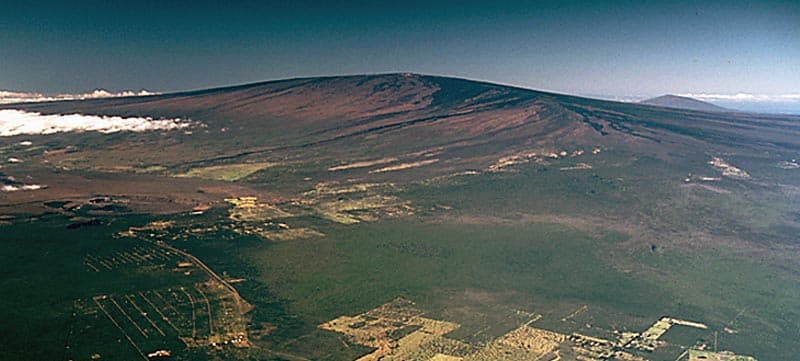
About Haleakala
Haleakala is a shield rising to 3,053 meters (10,017 feet) in United States's Eastern Pacific Volcanic Regions. Its last known eruption was in 1750 CE. The volcano has produced 40 recorded eruptions.
Geography & Climate
Haleakala is located in United States, within the Hawaiian-Emperor Hotspot Volcano Group of the broader Eastern Pacific Volcanic Regions. Situated at 20.71° N, 156.25° W in the Northern Hemisphere, the volcano lies within a tropical climate zone. At 3,053 meters above sea level, Haleakala rises above the surrounding terrain into montane or subalpine conditions. The elevation creates distinct ecological zones along its flanks, from forested lower slopes to exposed rocky terrain near the summit. The volcanic landform is characterized as a shield, which describes the physical shape and structure of the volcanic edifice as observed from the surface.
Geological Context
Haleakala is an intraplate volcano, meaning it formed away from any plate boundary. These volcanoes are often powered by hotspots — plumes of abnormally hot mantle material rising from deep within the Earth. Hotspot volcanoes like Haleakala tend to produce effusive eruptions with lava flows that can be relatively predictable, giving nearby communities in United States more time to prepare. However, they can also produce explosive phases, particularly when magma interacts with groundwater. The dominant rock type is basalt / picro-basalt, a dark, fine-grained volcanic rock that forms from rapidly cooling, low-viscosity lava. Basaltic eruptions tend to be less explosive and produce fluid lava flows that can travel long distances. While less immediately dangerous than explosive eruptions, basaltic lava flows can destroy structures and infrastructure in their path, and volcanic gases released during these eruptions can affect air quality over a wide area.
Eruption History Summary
Haleakala has 40 recorded eruptions in the geological database, spanning from 7950 BCE to 1750 CE. With an average interval of roughly 243 years between eruptions over a span of 9,700 years, this is one of the more frequently active volcanoes in the database. This persistent activity suggests a robust and well-supplied magma system beneath the volcano.
Significance
Its 40 recorded eruptions make it one of the most prolific volcanoes in our database, reflecting a persistent and well-documented eruptive history that has provided volcanologists with extensive data for understanding eruption patterns and forecasting future activity.
GVP Reference Summary
The massive Haleakala shield volcano forms the eastern portion of the island of Maui. The summit is at the NW end of a volcanic ridge and at the head of a large scarp that opens to the ENE, interrupting the ridge which continues 7 km across the valley, formed as a result of the coalescence of headward erosion of the Koolau and Kaupo valleys. Subsequently the valley has been partially filled by a chain of young cinder cones and lava flows erupted along the rift zone that extends across the basaltic volcano from the SW to the E flanks. The most recent eruption was thought to have occurred between the exploring voyages of La Perouse in 1786 and Vancouver in 1793, but uncertainty surrounds the date of this event, which could have occurred in about 1750 CE (anthropological evidence) or several centuries earlier (radiocarbon dates).
— Smithsonian Institution, Global Volcanism Program
40 Recorded Eruptions
| Year | VEI | Type | Area |
|---|---|---|---|
| 1750 | — | Confirmed Eruption | SW rift zone (180-360 m) |
| 1460 | — | Confirmed Eruption | East rift zone |
| 1420 | — | Confirmed Eruption | SW rift zone |
| 1360 | — | Confirmed Eruption | SW rift zone (~1600 m) |
| 1350 | — | Confirmed Eruption | SW rift zone (~1500 m) |
| 1200 | — | Confirmed Eruption | SW rift zone (~1200 m) |
| 1080 | — | Confirmed Eruption | North crater wall (Hanakauhi flow) |
| 1020 | — | Confirmed Eruption | SW rift zone |
| 1010 | — | Confirmed Eruption | Haleakala crater (Halali'i) |
| 990 | — | Confirmed Eruption | East rift zone |
| 980 | — | Confirmed Eruption | Haleakala crater (Puu o ka O'o) |
| 910 | — | Confirmed Eruption | Haleakala crater |
| 790 | — | Confirmed Eruption | Haleakala crater (Puu Nole) |
| 80 | — | Confirmed Eruption | Haleakala crater |
| 290 BCE | — | Confirmed Eruption | SW rift zone (~2400 m) |
| 390 BCE | — | Confirmed Eruption | North crater wall |
| 580 BCE | — | Confirmed Eruption | Haleakala crater |
| 1140 BCE | — | Confirmed Eruption | SW rift zone |
| 1240 BCE | — | Confirmed Eruption | Upper SW rift zone (~2800 m) |
| 1310 BCE | — | Confirmed Eruption | Upper SW rift zone (~2600 m) |
| 1800 BCE | — | Confirmed Eruption | Haleakala crater |
| 1850 BCE | — | Confirmed Eruption | SW rift zone (~1600 m) |
| 1900 BCE | — | Confirmed Eruption | East rift zone |
| 1940 BCE | — | Confirmed Eruption | SW rift zone |
| 2120 BCE | — | Confirmed Eruption | Haleakala crater (Puu Maile) |
| 2210 BCE | — | Confirmed Eruption | East rift zone |
| 2260 BCE | — | Confirmed Eruption | East rift zone (East Camp cone) |
| 2470 BCE | — | Confirmed Eruption | SW rift zone (~2000 m) |
| 2580 BCE | — | Confirmed Eruption | — |
| 3070 BCE | — | Confirmed Eruption | East rift zone |
| 4760 BCE | — | Confirmed Eruption | — |
| 5860 BCE | — | Confirmed Eruption | East rift zone |
| 6030 BCE | — | Confirmed Eruption | East rift zone |
| 6220 BCE | — | Confirmed Eruption | SW rift zone |
| 6700 BCE | — | Confirmed Eruption | SW rift zone |
| 6760 BCE | — | Confirmed Eruption | SW rift zone (W of Kanahau) |
| 7210 BCE | — | Confirmed Eruption | Upper SW rift zone |
| 7450 BCE | — | Confirmed Eruption | East rift zone |
| 7570 BCE | — | Confirmed Eruption | East rift zone |
| 7950 BCE | — | Confirmed Eruption | SW rift zone (~1800 m) |
Real-Time Data
Frequently Asked Questions About Haleakala
Is Haleakala an active volcano?+
Haleakala is not currently classified as active. Its activity evidence is listed as "Eruption Dated." The last known eruption was in 1750 CE. However, no volcano is ever considered permanently extinct.
When did Haleakala last erupt?+
The most recent recorded eruption of Haleakala occurred in 1750 CE. The eruption was classified as a "Confirmed Eruption." Haleakala has 40 recorded eruptions in total.
How high is Haleakala?+
Haleakala has a summit elevation of 3,053 meters (10,017 feet) above sea level. At 3,053 meters, it is comparable in height to many significant mountain peaks and stands well above the tree line.
What type of volcano is Haleakala?+
Haleakala is classified as a Shield. Shield volcanoes have distinct geological characteristics that set them apart from other volcanic types.
Where is Haleakala located?+
Haleakala is located in United States, in the Eastern Pacific Volcanic Regions. More specifically, it lies within the Hawaiian-Emperor Hotspot Volcano Group. Its exact coordinates are 20.710° latitude, -156.254° longitude.
Is it safe to visit Haleakala?+
Haleakala can generally be visited, but as with any volcano, visitors should check local conditions and any advisory notices before traveling. United States may have specific regulations for accessing volcanic areas. Guided tours are often the safest and most informative way to experience a volcano.