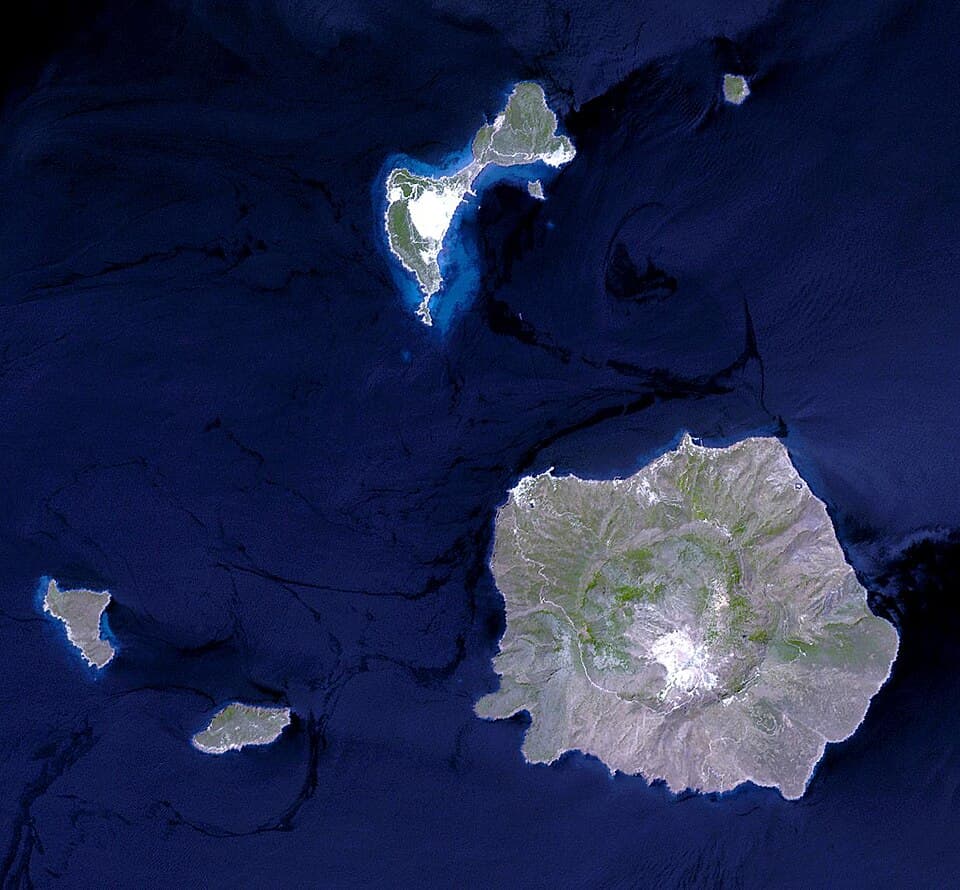
About Milos
Milos is a stratovolcano(es) rising to 751 meters (2,464 feet) in Greece's European Volcanic Regions. Its last known eruption was in 140 CE. The volcano has produced 1 recorded eruption, with a maximum Volcanic Explosivity Index (VEI) of 1.
Geography & Climate
Milos is located in Greece, within the Hellenic Volcanic Arc of the broader European Volcanic Regions. Situated at 36.70° N, 24.44° E in the Northern Hemisphere, the volcano lies within a temperate climate zone. With a summit elevation of 751 meters above sea level, Milos is a moderately sized peak that remains accessible to hikers and researchers for much of the year. The volcanic landform is characterized as a composite, which describes the physical shape and structure of the volcanic edifice as observed from the surface.
Geological Context
Milos sits in a subduction zone, where one tectonic plate dives beneath another, creating intense heat and pressure that generates magma. Subduction zones are responsible for many of the world's most explosive volcanoes and deadliest eruptions. For communities in Greece near Milos, this tectonic setting means the volcano is capable of producing powerful explosive eruptions, pyroclastic flows, and lahars that can threaten populated areas within tens of kilometers of the summit. The dominant rock type is rhyolite, a silica-rich volcanic rock associated with highly viscous magma. Rhyolitic eruptions can be extremely explosive and are responsible for some of the largest volcanic events in Earth's history, including supervolcanic caldera-forming eruptions. The high silica content traps dissolved gases, building enormous pressure that can lead to catastrophic explosive releases.
Eruption History Summary
Milos has 1 recorded eruption in the geological database, spanning from 140 CE to 140 CE. The most powerful recorded event was a gentle, effusive event in 140 CE, reaching VEI 1 on the Volcanic Explosivity Index.
GVP Reference Summary
Mílos and adjacent small islands have grown from submarine and subaerial volcanism that initially was dominantly andesitic and basaltic, but ended with predominately rhyolitic eruptions. The oldest volcanic rocks are Pliocene submarine rhyolitic pyroclastic-flow deposits overlying basement metamorphic and sedimentary rocks. The latest activity during the late Pleistocene was concentrated in the eastern half of the low, U-shaped Mílos Island, forming lava domes and phreatic explosion craters, and on Antimílos Island to the NW, where a composite volcano was constructed. The youngest magmatic eruptions took place about 90,000 years ago, but phreatic explosions, commonly producing overlapping craters rarely more than 1 km in diameter, continued from late-Pleistocene to Recent times. A lahar deposit in SE Mílos, east of Fyriplaka tuff ring, buried walls of a Roman harbor town and overlies a coarse ash layer, and was considered to originate from a small phreatic explosion through basement rocks.
— Smithsonian Institution, Global Volcanism Program
1 Recorded Eruption
| Year | VEI | Type | Area |
|---|---|---|---|
| 140 | 1 | Confirmed Eruption | SE Mílos, east of Fyriplaka tuff ring |
Real-Time Data
Frequently Asked Questions About Milos
Is Milos an active volcano?+
Milos is not currently classified as active. Its activity evidence is listed as "Eruption Dated." The last known eruption was in 140 CE. However, no volcano is ever considered permanently extinct.
When did Milos last erupt?+
The most recent recorded eruption of Milos occurred in 140 CE with a Volcanic Explosivity Index (VEI) of 1. The eruption was classified as a "Confirmed Eruption." Milos has 1 recorded eruption in total.
How high is Milos?+
Milos has a summit elevation of 751 meters (2,464 feet) above sea level. At 751 meters, it is a relatively low-elevation volcano.
What type of volcano is Milos?+
Milos is classified as a Stratovolcano(es). Stratovolcano(es) volcanoes have distinct geological characteristics that set them apart from other volcanic types.
Where is Milos located?+
Milos is located in Greece, in the European Volcanic Regions. More specifically, it lies within the Hellenic Volcanic Arc. Its exact coordinates are 36.699° latitude, 24.439° longitude.
Is it safe to visit Milos?+
Milos can generally be visited, but as with any volcano, visitors should check local conditions and any advisory notices before traveling. Greece may have specific regulations for accessing volcanic areas. Guided tours are often the safest and most informative way to experience a volcano.