About Cameroon
Cameroon is a stratovolcano rising to 4,095 meters (13,436 feet) in Cameroon's Northern Africa Volcanic Regions. It has been active in recent decades, with its last eruption in 2000 CE. The volcano has produced 19 recorded eruptions, with a maximum Volcanic Explosivity Index (VEI) of 3.
Geography & Climate
Cameroon is located in Cameroon, within the Western Africa Volcanic Province of the broader Northern Africa Volcanic Regions. Situated at 4.20° N, 9.17° E in the Northern Hemisphere, the volcano lies within a tropical climate zone. Standing at 4,095 meters above sea level, Cameroon towers above the alpine zone, where vegetation gives way to bare rock, snow, and ice for much of the year. The high elevation means the upper slopes experience significantly colder temperatures than surrounding lowlands. The volcanic landform is characterized as a composite, which describes the physical shape and structure of the volcanic edifice as observed from the surface.
Geological Context
Cameroon is an intraplate volcano, meaning it formed away from any plate boundary. These volcanoes are often powered by hotspots — plumes of abnormally hot mantle material rising from deep within the Earth. Hotspot volcanoes like Cameroon tend to produce effusive eruptions with lava flows that can be relatively predictable, giving nearby communities in Cameroon more time to prepare. However, they can also produce explosive phases, particularly when magma interacts with groundwater. The dominant rock type is trachybasalt / tephrite basanite, a dark, fine-grained volcanic rock that forms from rapidly cooling, low-viscosity lava. Basaltic eruptions tend to be less explosive and produce fluid lava flows that can travel long distances. While less immediately dangerous than explosive eruptions, basaltic lava flows can destroy structures and infrastructure in their path, and volcanic gases released during these eruptions can affect air quality over a wide area.
Eruption History Summary
Cameroon has 19 recorded eruptions in the geological database, spanning from 450 BCE to 2000 CE. The most powerful recorded event was a severe eruption capable of regional ash fall and pyroclastic flows in 1807 CE, reaching VEI 3 on the Volcanic Explosivity Index. Notable eruptions include 1807 CE (VEI 3), 1650 CE (VEI 3), 450 BCE (VEI 3). This level of eruptive frequency indicates a persistently active volcanic system that warrants ongoing monitoring. With eruptive activity as recently as 2000 CE, Cameroon remains an actively monitored volcano.
Significance
With a maximum recorded VEI of 3, Cameroon has produced eruptions capable of generating pyroclastic flows and significant ash fall in the surrounding area. While not among the largest eruptions globally, VEI 3 events pose serious hazards to local populations and can disrupt regional air travel. With 19 recorded eruptions, Cameroon has a substantial eruptive history that provides valuable data for understanding volcanic behavior and assessing future hazards in the Northern Africa Volcanic Regions region. Given its recent activity, Cameroon is closely monitored by geological survey organizations to provide early warning of future unrest.
GVP Reference Summary
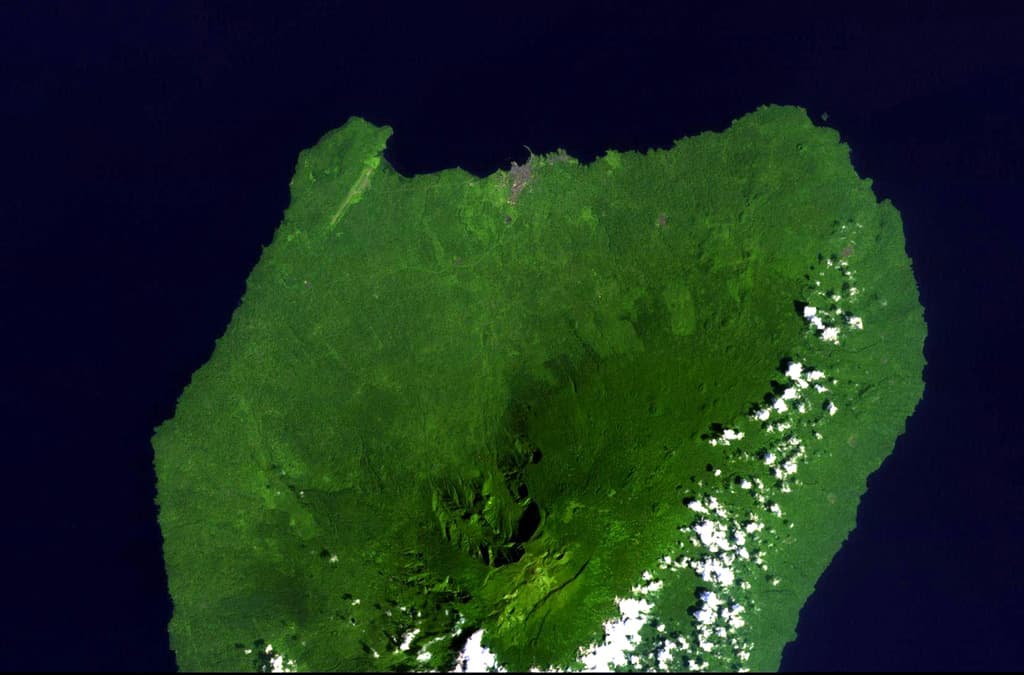
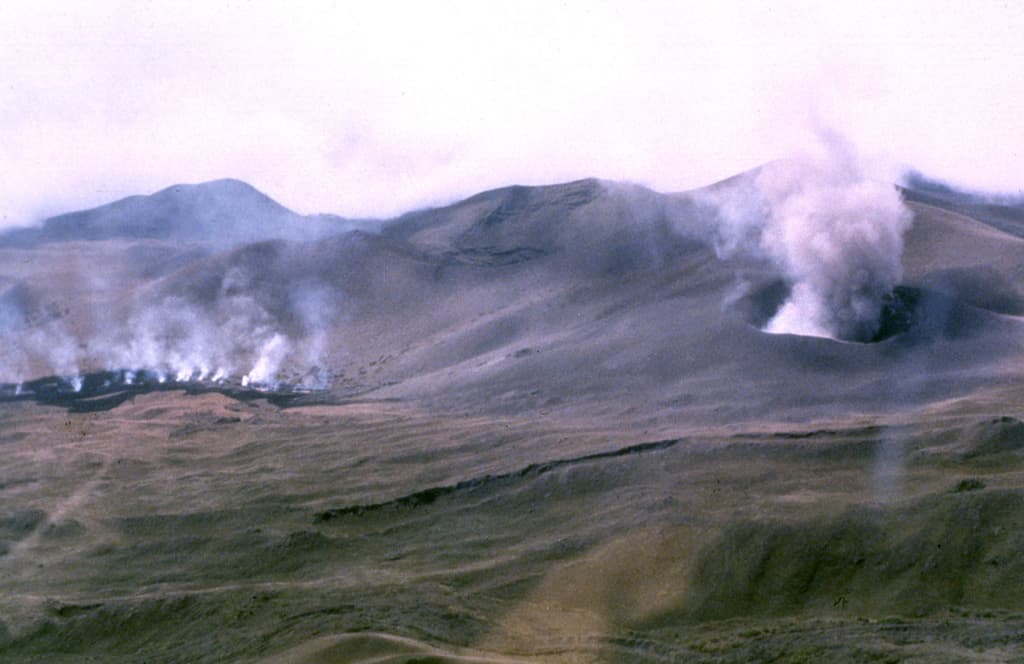
The massive steep-sided Mount Cameroon rises above the coast of west Cameroon, overlooking the Bight of Biafra, part of the Gulf of Guinea. The dominantly basaltic-to-trachybasaltic edifice forms a volcanic horst constructed above a basement of Precambrian metamorphic rocks covered with Cretaceous to Quaternary sediments. More than 100 small cinder cones, often fissure-controlled parallel to the long axis of the 1,400 km3 edifice, occur on the flanks and surrounding lowlands. A large satellitic peak, Etinde (also known as Little Cameroon), is located on the S flank near the coast. The first known reported activity was in the 5th century BCE by the Carthaginian navigator Hannon. Additional activity has frequently been reported since about 1800 CE, consisting of moderate explosive and effusive eruptions from both summit and flank vents. A 1922 SW-flank eruption produced a lava flow that reached the Atlantic coast, and a lava flow from a 1999 S-flank eruption stopped only 200 m from the sea. Explosive activity from two vents on the upper SE flank was reported in May 2000.
— Smithsonian Institution, Global Volcanism Program
19 Recorded Eruptions
How Cameroon's 18 size-rated eruptions break down by Volcanic Explosivity Index. Select a bar to see what that size means.
Explosive — ash plumes reaching 1–5 km, localized impact.
Of Cameroon's 18 size-rated eruptions on record, the most common was VEI 2 (14 of 18, 78%). It is strikingly consistent, erupting at close to the same size again and again. No eruption on record exceeded VEI 3.
Based on the Smithsonian GVP eruption record. This describes Cameroon's past eruptions only — it does not predict future activity. What is the VEI? · Most explosive volcanoes
| Year | VEI | Type | Area |
|---|---|---|---|
| 2000 | 2 | Confirmed Eruption | Upper SW flank (4000, 3470-3220, 2750 m) |
| 1999 | 2 | Confirmed Eruption | South flank (2650 and 1500 m) |
| 1989 | 1 | Confirmed Eruption | NE flank (2860 m) |
| 1982 | 2 | Confirmed Eruption | SW flank (2500 m) |
| 1959 | 2 | Confirmed Eruption | NE flank (3000-1500 m) |
| 1954 | 2 | Confirmed Eruption | Immediately south of summit |
| 1925 | — | Confirmed Eruption | Near Fako |
| 1922 | 2 | Confirmed Eruption | Mateer (W, 3300 m), Waldau (SW, 1300 m) |
| 1909 | 2 | Confirmed Eruption | NE flank (2400 m; Okoli Craters) |
| 1871 | 2 | Confirmed Eruption | — |
| 1868 | 2 | Confirmed Eruption | SW flank (2250 m) and NW flank |
| 1866 | 2 | Confirmed Eruption | — |
| 1865 | 2 | Confirmed Eruption | — |
| 1852 | 2 | Confirmed Eruption | West flank |
| 1838 | 2 | Confirmed Eruption | Near Fako |
| 1825 | 2 | Confirmed Eruption | — |
| 1807 | 3 | Confirmed Eruption | South flank (2600 m) |
| 1650 | 3 | Confirmed Eruption | — |
| 450 BCE | 3 | Confirmed Eruption | — |
Real-Time Data
Frequently Asked Questions About Cameroon
Is Cameroon an active volcano?+
Yes, Cameroon is considered an active volcano. Its most recent eruption was in 2000 CE. The volcano is monitored by geological agencies, and its activity status is based on observed eruptions within recorded history.
When did Cameroon last erupt?+
The most recent recorded eruption of Cameroon occurred in 2000 CE with a Volcanic Explosivity Index (VEI) of 2. The eruption was classified as a "Confirmed Eruption." Cameroon has 19 recorded eruptions in total.
How high is Cameroon?+
Cameroon has a summit elevation of 4,095 meters (13,436 feet) above sea level. At 4,095 meters, it stands taller than Mount Rainier (4,392m) and is among the world's major volcanic peaks.
What type of volcano is Cameroon?+
Cameroon is classified as a Stratovolcano. Stratovolcanoes (also called composite volcanoes) are steep, conical volcanoes built up by many layers of hardened lava, tephra, and volcanic ash. They are among the most common and dangerous types, known for explosive eruptions.
Where is Cameroon located?+
Cameroon is located in Cameroon, in the Northern Africa Volcanic Regions. More specifically, it lies within the Western Africa Volcanic Province. Its exact coordinates are 4.203° latitude, 9.170° longitude.
Is it safe to visit Cameroon?+
Visiting Cameroon requires checking current volcanic activity and alert levels. As an active volcano with eruptions as recent as 2000 CE, conditions can change rapidly. Always consult local geological authorities and follow official warnings before visiting. Many active volcanoes have designated safe viewing areas and guided tour options.