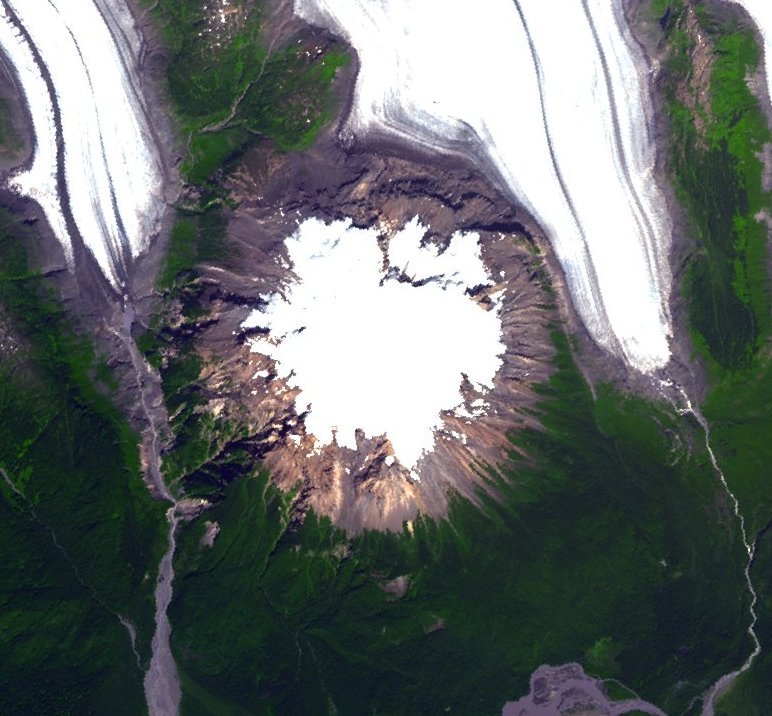
About Hoodoo Mountain
Hoodoo Mountain is a pyroclastic cone(s) rising to 1,850 meters (6,070 feet) in Canada's North America Volcanic Regions. The volcano is currently active, with its most recent eruption in 7050 BCE. The volcano has produced 1 recorded eruption.
Geography & Climate
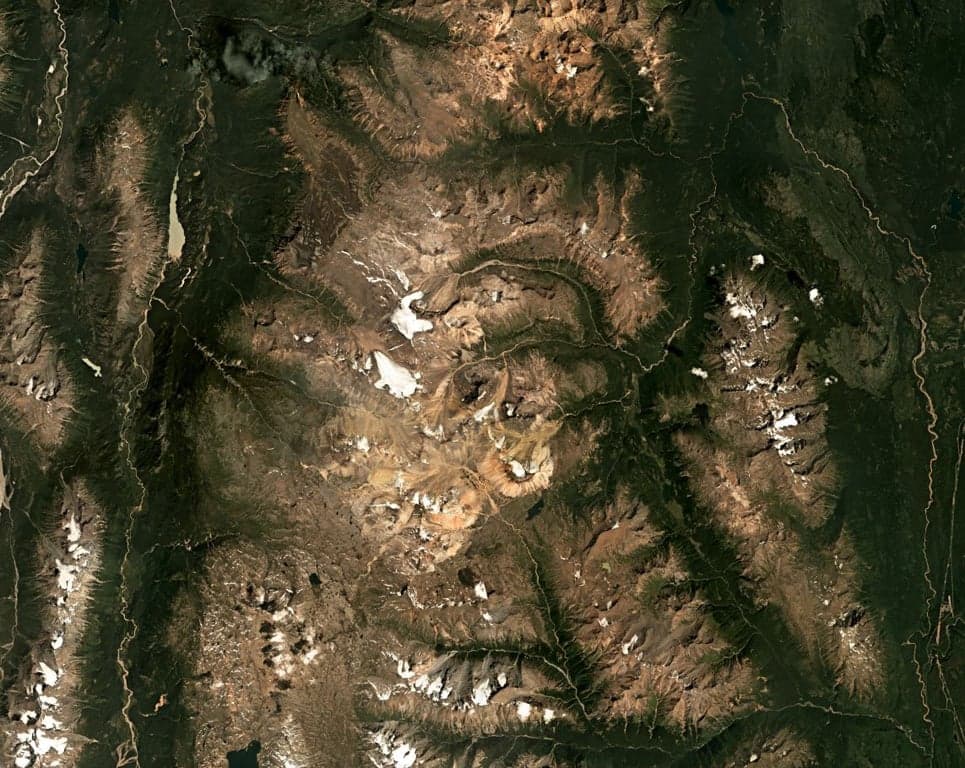
Hoodoo Mountain is located in Canada, within the Northern Cordilleran Volcanic Province of the broader North America Volcanic Regions. Situated at 56.78° N, 131.28° W in the Northern Hemisphere, the volcano lies within a subarctic climate zone. With a summit elevation of 1,850 meters above sea level, Hoodoo Mountain is a moderately sized peak that remains accessible to hikers and researchers for much of the year. The volcanic landform is characterized as a minor, which describes the physical shape and structure of the volcanic edifice as observed from the surface.
Geological Context
Hoodoo Mountain is an intraplate volcano, meaning it formed away from any plate boundary. These volcanoes are often powered by hotspots — plumes of abnormally hot mantle material rising from deep within the Earth. Hotspot volcanoes like Hoodoo Mountain tend to produce effusive eruptions with lava flows that can be relatively predictable, giving nearby communities in Canada more time to prepare. However, they can also produce explosive phases, particularly when magma interacts with groundwater. The dominant rock type is phonolite, an alkaline volcanic rock that indicates a distinct magma chemistry linked to unique tectonic conditions. This composition can produce both effusive and explosive eruptions, with magma viscosity depending on specific mineral content and gas concentrations at the time of eruption.
Eruption History Summary
Hoodoo Mountain has 1 recorded eruption in the geological database, spanning from 7050 BCE to 7050 BCE.
GVP Reference Summary
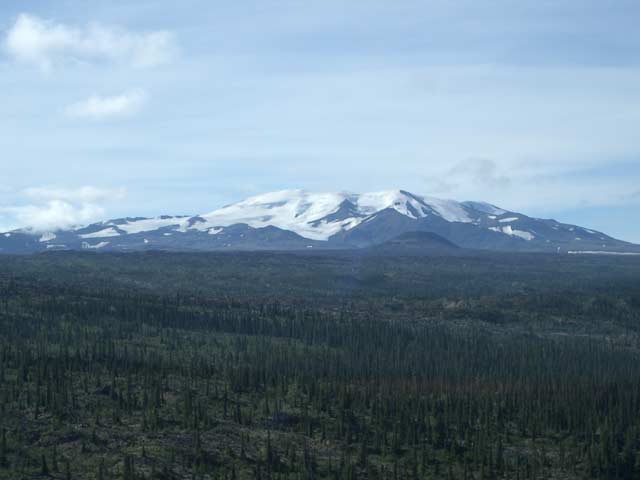
Hoodoo Mountain is a flat-topped Pleistocene-to-Holocene volcano in the Boundary Ranges of NW British Columbia near the Alaska border that is composed of both subglacial and subaerial volcanic products. Valley glaciers surround the volcano on all except the south side. The Pleistocene Little Bear Mountain basaltic tuya adjoins Hoodoo Mountain on the immediate north. Most of the volcano formed beneath glacial ice; all flank flows appear to have originated from beneath the current 4-km-wide summit icecap. More than 90% of the volcano, which dates back to at least 100,000 years, consists of interlayered peralkaline phonolitic and trachytic lava flows and hyaloclastites. At least one subaerial explosive eruption produced a welded and unwelded ignimbrite sequence on the north side. The most recent stage of volcanic activity produced subaerial unglaciated lava flows with well-preserved lava channels that originated from summit and flank vents about 9,000 years ago.
— Smithsonian Institution, Global Volcanism Program
1 Recorded Eruption
| Year | VEI | Type | Area |
|---|---|---|---|
| 7050 BCE | 0 | Confirmed Eruption | — |
Real-Time Data
Frequently Asked Questions About Hoodoo Mountain
Is Hoodoo Mountain an active volcano?+
Hoodoo Mountain is not currently classified as active. Its activity evidence is listed as "Eruption Dated." The last known eruption was in 7050 BCE. However, no volcano is ever considered permanently extinct.
When did Hoodoo Mountain last erupt?+
The most recent recorded eruption of Hoodoo Mountain occurred in 7050 BCE with a Volcanic Explosivity Index (VEI) of 0. The eruption was classified as a "Confirmed Eruption." Hoodoo Mountain has 1 recorded eruption in total.
How high is Hoodoo Mountain?+
Hoodoo Mountain has a summit elevation of 1,850 meters (6,070 feet) above sea level. At 1,850 meters, it is a moderately sized volcanic peak, roughly comparable to Mount Vesuvius (1,281m).
What type of volcano is Hoodoo Mountain?+
Hoodoo Mountain is classified as a Pyroclastic cone(s). Pyroclastic cones (or cinder cones) are small, steep-sided volcanic cones built from fragments of lava blasted into the air. They are the simplest type of volcano and often form in groups.
Where is Hoodoo Mountain located?+
Hoodoo Mountain is located in Canada, in the North America Volcanic Regions. More specifically, it lies within the Northern Cordilleran Volcanic Province. Its exact coordinates are 56.780° latitude, -131.280° longitude.
Is it safe to visit Hoodoo Mountain?+
Hoodoo Mountain can generally be visited, but as with any volcano, visitors should check local conditions and any advisory notices before traveling. Canada may have specific regulations for accessing volcanic areas. Guided tours are often the safest and most informative way to experience a volcano.