About Churchill
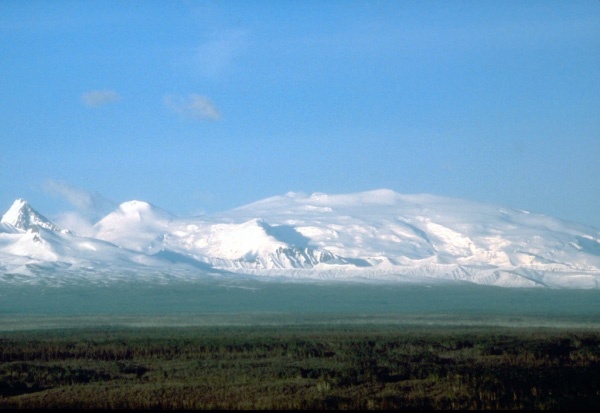
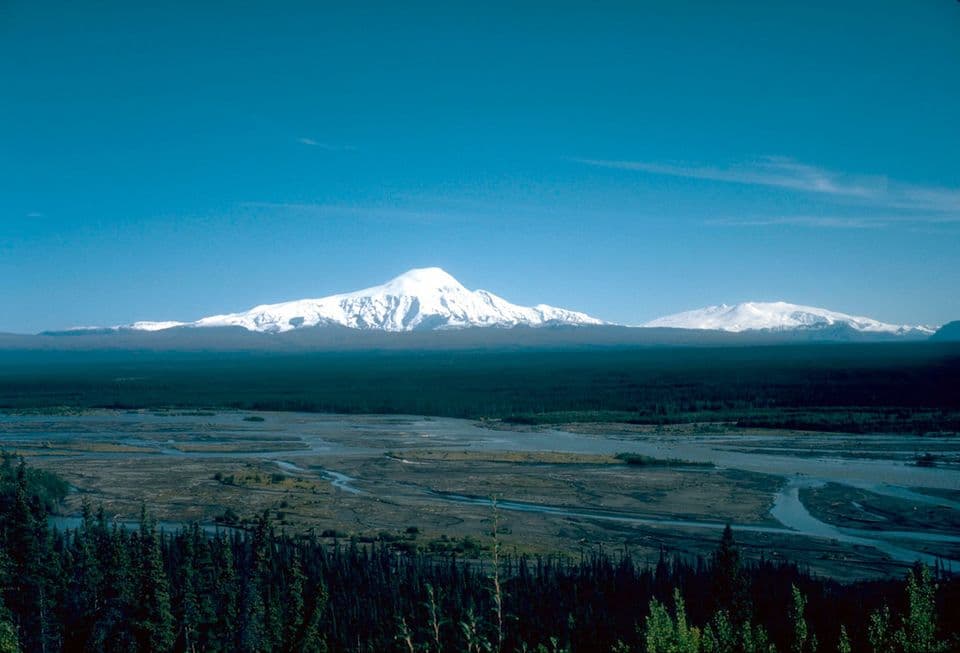
Churchill is a stratovolcano rising to 5,005 meters (16,421 feet) in United States's North America Volcanic Regions. Its last known eruption was in 847 CE. The volcano has produced 2 recorded eruptions, with a maximum Volcanic Explosivity Index (VEI) of 6.
Geography & Climate
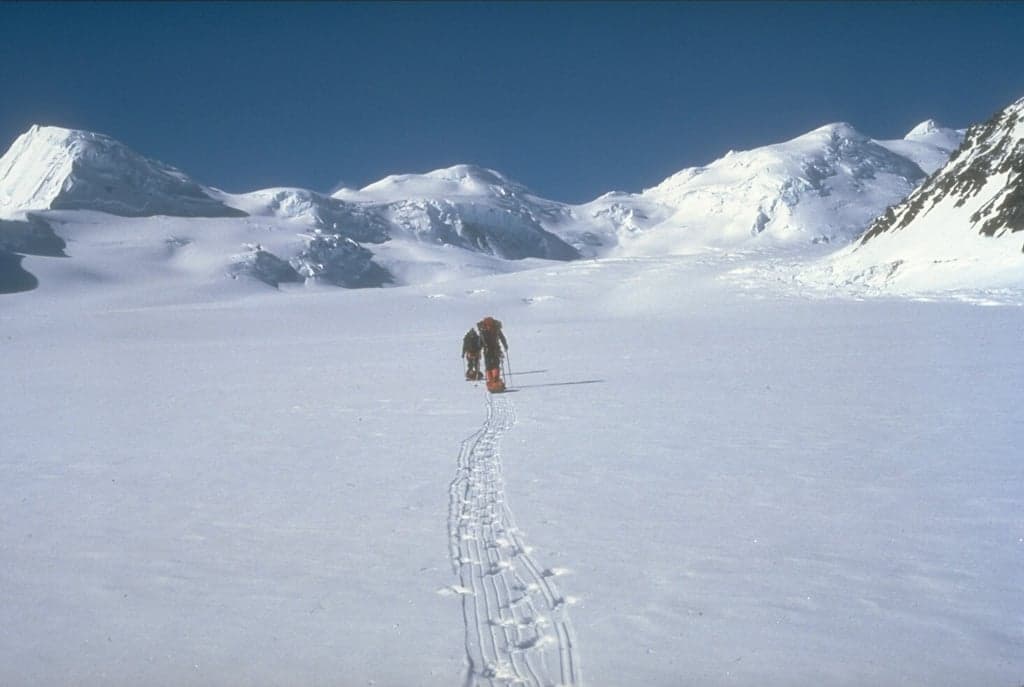
Churchill is located in United States, within the Wrangell Volcanic Arc of the broader North America Volcanic Regions. Situated at 61.38° N, 141.75° W in the Northern Hemisphere, the volcano lies within a subarctic climate zone. At 5,005 meters above sea level, Churchill reaches well into the permanent snow and ice zone. Glaciers and snowpack on the upper slopes create the potential for lahars — destructive volcanic mudflows — during eruptions, as heat rapidly melts ice and snow. The volcanic landform is characterized as a composite, which describes the physical shape and structure of the volcanic edifice as observed from the surface.
Geological Context
Churchill is an intraplate volcano, meaning it formed away from any plate boundary. These volcanoes are often powered by hotspots — plumes of abnormally hot mantle material rising from deep within the Earth. Hotspot volcanoes like Churchill tend to produce effusive eruptions with lava flows that can be relatively predictable, giving nearby communities in United States more time to prepare. However, they can also produce explosive phases, particularly when magma interacts with groundwater. The dominant rock type is dacite, an intermediate to silica-rich volcanic rock. This composition typically produces more viscous magma, leading to more explosive eruptions with ash columns and pyroclastic flows. Andesitic and dacitic magmas build pressure before erupting, which is why volcanoes with this rock chemistry are often associated with Plinian-style eruptions that can send ash tens of kilometers into the atmosphere and disrupt aviation across entire regions.
Eruption History Summary
Churchill has 2 recorded eruptions in the geological database, spanning from 63 CE to 847 CE. The most powerful recorded event was a colossal eruption capable of affecting global climate for years in 847 CE, reaching VEI 6 on the Volcanic Explosivity Index. Notable eruptions include 847 CE (VEI 6), 63 CE (VEI 6). These eruptions span roughly 784 years of volcanic history.
Significance
Churchill has produced at least one eruption of VEI 6 or higher, placing it among the most powerful volcanic systems on Earth. Eruptions of this magnitude inject massive quantities of sulfur dioxide into the stratosphere, affecting global climate by lowering average temperatures for one to three years after the event.
GVP Reference Summary
The Bona-Churchill massif in the St. Elias Mountains has a 2.7 x 4.2 km summit caldera which was the source of the White River Ash, produced by two of the largest explosive eruptions in North America during the past 2,000 years (McGimsey et al., 1992). The summit of Mount Bona lies 4 km across a high saddle from the younger Churchill. The source vent of the widespread bi-lobate White River Ash deposit, which covers more than 340,000 km2 of eastern Alaska and NW Canada, was initially thought to be a pumice mound that is mostly buried beneath the Klutlan Glacier NE of Churchill volcano. Later work revealed thick young pumice deposits along the caldera rim that are mineralogically and chemically similar to the White River Ash deposits.
— Smithsonian Institution, Global Volcanism Program
2 Recorded Eruptions
| Year | VEI | Type | Area |
|---|---|---|---|
| 847 | 6 | Confirmed Eruption | — |
| 63 | 6 | Confirmed Eruption | — |
Real-Time Data
Frequently Asked Questions About Churchill
Is Churchill an active volcano?+
Churchill is not currently classified as active. Its activity evidence is listed as "Eruption Dated." The last known eruption was in 847 CE. However, no volcano is ever considered permanently extinct.
When did Churchill last erupt?+
The most recent recorded eruption of Churchill occurred in 847 CE with a Volcanic Explosivity Index (VEI) of 6. The eruption was classified as a "Confirmed Eruption." Churchill has 2 recorded eruptions in total.
How high is Churchill?+
Churchill has a summit elevation of 5,005 meters (16,421 feet) above sea level. At 5,005 meters, it stands taller than Mount Rainier (4,392m) and is among the world's major volcanic peaks.
What type of volcano is Churchill?+
Churchill is classified as a Stratovolcano. Stratovolcanoes (also called composite volcanoes) are steep, conical volcanoes built up by many layers of hardened lava, tephra, and volcanic ash. They are among the most common and dangerous types, known for explosive eruptions.
Where is Churchill located?+
Churchill is located in United States, in the North America Volcanic Regions. More specifically, it lies within the Wrangell Volcanic Arc. Its exact coordinates are 61.380° latitude, -141.750° longitude.
Is it safe to visit Churchill?+
Churchill can generally be visited, but as with any volcano, visitors should check local conditions and any advisory notices before traveling. United States may have specific regulations for accessing volcanic areas. Guided tours are often the safest and most informative way to experience a volcano.