Nevsehir-Acigol Volcanic Complex
Complex · 1,683m · Turkiye
About Nevsehir-Acigol Volcanic Complex
Nevsehir-Acigol Volcanic Complex is a complex rising to 1,683 meters (5,522 feet) in Turkiye's European Volcanic Regions. No historical eruptions have been recorded, though the volcano is classified based on geological evidence of past activity. The volcano has produced 5 recorded eruptions.
Geography & Climate
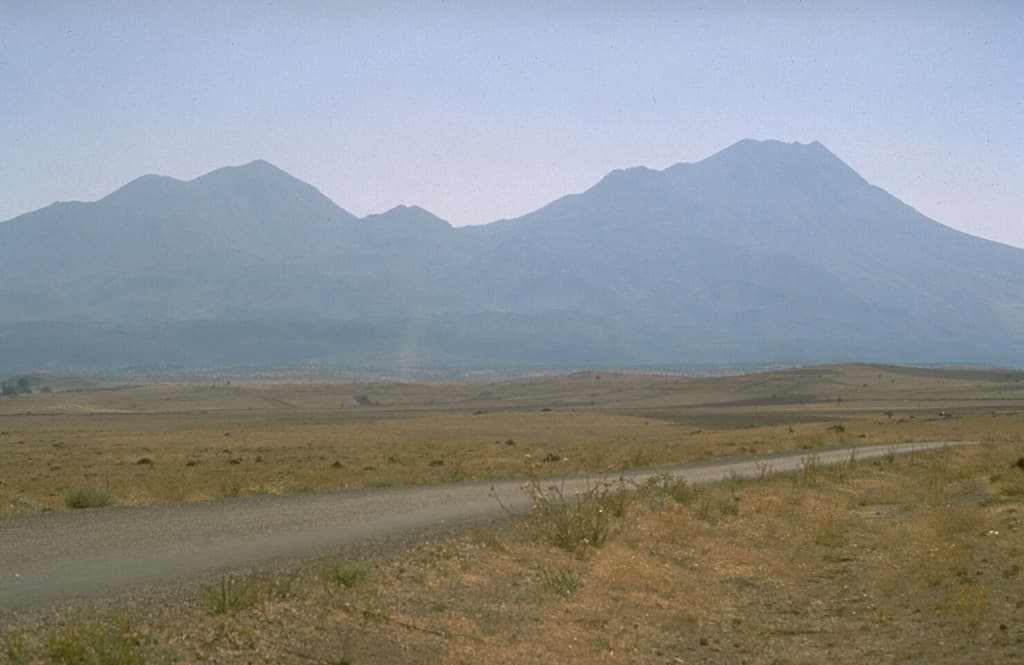
Nevsehir-Acigol Volcanic Complex is located in Turkiye, within the Western Anatolian Volcanic Province of the broader European Volcanic Regions. Situated at 38.54° N, 34.62° E in the Northern Hemisphere, the volcano lies within a temperate climate zone. With a summit elevation of 1,683 meters above sea level, Nevsehir-Acigol Volcanic Complex is a moderately sized peak that remains accessible to hikers and researchers for much of the year. The volcanic landform is characterized as a cluster, which describes the physical shape and structure of the volcanic edifice as observed from the surface.
Eruption History Summary
Nevsehir-Acigol Volcanic Complex has 5 recorded eruptions in the geological database, spanning from 7810 BCE to 2080 BCE. This eruption frequency indicates a moderately active volcanic system with periodic reawakenings.
Significance
With 5 recorded eruptions on file, Nevsehir-Acigol Volcanic Complex has enough documented activity to help scientists identify patterns in its eruptive behavior.
GVP Reference Summary
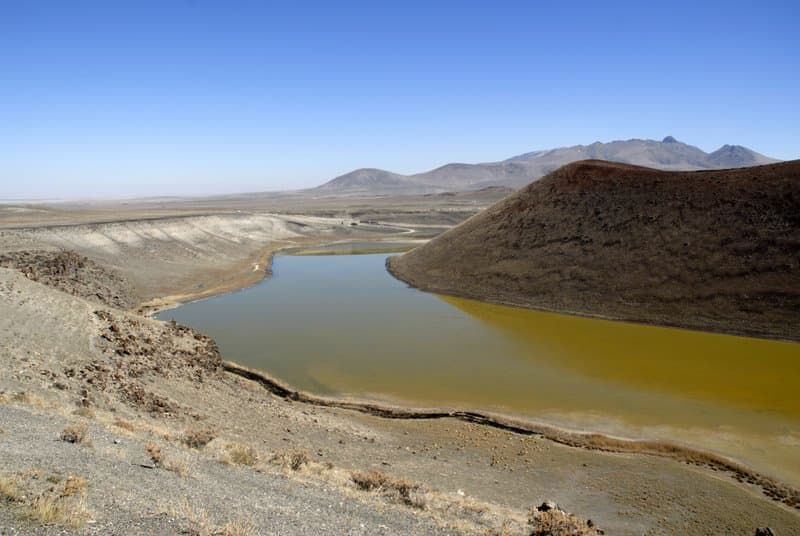
The Nevsehir-Acigöl Volcanic Complex is located in the Cappadocia region of central Turkey largely in the area between the towns of Acigöl and Nevsehir. A hypothesized 7 x 8 km late-Pleistocene caldera (Acigöl, or Kocadag) is part of a partially buried larger caldera and contains a group of maars, lava domes, basaltic lava flows, and pyroclastic cones. As defined by Uslusar et al. (2021), this complex includes 24 lava domes (andesitic to rhyolitic), 10 scoria cones (basaltic to andesitic), six maars (basaltic trachyandesitic and rhyolitic), two tuff rings (basaltic), and another 28 undifferentiated features; the youngest dome and maar ages are about 20 ka (U-Th/He). Three groups of obsidian lava flows have been dated; pre-collapse flows between about 190,000 and 180,000 years before present (BP), 75,000 years BP lava domes (such as Taskesik Tepe on the east), and lava domes on the west about 20,000 to 15,000 years old. Thirteen tephra layers deposited between about 11,000 and 4,300 years ago were found in sediment cores in the late Pleistocene Eski Acigöl maar (Kuzucuoglu et al., 1998), but their source is uncertain. An ash layer near the Kocatepe dome was reported by Pasquare (1968) to overlie artifacts of Roman-Cappadocian age, but no detailed work is known.
— Smithsonian Institution, Global Volcanism Program
5 Recorded Eruptions
| Year | VEI | Type | Area |
|---|---|---|---|
| 2080 BCE | — | Uncertain Eruption | — |
| 2370 BCE | — | Uncertain Eruption | — |
| 3500 BCE | — | Uncertain Eruption | — |
| 6230 BCE | — | Uncertain Eruption | — |
| 7810 BCE | — | Uncertain Eruption | — |
Real-Time Data
Frequently Asked Questions About Nevsehir-Acigol Volcanic Complex
Is Nevsehir-Acigol Volcanic Complex an active volcano?+
Nevsehir-Acigol Volcanic Complex is not currently classified as active. Its activity evidence is listed as "unknown." No recorded eruptions have been documented. However, no volcano is ever considered permanently extinct.
When did Nevsehir-Acigol Volcanic Complex last erupt?+
The most recent recorded eruption of Nevsehir-Acigol Volcanic Complex occurred in 2080 BCE. The eruption was classified as a "Uncertain Eruption." Nevsehir-Acigol Volcanic Complex has 5 recorded eruptions in total.
How high is Nevsehir-Acigol Volcanic Complex?+
Nevsehir-Acigol Volcanic Complex has a summit elevation of 1,683 meters (5,522 feet) above sea level. At 1,683 meters, it is a moderately sized volcanic peak, roughly comparable to Mount Vesuvius (1,281m).
What type of volcano is Nevsehir-Acigol Volcanic Complex?+
Nevsehir-Acigol Volcanic Complex is classified as a Complex. Complex volcanoes have distinct geological characteristics that set them apart from other volcanic types.
Where is Nevsehir-Acigol Volcanic Complex located?+
Nevsehir-Acigol Volcanic Complex is located in Turkiye, in the European Volcanic Regions. More specifically, it lies within the Western Anatolian Volcanic Province. Its exact coordinates are 38.537° latitude, 34.621° longitude.
Is it safe to visit Nevsehir-Acigol Volcanic Complex?+
Nevsehir-Acigol Volcanic Complex can generally be visited, but as with any volcano, visitors should check local conditions and any advisory notices before traveling. Turkiye may have specific regulations for accessing volcanic areas. Guided tours are often the safest and most informative way to experience a volcano.