About Pacaya
Pacaya is a complex rising to 2,569 meters (8,429 feet) in Guatemala's Middle America-Caribbean Volcanic Regions. The volcano is currently active, with its most recent eruption in 2021 CE. The volcano has produced 36 recorded eruptions, with a maximum Volcanic Explosivity Index (VEI) of 3.
Geography & Climate
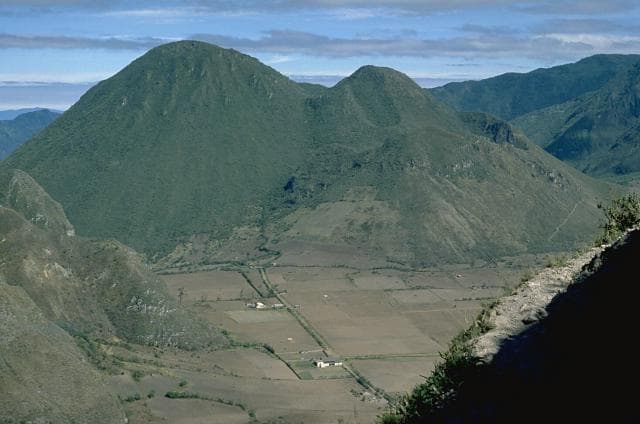
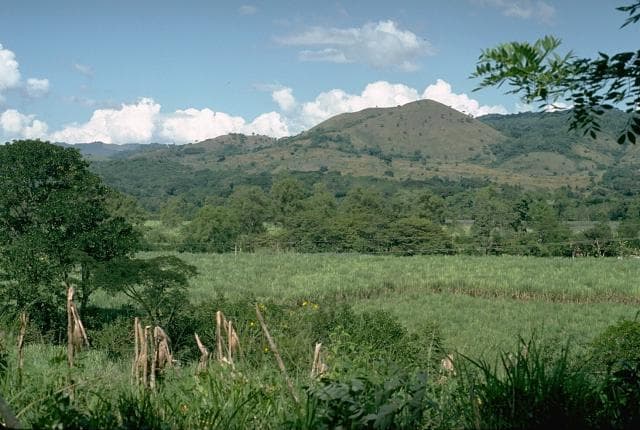
Pacaya is located in Guatemala, within the Central America Volcanic Arc of the broader Middle America-Caribbean Volcanic Regions. Situated at 14.38° N, 90.60° W in the Northern Hemisphere, the volcano lies within a tropical climate zone. At 2,569 meters above sea level, Pacaya rises above the surrounding terrain into montane or subalpine conditions. The elevation creates distinct ecological zones along its flanks, from forested lower slopes to exposed rocky terrain near the summit. The volcanic landform is characterized as a composite, which describes the physical shape and structure of the volcanic edifice as observed from the surface.
Geological Context
Pacaya sits in a subduction zone, where one tectonic plate dives beneath another, creating intense heat and pressure that generates magma. Subduction zones are responsible for many of the world's most explosive volcanoes and deadliest eruptions. For communities in Guatemala near Pacaya, this tectonic setting means the volcano is capable of producing powerful explosive eruptions, pyroclastic flows, and lahars that can threaten populated areas within tens of kilometers of the summit. The dominant rock type is basalt / picro-basalt, a dark, fine-grained volcanic rock that forms from rapidly cooling, low-viscosity lava. Basaltic eruptions tend to be less explosive and produce fluid lava flows that can travel long distances. While less immediately dangerous than explosive eruptions, basaltic lava flows can destroy structures and infrastructure in their path, and volcanic gases released during these eruptions can affect air quality over a wide area.
Eruption History Summary
Pacaya has 36 recorded eruptions in the geological database, spanning from 400 CE to 2021 CE. The most powerful recorded event was a severe eruption capable of regional ash fall and pyroclastic flows in 2006 CE, reaching VEI 3 on the Volcanic Explosivity Index. Notable eruptions include 2006 CE (VEI 3), 2004 CE (VEI 3), 1990 CE (VEI 3). With an average interval of roughly 45 years between eruptions over a span of 1,615 years, this is one of the more frequently active volcanoes in the database. This persistent activity suggests a robust and well-supplied magma system beneath the volcano. With eruptive activity as recently as 2021 CE, Pacaya remains an actively monitored volcano.
Significance
With a maximum recorded VEI of 3, Pacaya has produced eruptions capable of generating pyroclastic flows and significant ash fall in the surrounding area. While not among the largest eruptions globally, VEI 3 events pose serious hazards to local populations and can disrupt regional air travel. Its 36 recorded eruptions make it one of the most prolific volcanoes in our database, reflecting a persistent and well-documented eruptive history that has provided volcanologists with extensive data for understanding eruption patterns and forecasting future activity. Given its recent activity, Pacaya is closely monitored by geological survey organizations to provide early warning of future unrest.
GVP Reference Summary
Eruptions from Pacaya are frequently visible from Guatemala City, the nation's capital. This complex basaltic volcano was constructed just outside the southern topographic rim of the 14 x 16 km Pleistocene Amatitlán caldera. A cluster of dacitic lava domes occupies the southern caldera floor. The post-caldera Pacaya massif includes the older Pacaya Viejo and Cerro Grande stratovolcanoes and the currently active Mackenney stratovolcano. Collapse of Pacaya Viejo between 600 and 1,500 years ago produced a debris-avalanche deposit that extends 25 km onto the Pacific coastal plain and left an arcuate scarp inside which the modern Pacaya volcano (Mackenney cone) grew. The NW-flank Cerro Chino crater was last active in the 19th century. During the past several decades, activity has consisted of frequent Strombolian eruptions with intermittent lava flow extrusion that has partially filled in the caldera moat and covered the flanks of Mackenney cone, punctuated by occasional larger explosive eruptions that partially destroy the summit.
— Smithsonian Institution, Global Volcanism Program
36 Recorded Eruptions
How Pacaya's 32 size-rated eruptions break down by Volcanic Explosivity Index. Select a bar to see what that size means.
Explosive — ash plumes reaching 1–5 km, localized impact.
Of Pacaya's 32 size-rated eruptions on record, the most common was VEI 2 (16 of 32, 50%). Its record is centred on moderate explosive eruptions (VEI 2–3), with larger events far rarer. No eruption on record exceeded VEI 3.
Based on the Smithsonian GVP eruption record. This describes Pacaya's past eruptions only — it does not predict future activity. What is the VEI? · Most explosive volcanoes
| Year | VEI | Type | Area |
|---|---|---|---|
| 2015 – 2021 | 1 | Confirmed Eruption | MacKenney Crater |
| 2014 – 2015 | 1 | Confirmed Eruption | MacKenney Crater |
| 2013 – 2014 | 2 | Confirmed Eruption | MacKenney Crater |
| 2006 – 2010 | 3 | Confirmed Eruption | MacKenney Cone |
| 2004 – 2005 | 3 | Confirmed Eruption | MacKenney Cone and lower S flank |
| 2002 | 1 | Confirmed Eruption | MacKenney Crater |
| 2001 | 1 | Confirmed Eruption | MacKenney Crater |
| 2000 – 2001 | 1 | Confirmed Eruption | MacKenney Crater |
| 1990 – 2000 | 3 | Confirmed Eruption | MacKenney Crater and flank vents |
| 1965 – 1989 | 3 | Confirmed Eruption | MacKenney Crater and flank vents |
| 1961 | 2 | Confirmed Eruption | Cachajinas vent (South flank, 1860 m) |
| 1885 | 2 | Confirmed Eruption | — |
| 1846 | 2 | Confirmed Eruption | Cerro Chino |
| 1830 | — | Uncertain Eruption | — |
| 1805 | 2 | Confirmed Eruption | — |
| 1775 | 3 | Confirmed Eruption | Cerro Chino (SW flank and summit) |
| 1760 | — | Uncertain Eruption | — |
| 1717 | — | Uncertain Eruption | — |
| 1699 | 2 | Confirmed Eruption | — |
| 1693 | 2 | Confirmed Eruption | — |
| 1690 | 2 | Confirmed Eruption | — |
| 1687 | 2 | Confirmed Eruption | — |
| 1678 | 2 | Confirmed Eruption | — |
| 1677 | — | Uncertain Eruption | — |
| 1674 | 2 | Confirmed Eruption | — |
| 1671 | 2 | Confirmed Eruption | — |
| 1668 – 1669 | 2 | Confirmed Eruption | — |
| 1664 | 3 | Confirmed Eruption | — |
| 1655 | 2 | Confirmed Eruption | — |
| 1651 | 2 | Confirmed Eruption | — |
| 1623 | 3 | Confirmed Eruption | — |
| 1565 | 3 | Confirmed Eruption | Cerro Chino |
| 1360 | 3 | Confirmed Eruption | Cerro Chino |
| 1160 | 3 | Confirmed Eruption | MacKenney Crater |
| 880 | 3 | Confirmed Eruption | — |
| 400 | 2 | Confirmed Eruption | — |
Real-Time Data
Frequently Asked Questions About Pacaya
Is Pacaya an active volcano?+
Yes, Pacaya is considered an active volcano. Its most recent eruption was in 2021 CE. The volcano is monitored by geological agencies, and its activity status is based on observed eruptions within recorded history.
When did Pacaya last erupt?+
The most recent recorded eruption of Pacaya began in 2015 CE and continued until 2021 CE with a Volcanic Explosivity Index (VEI) of 1. The eruption was classified as a "Confirmed Eruption." Pacaya has 36 recorded eruptions in total.
How high is Pacaya?+
Pacaya has a summit elevation of 2,569 meters (8,429 feet) above sea level. At 2,569 meters, it is comparable in height to many significant mountain peaks and stands well above the tree line.
What type of volcano is Pacaya?+
Pacaya is classified as a Complex. Complex volcanoes have distinct geological characteristics that set them apart from other volcanic types.
Where is Pacaya located?+
Pacaya is located in Guatemala, in the Middle America-Caribbean Volcanic Regions. More specifically, it lies within the Central America Volcanic Arc. Its exact coordinates are 14.382° latitude, -90.601° longitude.
Is it safe to visit Pacaya?+
Visiting Pacaya requires checking current volcanic activity and alert levels. As an active volcano with eruptions as recent as 2021 CE, conditions can change rapidly. Always consult local geological authorities and follow official warnings before visiting. Many active volcanoes have designated safe viewing areas and guided tour options.