Mono-Inyo Craters
Lava dome(s) · 2,796m · United States
About Mono-Inyo Craters
Mono-Inyo Craters is a lava dome(s) rising to 2,796 meters (9,174 feet) in United States's North America Volcanic Regions. Its last known eruption was in 1380 CE. The volcano has produced 13 recorded eruptions, with a maximum Volcanic Explosivity Index (VEI) of 4.
Geography & Climate
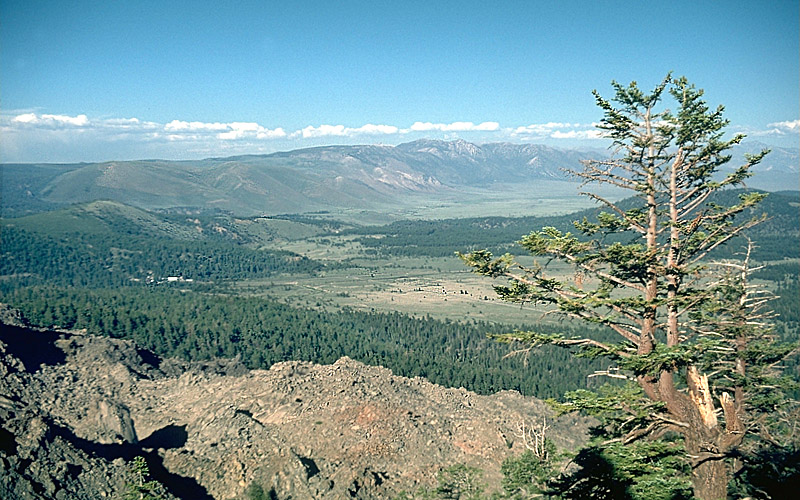
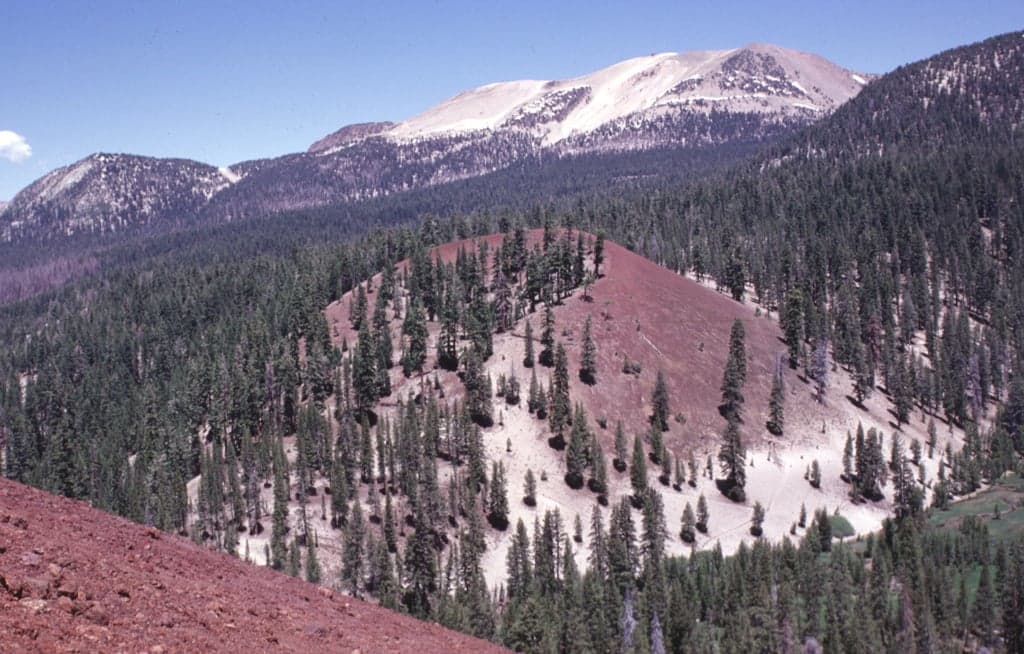
Mono-Inyo Craters is located in United States, within the Basin and Range Volcanic Province of the broader North America Volcanic Regions. Situated at 37.80° N, 119.03° W in the Northern Hemisphere, the volcano lies within a temperate climate zone. At 2,796 meters above sea level, Mono-Inyo Craters rises above the surrounding terrain into montane or subalpine conditions. The elevation creates distinct ecological zones along its flanks, from forested lower slopes to exposed rocky terrain near the summit. The volcanic landform is characterized as a cluster, which describes the physical shape and structure of the volcanic edifice as observed from the surface.
Geological Context
Mono-Inyo Craters is situated along a rift zone, where tectonic plates are pulling apart. As the crust thins and fractures, magma rises to fill the gap, creating volcanic activity. Rift volcanism typically produces more fluid lava flows rather than explosive blasts, which means communities near Mono-Inyo Craters in United States generally face slower-moving hazards like lava flows and ground fissures rather than sudden pyroclastic events. However, rift volcanoes can still generate significant ash emissions and gas releases that affect local air quality. The dominant rock type is rhyolite, a silica-rich volcanic rock associated with highly viscous magma. Rhyolitic eruptions can be extremely explosive and are responsible for some of the largest volcanic events in Earth's history, including supervolcanic caldera-forming eruptions. The high silica content traps dissolved gases, building enormous pressure that can lead to catastrophic explosive releases.
Eruption History Summary
Mono-Inyo Craters has 13 recorded eruptions in the geological database, spanning from 6750 BCE to 1380 CE. The most powerful recorded event was a cataclysmic eruption with ash columns reaching the stratosphere in 1380 CE, reaching VEI 4 on the Volcanic Explosivity Index. Notable eruptions include 1380 CE (VEI 4), 1350 CE (VEI 4), 620 CE (VEI 4). This level of eruptive frequency indicates a persistently active volcanic system that warrants ongoing monitoring.
Significance
With a maximum recorded VEI of 4, Mono-Inyo Craters has demonstrated the capacity for significant explosive eruptions that can impact regional aviation, agriculture, and communities tens of kilometers from the summit. VEI 4 eruptions produce ash columns reaching 15-25 kilometers into the atmosphere. With 13 recorded eruptions, Mono-Inyo Craters has a substantial eruptive history that provides valuable data for understanding volcanic behavior and assessing future hazards in the North America Volcanic Regions region.
GVP Reference Summary
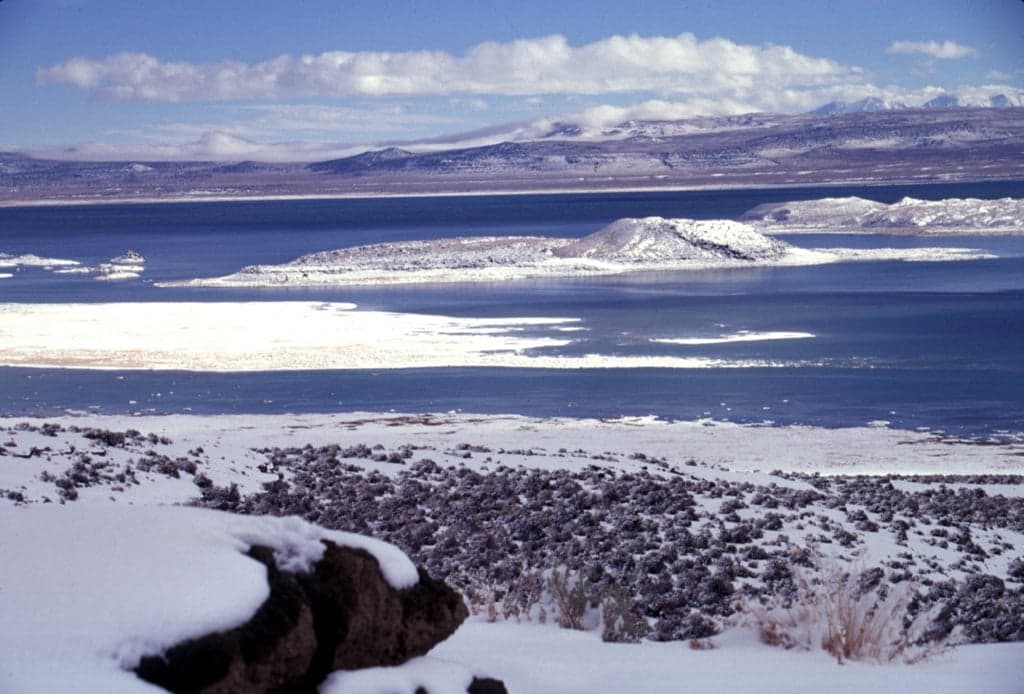
The Mono-Inyo Craters chain, on the eastern side of the Sierra Nevada between Mono Lake and Long Valley caldera, form a sickle-shaped, 25-km-long group of 35 dominantly rhyolitic lava domes, lava flows, and tephra rings. The partially overlapping dike-fed domes of the Mono Craters at the north end were erupted near the margin of a pull-apart basin. Explosive eruptions began more than 50,000 years ago from now-buried vents, but almost all of the exposed domes and flows are of Holocene age. Activity propagated both north and south from the center of the chain during the late Holocene. The latest eruptions occurred nearly contemporaneously about 600 years ago from the Panum Crater area at the northern end of the Mono Craters and from the Inyo Craters to the south, producing a series of tephra rings and obsidian lava domes and flows accompanied by deposition of locally extensive tephra layers and the formation of several phreatic explosion craters at the southern end of the Inyo Craters. The latest eruptions at Inyo Craters about 600 years ago produced explosive eruptions accompanied by formation of the South Deadman, Obsidian Flow, and Glass Creek rhyolitic lava domes and lava flows. The Inyo Crater Lakes are small phreatic craters that formed during this eruption on the south flank of the Pleistocene Deer Mountain rhyolite dome of the Long Valley caldera.
— Smithsonian Institution, Global Volcanism Program
13 Recorded Eruptions
How Mono-Inyo Craters's 4 size-rated eruptions break down by Volcanic Explosivity Index. Select a bar to see what that size means.
Cataclysmic — ash columns of 10–25 km reaching the stratosphere.
Of Mono-Inyo Craters's 4 size-rated eruptions on record, the most common was VEI 4 (3 of 4, 75%). It erupts big or not at all — the record is dominated by a single, powerful size class. The largest on record reached VEI 4.
Based on the Smithsonian GVP eruption record. This describes Mono-Inyo Craters's past eruptions only — it does not predict future activity. What is the VEI? · Most explosive volcanoes
| Year | VEI | Type | Area |
|---|---|---|---|
| 1380 | 4 | Confirmed Eruption | Inyo Craters (S Deadman, Obsidian, Glass Creek) |
| 1350 | 4 | Confirmed Eruption | Mono Craters (Panum Crater, nearby vents) |
| 1000 | — | Confirmed Eruption | Mono Craters (dome on NW edge of NW Coulee) |
| 620 | 4 | Confirmed Eruption | Southern Mono Craters (South Coulee area) |
| 490 | — | Confirmed Eruption | Mono Craters (NW Coulee and Pumice Pit dome) |
| 440 | — | Confirmed Eruption | Southern Mono Craters |
| 320 | — | Confirmed Eruption | Mono Craters (South Coulee?) |
| 290 | 3 | Confirmed Eruption | Inyo Craters (Wilson Butte) |
| 10 | — | Confirmed Eruption | Mono Craters (South Coulee?) |
| 700 BCE | — | Confirmed Eruption | Central Mono Craters |
| 3850 BCE | — | Confirmed Eruption | Mono Craters (crater N of Punchbowl) |
| 4050 BCE | — | Confirmed Eruption | Inyo Craters (N of Deadman Creek) |
| 6750 BCE | — | Confirmed Eruption | Mono Craters (Punchbowl) |
Real-Time Data
Frequently Asked Questions About Mono-Inyo Craters
Is Mono-Inyo Craters an active volcano?+
Mono-Inyo Craters is not currently classified as active. Its activity evidence is listed as "Eruption Dated." The last known eruption was in 1380 CE. However, no volcano is ever considered permanently extinct.
When did Mono-Inyo Craters last erupt?+
The most recent recorded eruption of Mono-Inyo Craters occurred in 1380 CE with a Volcanic Explosivity Index (VEI) of 4. The eruption was classified as a "Confirmed Eruption." Mono-Inyo Craters has 13 recorded eruptions in total.
How high is Mono-Inyo Craters?+
Mono-Inyo Craters has a summit elevation of 2,796 meters (9,174 feet) above sea level. At 2,796 meters, it is comparable in height to many significant mountain peaks and stands well above the tree line.
What type of volcano is Mono-Inyo Craters?+
Mono-Inyo Craters is classified as a Lava dome(s). Lava domes are mounds of viscous lava that pile up around a volcanic vent. They grow by expansion from within and can collapse to produce dangerous pyroclastic flows.
Where is Mono-Inyo Craters located?+
Mono-Inyo Craters is located in United States, in the North America Volcanic Regions. More specifically, it lies within the Basin and Range Volcanic Province. Its exact coordinates are 37.804° latitude, -119.029° longitude.
Is it safe to visit Mono-Inyo Craters?+
Mono-Inyo Craters can generally be visited, but as with any volcano, visitors should check local conditions and any advisory notices before traveling. United States may have specific regulations for accessing volcanic areas. Guided tours are often the safest and most informative way to experience a volcano.