Southern EPR at 8°S
Fissure vent(s) · -2,800m · Undersea Features
About Southern EPR at 8°S
Southern EPR at 8°S is a fissure vent(s) rising to -2,800 meters (-9,187 feet) in Undersea Features's Southern Pacific Volcanic Regions. It last erupted in 1969 CE, and volcanologists consider it an active volcanic system. The volcano has produced 1 recorded eruption.
Geography & Climate
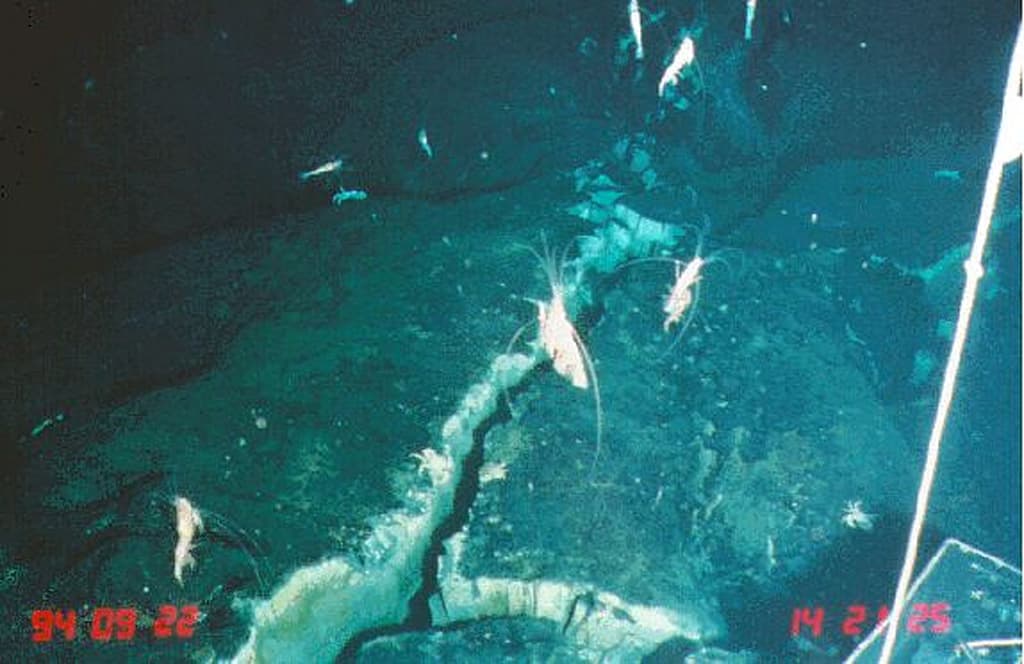
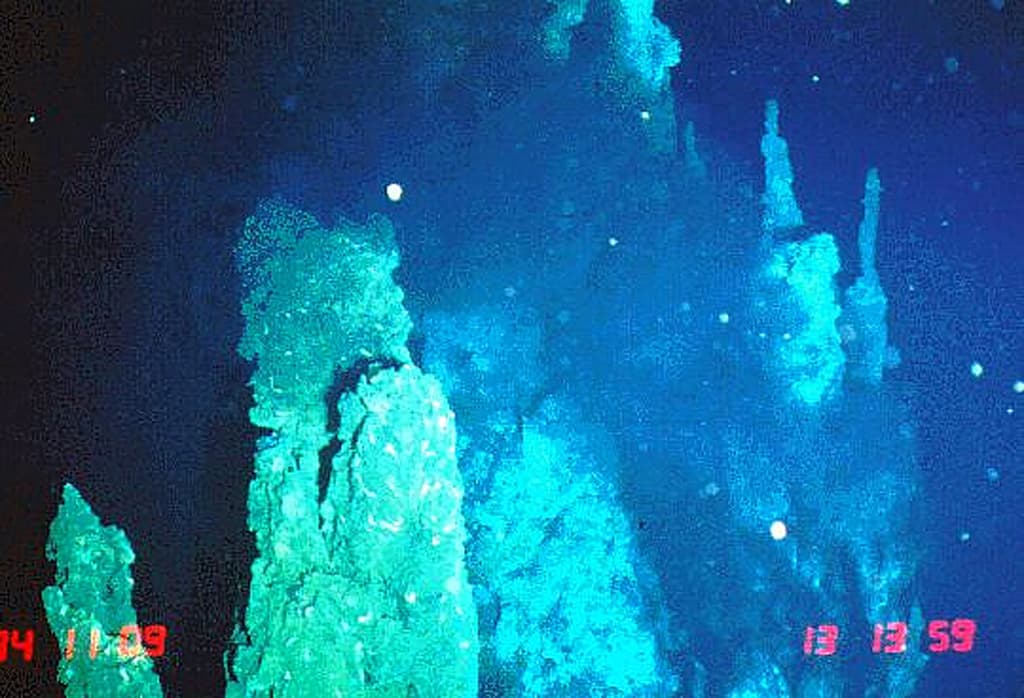
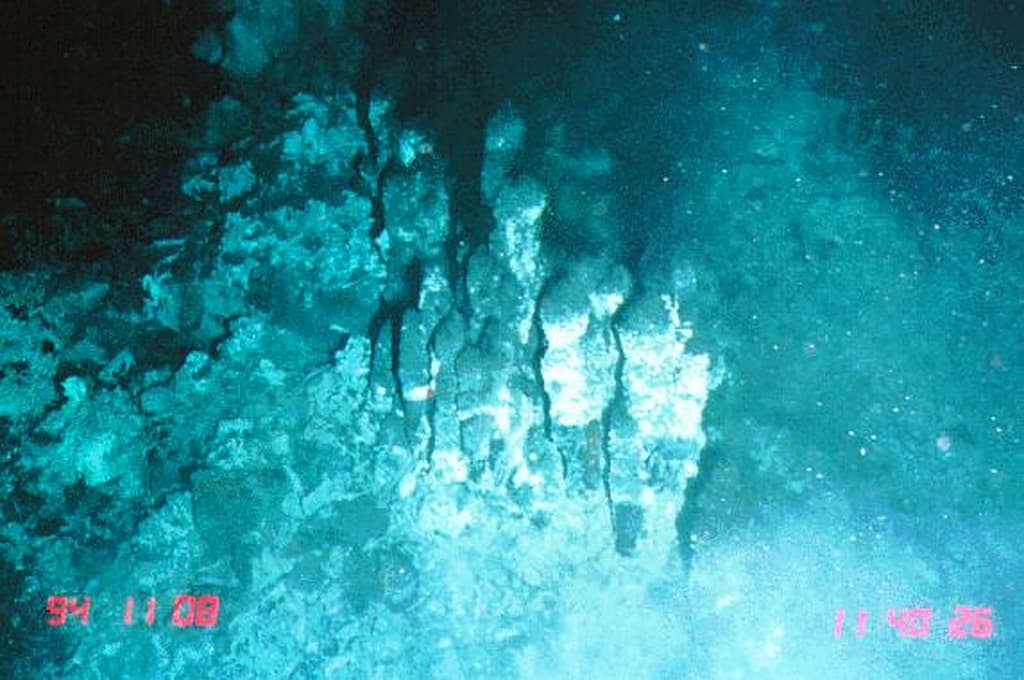
Southern EPR at 8°S is located in Undersea Features, within the Southern East Pacific Rise Volcanic Province of the broader Southern Pacific Volcanic Regions. Situated at 8.27° S, 107.95° W in the Southern Hemisphere, the volcano lies within a tropical climate zone. With an elevation of -2,800 meters — below sea level — Southern EPR at 8°S is a submarine or submerged volcanic feature. Submarine volcanoes make up the majority of Earth's volcanic activity, though most eruptions go unobserved beneath the ocean surface. The volcanic landform is characterized as a cluster, which describes the physical shape and structure of the volcanic edifice as observed from the surface.
Geological Context
Southern EPR at 8°S is situated along a rift zone, where tectonic plates are pulling apart. As the crust thins and fractures, magma rises to fill the gap, creating volcanic activity. Rift volcanism typically produces more fluid lava flows rather than explosive blasts, which means communities near Southern EPR at 8°S in Undersea Features generally face slower-moving hazards like lava flows and ground fissures rather than sudden pyroclastic events. However, rift volcanoes can still generate significant ash emissions and gas releases that affect local air quality. The dominant rock type is basalt / picro-basalt, a dark, fine-grained volcanic rock that forms from rapidly cooling, low-viscosity lava. Basaltic eruptions tend to be less explosive and produce fluid lava flows that can travel long distances. While less immediately dangerous than explosive eruptions, basaltic lava flows can destroy structures and infrastructure in their path, and volcanic gases released during these eruptions can affect air quality over a wide area.
Eruption History Summary
Southern EPR at 8°S has 1 recorded eruption in the geological database, spanning from 1964 CE to 1969 CE. The most recent eruption in 1969 CE places this volcano within the modern era of volcanological observation.
GVP Reference Summary
A massive 15 +/- 4 km3 lava flow field covers about 220 km2 of the East Pacific Rise (EPR) axis crest at about 8°S. The high reflectivity of the lava flow indicates a very youthful age. Teleseismically recorded earthquakes in 1964, 1965, and 1969, were of an unusual magnitude. A helium megaplume of a volume consistent with the eruption of a lava flow of this volume was detected several years later at a distant location; its movement was consistent with inferred circulation patterns at mid-ocean depths. These observations led Macdonald et al. (1989) to suggest that part or all of this lava field may have been emplaced within the previous 25 years, during one or more eruptions coincident with the earthquakes and onset of the helium plume.
— Smithsonian Institution, Global Volcanism Program
1 Recorded Eruption
| Year | VEI | Type | Area |
|---|---|---|---|
| 1964 – 1969 | 0 | Confirmed Eruption | East Pacific Rise (8.3°S) |
Real-Time Data
Frequently Asked Questions About Southern EPR at 8°S
Is Southern EPR at 8°S an active volcano?+
Yes, Southern EPR at 8°S is considered an active volcano. Its most recent eruption was in 1969 CE. The volcano is monitored by geological agencies, and its activity status is based on observed eruptions within recorded history.
When did Southern EPR at 8°S last erupt?+
The most recent recorded eruption of Southern EPR at 8°S began in 1964 CE and continued until 1969 CE with a Volcanic Explosivity Index (VEI) of 0. The eruption was classified as a "Confirmed Eruption." Southern EPR at 8°S has 1 recorded eruption in total.
How high is Southern EPR at 8°S?+
Southern EPR at 8°S has a summit elevation of -2,800 meters (-9,187 feet) above sea level. With an elevation of -2,800 meters (below sea level), this is a submarine or submerged volcanic feature.
What type of volcano is Southern EPR at 8°S?+
Southern EPR at 8°S is classified as a Fissure vent(s). Fissure vent(s) volcanoes have distinct geological characteristics that set them apart from other volcanic types.
Where is Southern EPR at 8°S located?+
Southern EPR at 8°S is located in Undersea Features, in the Southern Pacific Volcanic Regions. More specifically, it lies within the Southern East Pacific Rise Volcanic Province. Its exact coordinates are -8.270° latitude, -107.950° longitude.
Is it safe to visit Southern EPR at 8°S?+
Visiting Southern EPR at 8°S requires checking current volcanic activity and alert levels. As an active volcano with eruptions as recent as 1969 CE, conditions can change rapidly. Always consult local geological authorities and follow official warnings before visiting. Many active volcanoes have designated safe viewing areas and guided tour options.