About Vulsini
Vulsini is a caldera rising to 800 meters (2,625 feet) in Italy's European Volcanic Regions. No historical eruptions have been recorded, though the volcano is classified based on geological evidence of past activity. The volcano has produced 1 recorded eruption.
Geography & Climate
Vulsini is located in Italy, within the Italian Peninsula Volcanic Provinces of the broader European Volcanic Regions. Situated at 42.60° N, 11.93° E in the Northern Hemisphere, the volcano lies within a temperate climate zone. With a summit elevation of 800 meters above sea level, Vulsini is a moderately sized peak that remains accessible to hikers and researchers for much of the year. The volcanic landform is characterized as a caldera, which describes the physical shape and structure of the volcanic edifice as observed from the surface.
Eruption History Summary
Vulsini has 1 recorded eruption in the geological database, spanning from 104 BCE to 104 BCE.
GVP Reference Summary
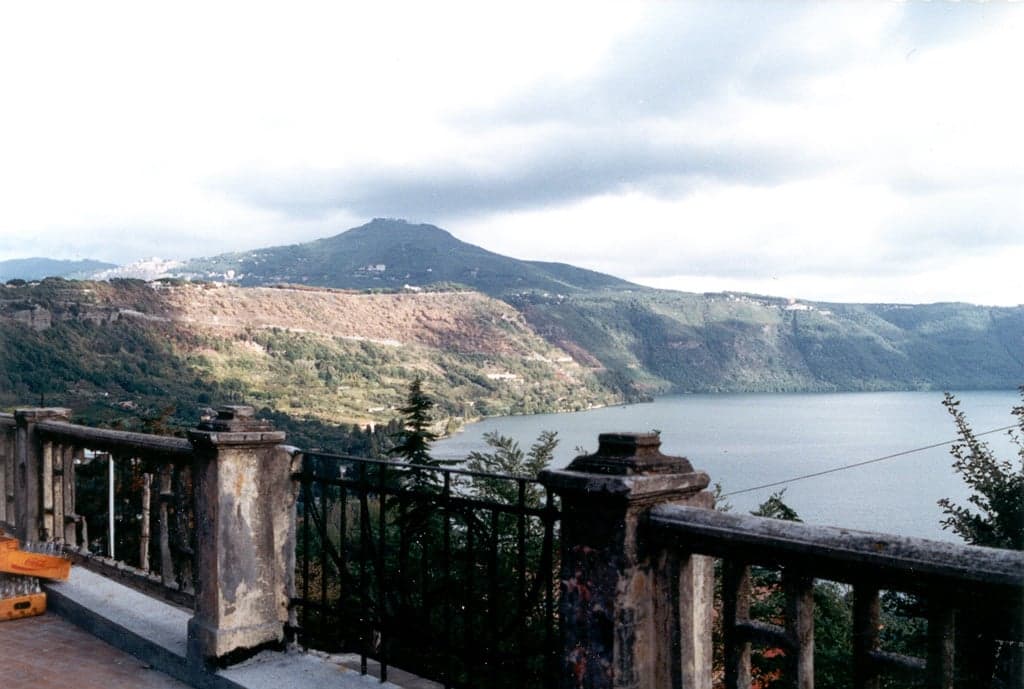
The Vulsini volcanic complex in central Italy covers about 2,200 km2 at the northern end of the Roman Magmatic Province. Following lava extrusion and explosive eruptions that constructed the main complex, the 16 km lake-filled Bolsena caldera on the east and the 8 x 11 km Latera caldera on the west were formed during major Pleistocene eruptions at about 0.3 and 0.16 million years ago, respectively. Five major Plinian fall deposits were erupted from vents at or near Latera caldera during the late Pleistocene. The latest major eruption formed unwelded pumice flows and welded airfall tuffs of the Pitigliano Formation, associated with collapse of the Vepe caldera about 166,000 years ago at the NW end of Latera caldera. Post-caldera volcanism produced scoria cones and lava flows from vents within and to the west of Latera caldera. Remnants of ash cones in Lake Bolsena may have given rise to a legend of a pre-historical fire-god, Volta. Stothers and Rampino (1983) cited Obsequens, writing about four centuries later and likely drawing from Livy, that "a flame shot up near Volsinii" in 104 BCE; direct translations did not specify the volcano: "In the Vulsinian territory a flame was seen to rise from the earth and touch the sky."
— Smithsonian Institution, Global Volcanism Program
1 Recorded Eruption
| Year | VEI | Type | Area |
|---|---|---|---|
| 104 BCE | — | Uncertain Eruption | — |
Real-Time Data
Frequently Asked Questions About Vulsini
Is Vulsini an active volcano?+
Vulsini is not currently classified as active. Its activity evidence is listed as "unknown." No recorded eruptions have been documented. However, no volcano is ever considered permanently extinct.
When did Vulsini last erupt?+
The most recent recorded eruption of Vulsini occurred in 104 BCE. The eruption was classified as a "Uncertain Eruption." Vulsini has 1 recorded eruption in total.
How high is Vulsini?+
Vulsini has a summit elevation of 800 meters (2,625 feet) above sea level. At 800 meters, it is a relatively low-elevation volcano.
What type of volcano is Vulsini?+
Vulsini is classified as a Caldera. Calderas are large volcanic depressions formed when a volcano erupts so powerfully that its magma chamber collapses, creating a basin that can be kilometers wide. They are often sites of some of Earth's largest eruptions.
Where is Vulsini located?+
Vulsini is located in Italy, in the European Volcanic Regions. More specifically, it lies within the Italian Peninsula Volcanic Provinces. Its exact coordinates are 42.600° latitude, 11.930° longitude.
Is it safe to visit Vulsini?+
Vulsini can generally be visited, but as with any volcano, visitors should check local conditions and any advisory notices before traveling. Italy may have specific regulations for accessing volcanic areas. Guided tours are often the safest and most informative way to experience a volcano.