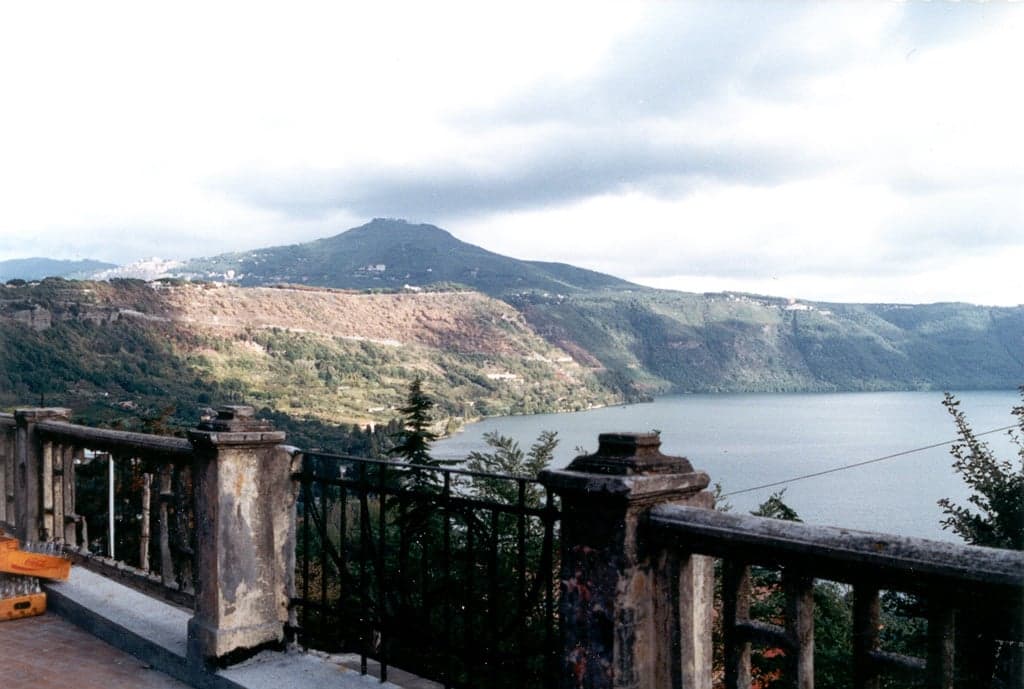
About Ischia
Ischia is a complex rising to 789 meters (2,589 feet) in Italy's European Volcanic Regions. Its last known eruption was in 1302 CE. The volcano has produced 24 recorded eruptions, with a maximum Volcanic Explosivity Index (VEI) of 3.
Geography & Climate
Ischia is located in Italy, within the Italian Peninsula Volcanic Provinces of the broader European Volcanic Regions. Situated at 40.73° N, 13.90° E in the Northern Hemisphere, the volcano lies within a temperate climate zone. With a summit elevation of 789 meters above sea level, Ischia is a moderately sized peak that remains accessible to hikers and researchers for much of the year. The volcanic landform is characterized as a composite, which describes the physical shape and structure of the volcanic edifice as observed from the surface.
Geological Context
Ischia sits in a subduction zone, where one tectonic plate dives beneath another, creating intense heat and pressure that generates magma. Subduction zones are responsible for many of the world's most explosive volcanoes and deadliest eruptions. For communities in Italy near Ischia, this tectonic setting means the volcano is capable of producing powerful explosive eruptions, pyroclastic flows, and lahars that can threaten populated areas within tens of kilometers of the summit. The dominant rock type is trachyte / trachydacite, an intermediate to silica-rich volcanic rock. This composition typically produces more viscous magma, leading to more explosive eruptions with ash columns and pyroclastic flows. Andesitic and dacitic magmas build pressure before erupting, which is why volcanoes with this rock chemistry are often associated with Plinian-style eruptions that can send ash tens of kilometers into the atmosphere and disrupt aviation across entire regions.
Eruption History Summary
Ischia has 24 recorded eruptions in the geological database, spanning from 7550 BCE to 1302 CE. The most powerful recorded event was a severe eruption capable of regional ash fall and pyroclastic flows in 40 CE, reaching VEI 3 on the Volcanic Explosivity Index. With an average interval of roughly 369 years between eruptions over a span of 8,852 years, this is one of the more frequently active volcanoes in the database. This persistent activity suggests a robust and well-supplied magma system beneath the volcano.
Significance
With a maximum recorded VEI of 3, Ischia has produced eruptions capable of generating pyroclastic flows and significant ash fall in the surrounding area. While not among the largest eruptions globally, VEI 3 events pose serious hazards to local populations and can disrupt regional air travel. Its 24 recorded eruptions make it one of the most prolific volcanoes in our database, reflecting a persistent and well-documented eruptive history that has provided volcanologists with extensive data for understanding eruption patterns and forecasting future activity.
GVP Reference Summary
The Ischia volcanic complex forms a rectangular, 6 x 9 km island immediately SW of the Campi Flegrei area at the western side of the Bay of Naples. The eruption of the trachytic Green Tuff ignimbrite about 56,000 years ago was followed by caldera formation. The high point on the island, Monte Epomeo, is a volcanic horst composed of the Green Tuff ignimbrite deposit that was submerged after its eruption and then uplifted. Volcanism on the island has been significantly affected by tectonism that formed a series of horsts and grabens; at least 800 m of uplift has formed as a result of resurgent doming during past 33,000 years. Many small monogenetic volcanoes were formed around the uplifted block. Volcanism during the Holocene produced a series of pumiceous tephras, tuff rings, lava domes, and lava flows, and a major collapse of Mount Epomeo produced a large submarine debris-avalanche deposit. The latest eruption, in 1302 CE, produced a spatter cone and the Arso lava flow, which reached the NE coast.
— Smithsonian Institution, Global Volcanism Program
24 Recorded Eruptions
| Year | VEI | Type | Area |
|---|---|---|---|
| 1302 | — | Confirmed Eruption | Arso |
| 1290 | — | Confirmed Eruption | — |
| 820 | — | Confirmed Eruption | Near Arso |
| 540 | — | Confirmed Eruption | Montagnone-Moschiata area |
| 295 | — | Confirmed Eruption | Vateliero, Molara-Cava Nocelle, Rotaro |
| 145 | — | Confirmed Eruption | — |
| 80 | — | Confirmed Eruption | — |
| 69 | — | Uncertain Eruption | — |
| 40 | 3 | Confirmed Eruption | Near Bosco della Maddalena |
| 6 BCE | — | Confirmed Eruption | — |
| 91 BCE | — | Confirmed Eruption | — |
| 200 BCE | — | Confirmed Eruption | Ischia Porto (Spiaggia dei Pescatori) |
| 370 BCE | — | Confirmed Eruption | Ischia Porto (San Pietro) |
| 470 BCE | — | Confirmed Eruption | Bosco dei Conti and Fondo Ferraro ? |
| 490 BCE | — | Confirmed Eruption | Case Balestrieri?, Cava Nocelle? |
| 700 BCE | — | Confirmed Eruption | Costa del Lenzuolo |
| 930 BCE | — | Confirmed Eruption | SE of Selva del Napolitano |
| 1480 BCE | — | Confirmed Eruption | Castiglione |
| 2350 BCE | — | Confirmed Eruption | Costa Sparaina |
| 2700 BCE | — | Confirmed Eruption | Punta della Cannuccia |
| 3050 BCE | — | Confirmed Eruption | Cantariello |
| 3580 BCE | — | Confirmed Eruption | Submarine SE flank (Secca d'Ischia) |
| 3880 BCE | — | Confirmed Eruption | Zaro, Marecocco, Spiaggia degli Inglesi |
| 7550 BCE | — | Confirmed Eruption | Selva del Napolitano, Piedmonte |
Real-Time Data
Frequently Asked Questions About Ischia
Is Ischia an active volcano?+
Ischia is classified as active based on credible evidence of past eruptions. Although its last known eruption was in 1302 CE, volcanologists consider it capable of erupting again.
When did Ischia last erupt?+
The most recent recorded eruption of Ischia occurred in 1302 CE. The eruption was classified as a "Confirmed Eruption." Ischia has 24 recorded eruptions in total.
How high is Ischia?+
Ischia has a summit elevation of 789 meters (2,589 feet) above sea level. At 789 meters, it is a relatively low-elevation volcano.
What type of volcano is Ischia?+
Ischia is classified as a Complex. Complex volcanoes have distinct geological characteristics that set them apart from other volcanic types.
Where is Ischia located?+
Ischia is located in Italy, in the European Volcanic Regions. More specifically, it lies within the Italian Peninsula Volcanic Provinces. Its exact coordinates are 40.730° latitude, 13.897° longitude.
Is it safe to visit Ischia?+
Ischia can generally be visited, but as with any volcano, visitors should check local conditions and any advisory notices before traveling. Italy may have specific regulations for accessing volcanic areas. Guided tours are often the safest and most informative way to experience a volcano.