About Jolo
Jolo is a pyroclastic cone(s) rising to 811 meters (2,661 feet) in Philippines's Western Pacific Volcanic Regions. No historical eruptions have been recorded, though the volcano is classified based on geological evidence of past activity.
Geography & Climate
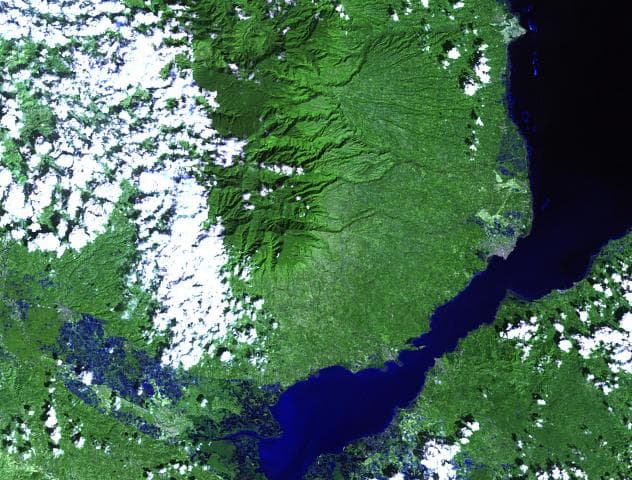
Jolo is located in Philippines, within the Negros-Sulu Volcanic Arc of the broader Western Pacific Volcanic Regions. Situated at 6.00° N, 121.13° E in the Northern Hemisphere, the volcano lies within a tropical climate zone. With a summit elevation of 811 meters above sea level, Jolo is a moderately sized peak that remains accessible to hikers and researchers for much of the year. The volcanic landform is characterized as a cluster, which describes the physical shape and structure of the volcanic edifice as observed from the surface.
GVP Reference Summary
Numerous pyroclastic cones and craters are present on the 60-km-wide Jolo Island at the SW end of the Philippines archipelago. Jolo lies in the Sulu archipelago, ~150 km SW of the tip of the Zamboanga Peninsula on SW Mindanao Island. Youthful-looking Tumatangus cone forms the high point of the island. Bud Dajo (or Buddajo) is a basaltic cinder cone that reaches above 600 m elevation; other nearby cones are Matanding, Guimba, and Sungal. Hot springs have been reported at craters on Cagayan Sulu, and solfataras at Siit Lake. Reported activity in 1641 CE was actually ashfall from Melebingoy eruption on Mindanao. Two large earthquakes (M 7.4-7.5) on 20-21 September 1897 caused a significant tsunami and later speculation of a possible submarine eruption, but there were no direct observations or later evidence of volcanism.
— Smithsonian Institution, Global Volcanism Program
0 Recorded Eruptions
No eruption records available for Jolo.
Real-Time Data
Frequently Asked Questions About Jolo
Is Jolo an active volcano?+
Jolo is not currently classified as active. Its activity evidence is listed as "unknown." No recorded eruptions have been documented. However, no volcano is ever considered permanently extinct.
How high is Jolo?+
Jolo has a summit elevation of 811 meters (2,661 feet) above sea level. At 811 meters, it is a relatively low-elevation volcano.
What type of volcano is Jolo?+
Jolo is classified as a Pyroclastic cone(s). Pyroclastic cones (or cinder cones) are small, steep-sided volcanic cones built from fragments of lava blasted into the air. They are the simplest type of volcano and often form in groups.
Where is Jolo located?+
Jolo is located in Philippines, in the Western Pacific Volcanic Regions. More specifically, it lies within the Negros-Sulu Volcanic Arc. Its exact coordinates are 6.000° latitude, 121.125° longitude.
Is it safe to visit Jolo?+
Jolo can generally be visited, but as with any volcano, visitors should check local conditions and any advisory notices before traveling. Philippines may have specific regulations for accessing volcanic areas. Guided tours are often the safest and most informative way to experience a volcano.