About Robinson Crusoe
Robinson Crusoe is a shield(s) rising to 922 meters (3,025 feet) in Chile's Southern Pacific Volcanic Regions. No historical eruptions have been recorded, though the volcano is classified based on geological evidence of past activity. The volcano has produced 2 recorded eruptions, with a maximum Volcanic Explosivity Index (VEI) of 1.
Geography & Climate
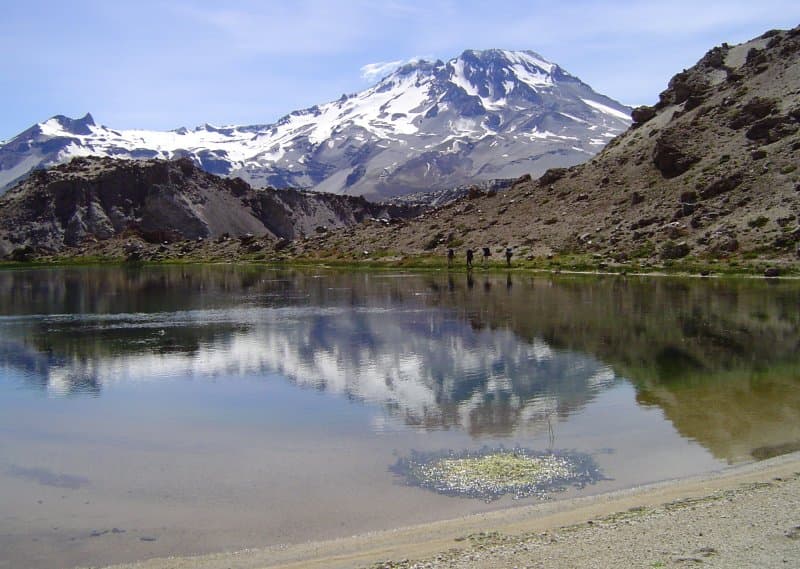
Robinson Crusoe is located in Chile, within the Juan Fernandez Hotspot Volcano Group of the broader Southern Pacific Volcanic Regions. Situated at 33.66° S, 78.85° W in the Southern Hemisphere, the volcano lies within a subtropical climate zone. With a summit elevation of 922 meters above sea level, Robinson Crusoe is a moderately sized peak that remains accessible to hikers and researchers for much of the year. The volcanic landform is characterized as a shield, which describes the physical shape and structure of the volcanic edifice as observed from the surface.
Eruption History Summary
Robinson Crusoe has 2 recorded eruptions in the geological database, spanning from 1743 CE to 1835 CE. The most powerful recorded event was a gentle, effusive event in 1835 CE, reaching VEI 1 on the Volcanic Explosivity Index. These eruptions span roughly 92 years of volcanic history.
GVP Reference Summary
The main part of Robinson Crusoe (Mas a Tierra) Island, in the central part of the Juan Fernandez Island group, is composed of four overlapping shield volcanoes with calderas breached to the NE. The SW part of the basaltic island consists of smaller altered cones. Potassium-Argon dates for the island range from 5.8 to 3.8 million years ago (Steussy et al., 1984) and the island is more dissected than Alexander Selkirk (Mas a Fuera) Island to the west. An eruption at El Yunque was reported in 1743, but is considered uncertain (Catalog of Active Volcanoes of the World). Reports exist of a submarine eruption about 1.5 km north of the island in 1835 that produced an explosion and flames that lit up the island, primarily from the Governor, but the story varied over the years and no evidence was ever located (see CAVW for summary).
— Smithsonian Institution, Global Volcanism Program
2 Recorded Eruptions
| Year | VEI | Type | Area |
|---|---|---|---|
| 1835 | 1 | Confirmed Eruption | 1.6 km north of Punta Bacalao |
| 1743 | — | Uncertain Eruption | — |
Real-Time Data
Frequently Asked Questions About Robinson Crusoe
Is Robinson Crusoe an active volcano?+
Robinson Crusoe is not currently classified as active. Its activity evidence is listed as "unknown." No recorded eruptions have been documented. However, no volcano is ever considered permanently extinct.
When did Robinson Crusoe last erupt?+
The most recent recorded eruption of Robinson Crusoe occurred in 1835 CE with a Volcanic Explosivity Index (VEI) of 1. The eruption was classified as a "Confirmed Eruption." Robinson Crusoe has 2 recorded eruptions in total.
How high is Robinson Crusoe?+
Robinson Crusoe has a summit elevation of 922 meters (3,025 feet) above sea level. At 922 meters, it is a relatively low-elevation volcano.
What type of volcano is Robinson Crusoe?+
Robinson Crusoe is classified as a Shield(s). Shield volcanoes are broad, gently sloping volcanoes built by fluid lava flows. They produce less explosive eruptions compared to stratovolcanoes and tend to have effusive lava rather than violent blasts.
Where is Robinson Crusoe located?+
Robinson Crusoe is located in Chile, in the Southern Pacific Volcanic Regions. More specifically, it lies within the Juan Fernandez Hotspot Volcano Group. Its exact coordinates are -33.658° latitude, -78.850° longitude.
Is it safe to visit Robinson Crusoe?+
Robinson Crusoe can generally be visited, but as with any volcano, visitors should check local conditions and any advisory notices before traveling. Chile may have specific regulations for accessing volcanic areas. Guided tours are often the safest and most informative way to experience a volcano.