Craters of the Moon
Volcanic field · 2,005m · United States
About Craters of the Moon
Craters of the Moon is a volcanic field rising to 2,005 meters (6,578 feet) in United States's North America Volcanic Regions. Its last known eruption dates to 130 BCE, in prehistoric times. The volcano has produced 14 recorded eruptions.
Geography & Climate
Craters of the Moon is located in United States, within the Yellowstone-Snake River Hotspot Volcano Group of the broader North America Volcanic Regions. Situated at 43.37° N, 113.49° W in the Northern Hemisphere, the volcano lies within a temperate climate zone. At 2,005 meters above sea level, Craters of the Moon rises above the surrounding terrain into montane or subalpine conditions. The elevation creates distinct ecological zones along its flanks, from forested lower slopes to exposed rocky terrain near the summit. The volcanic landform is characterized as a cluster, which describes the physical shape and structure of the volcanic edifice as observed from the surface.
Geological Context
Craters of the Moon is situated along a rift zone, where tectonic plates are pulling apart. As the crust thins and fractures, magma rises to fill the gap, creating volcanic activity. Rift volcanism typically produces more fluid lava flows rather than explosive blasts, which means communities near Craters of the Moon in United States generally face slower-moving hazards like lava flows and ground fissures rather than sudden pyroclastic events. However, rift volcanoes can still generate significant ash emissions and gas releases that affect local air quality. The dominant rock type is basalt / picro-basalt, a dark, fine-grained volcanic rock that forms from rapidly cooling, low-viscosity lava. Basaltic eruptions tend to be less explosive and produce fluid lava flows that can travel long distances. While less immediately dangerous than explosive eruptions, basaltic lava flows can destroy structures and infrastructure in their path, and volcanic gases released during these eruptions can affect air quality over a wide area.
Eruption History Summary
Craters of the Moon has 14 recorded eruptions in the geological database, spanning from 10060 BCE to 130 BCE. This level of eruptive frequency indicates a persistently active volcanic system that warrants ongoing monitoring.
Significance
With 14 recorded eruptions, Craters of the Moon has a substantial eruptive history that provides valuable data for understanding volcanic behavior and assessing future hazards in the North America Volcanic Regions region.
GVP Reference Summary
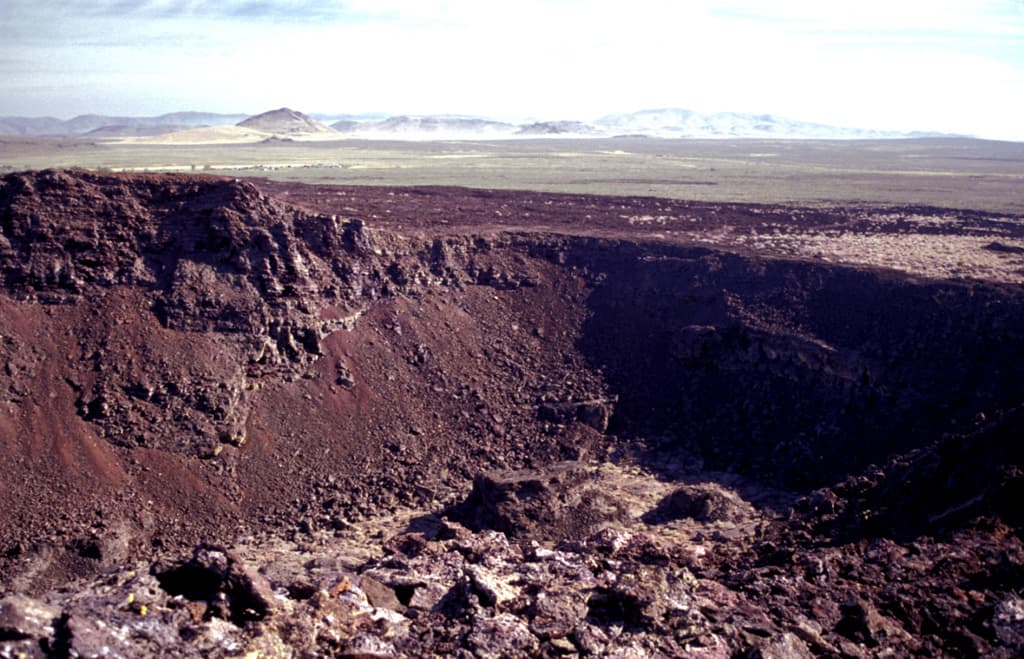
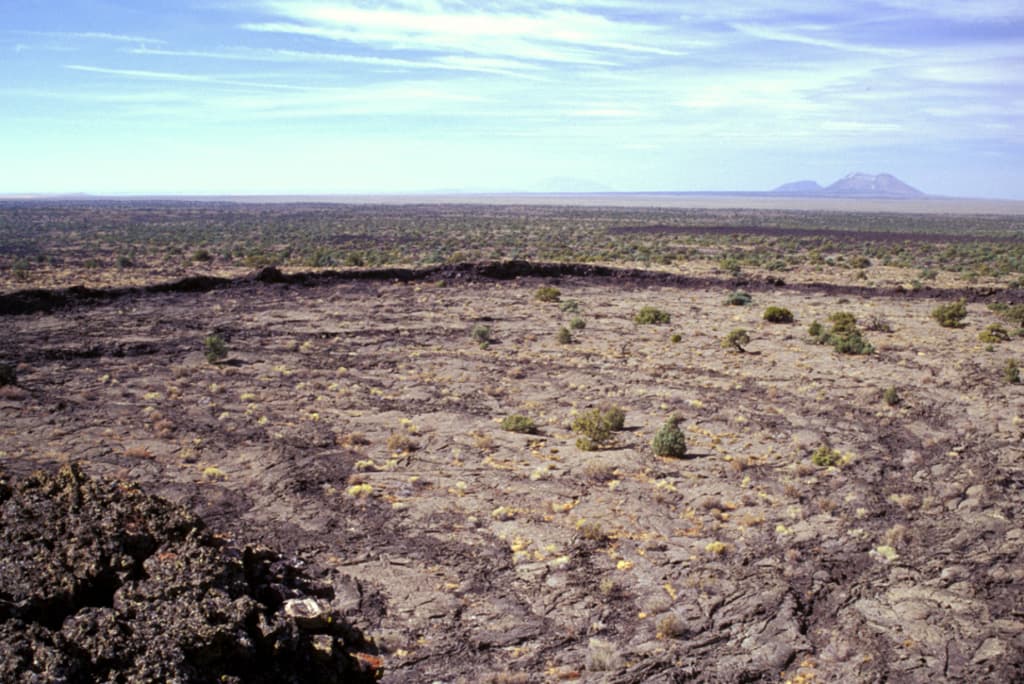
Craters of the Moon, the largest lava field of the Snake River Plain (SRP), covers about 1,600 km2 with more than 60 mapped lava flows erupted from eight fissure systems. About 25 cinder cones up to 250 m high formed primarily along a 45-km-long segment of the Great Rift, the principal 2-8 km wide fissure system that trends NW-SE through Craters of the Moon National Monument. Craters of the Moon lies at the NW part of the eastern SRP, with White Knob and the Pioneer Mountains along the northern boundary. The lava field was formed during eight eruptive episodes between about 15,000 and 2,000 years ago separated by quiescent periods up to about 3,000 years in duration. This contrasts with other SRP lava fields, which were formed during single eruptive episodes of relatively short duration. A complex assemblage of basaltic volcanic features is present, and cinder cones are common.
— Smithsonian Institution, Global Volcanism Program
14 Recorded Eruptions
How Craters of the Moon's 14 size-rated eruptions break down by Volcanic Explosivity Index. Select a bar to see what that size means.
Effusive — gentle lava flows with little to no explosion.
Of Craters of the Moon's 14 size-rated eruptions on record, the most common was VEI 0 (14 of 14, 100%). It is overwhelmingly effusive, erupting gently at nearly the same small size again and again — classic shield-building behaviour. No eruption on record exceeded VEI 0.
Based on the Smithsonian GVP eruption record. This describes Craters of the Moon's past eruptions only — it does not predict future activity. What is the VEI? · Most explosive volcanoes
| Year | VEI | Type | Area |
|---|---|---|---|
| 130 BCE | 0 | Confirmed Eruption | South of Big Craters, near Broken Top |
| 260 BCE | 0 | Confirmed Eruption | Big Craters, Trench Mortar Flat |
| 350 BCE | 0 | Confirmed Eruption | North Crater |
| 1680 BCE | 0 | Confirmed Eruption | Vermillion Chasm to Minidoka-Larkspur |
| 2560 BCE | 0 | Confirmed Eruption | Black Top Butte |
| 4070 BCE | 0 | Confirmed Eruption | Big Cinder Butte and vents to the SE |
| 4250 BCE | 0 | Confirmed Eruption | Sentinel Cone |
| 4600 BCE | 0 | Confirmed Eruption | Silent Cone |
| 5470 BCE | 0 | Confirmed Eruption | Grassy Cone |
| 5890 BCE | 0 | Confirmed Eruption | NW of Echo Crater |
| 8290 BCE | 0 | Confirmed Eruption | — |
| 8720 BCE | 0 | Confirmed Eruption | — |
| 9050 BCE | 0 | Confirmed Eruption | — |
| 10060 BCE | 0 | Confirmed Eruption | Sunset cone |
Real-Time Data
Frequently Asked Questions About Craters of the Moon
Is Craters of the Moon an active volcano?+
Craters of the Moon is not currently classified as active. Its activity evidence is listed as "Eruption Dated." The last known eruption was in 130 BCE. However, no volcano is ever considered permanently extinct.
When did Craters of the Moon last erupt?+
The most recent recorded eruption of Craters of the Moon occurred in 130 BCE with a Volcanic Explosivity Index (VEI) of 0. The eruption was classified as a "Confirmed Eruption." Craters of the Moon has 14 recorded eruptions in total.
How high is Craters of the Moon?+
Craters of the Moon has a summit elevation of 2,005 meters (6,578 feet) above sea level. At 2,005 meters, it is comparable in height to many significant mountain peaks and stands well above the tree line.
What type of volcano is Craters of the Moon?+
Craters of the Moon is classified as a Volcanic field. Volcanic fields consist of clusters of small volcanic vents and cinder cones spread across a region. Rather than a single central vent, eruptions can occur at many points across the field.
Where is Craters of the Moon located?+
Craters of the Moon is located in United States, in the North America Volcanic Regions. More specifically, it lies within the Yellowstone-Snake River Hotspot Volcano Group. Its exact coordinates are 43.371° latitude, -113.493° longitude.
Is it safe to visit Craters of the Moon?+
Craters of the Moon can generally be visited, but as with any volcano, visitors should check local conditions and any advisory notices before traveling. United States may have specific regulations for accessing volcanic areas. Guided tours are often the safest and most informative way to experience a volcano.