About Silverthrone
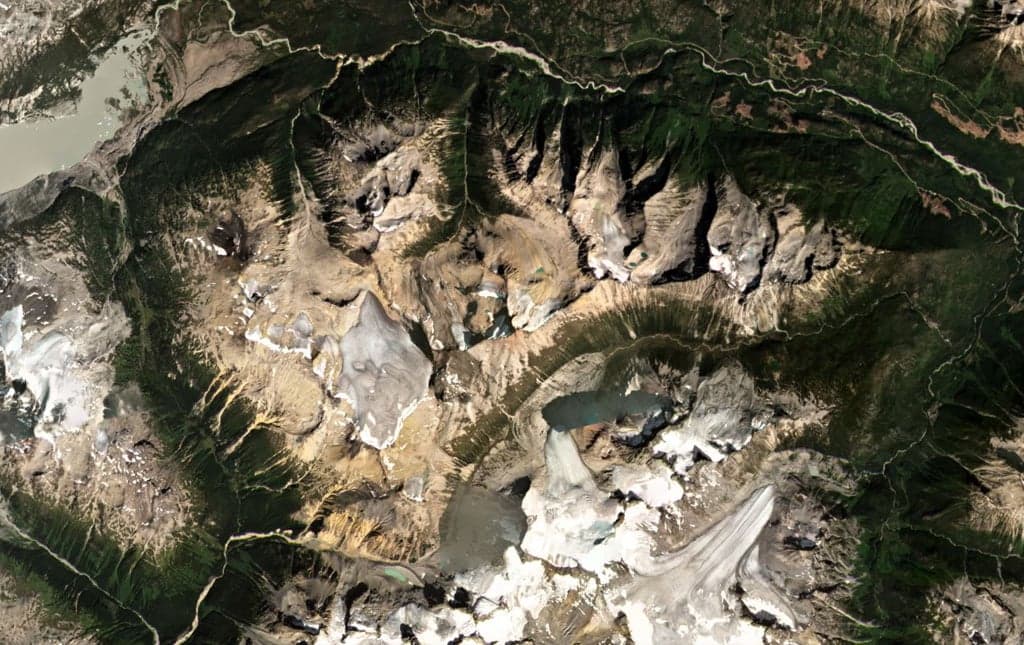
Silverthrone is a caldera rising to 2,860 meters (9,384 feet) in Canada's North America Volcanic Regions. No historical eruptions have been recorded, though the volcano is classified based on geological evidence of past activity.
Geography & Climate
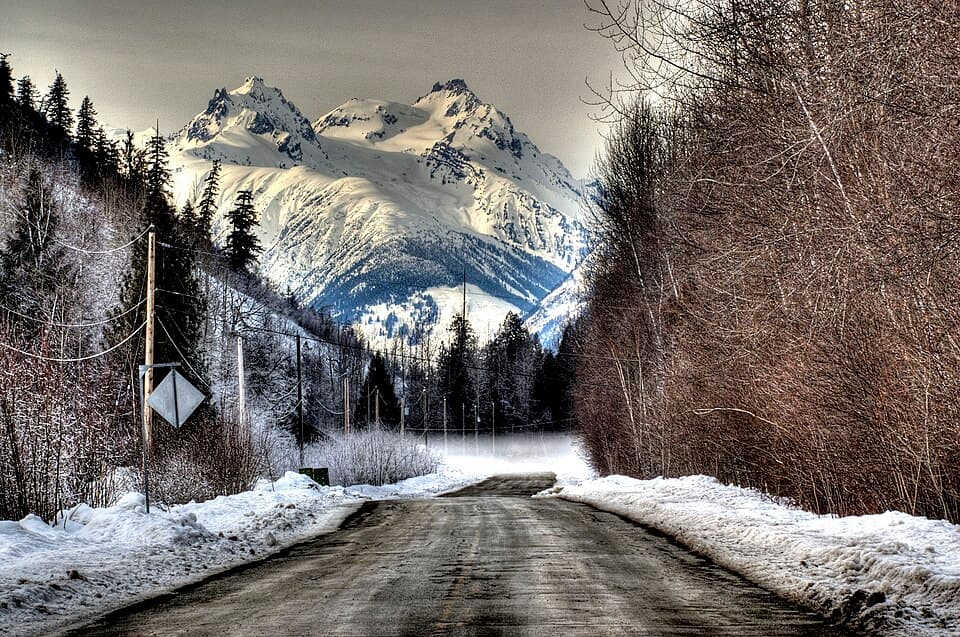
Silverthrone is located in Canada, within the Garibaldi Volcanic Arc of the broader North America Volcanic Regions. Situated at 51.52° N, 126.11° W in the Northern Hemisphere, the volcano lies within a temperate climate zone. At 2,860 meters above sea level, Silverthrone rises above the surrounding terrain into montane or subalpine conditions. The elevation creates distinct ecological zones along its flanks, from forested lower slopes to exposed rocky terrain near the summit. The volcanic landform is characterized as a composite, which describes the physical shape and structure of the volcanic edifice as observed from the surface.
Geological Context
Silverthrone sits in a subduction zone, where one tectonic plate dives beneath another, creating intense heat and pressure that generates magma. Subduction zones are responsible for many of the world's most explosive volcanoes and deadliest eruptions. For communities in Canada near Silverthrone, this tectonic setting means the volcano is capable of producing powerful explosive eruptions, pyroclastic flows, and lahars that can threaten populated areas within tens of kilometers of the summit. The dominant rock type is andesite / basaltic andesite, a dark, fine-grained volcanic rock that forms from rapidly cooling, low-viscosity lava. Basaltic eruptions tend to be less explosive and produce fluid lava flows that can travel long distances. While less immediately dangerous than explosive eruptions, basaltic lava flows can destroy structures and infrastructure in their path, and volcanic gases released during these eruptions can affect air quality over a wide area.
GVP Reference Summary
The Silverthrone volcanic complex lies near the coast in SW British Columbia, 55 km N of Kingcome Inlet and 60 km NW of Knight Inlet. The roughly circular, 20-km-wide, deeply dissected caldera complex contains rhyolitic, dacitic and andesitic lava domes, lava flows, and breccia. The bulk of the complex appears to have been erupted between 100,000 and 500,000 years ago, but postglacial andesitic and basaltic andesite cones and lava flows are also present. Anomalously old Potassium-Argon (K-Ar) dates of 1.0 and 1.1 Ma were obtained from a lava flow in the postglacial Pashleth and Machmel Creek valleys (Green et al., 1988). This flow is clearly much younger than the K-Ar date, and high-energy glacial streams have only begun to etch a channel along the margin. A radiocarbon date from barnacles 8.5 km upstream from the mouth of Machmel River, and buried by the flow, yielded an age of 12,200 +/- 140 years (Blake, 1985). This is a maximum age for the flow, which could be much younger (Hickson and Edwards, 2001).
— Smithsonian Institution, Global Volcanism Program
0 Recorded Eruptions
No eruption records available for Silverthrone.
Real-Time Data
Frequently Asked Questions About Silverthrone
Is Silverthrone an active volcano?+
Silverthrone is classified as active based on credible evidence of past eruptions. Although its last known eruption was in prehistoric times, volcanologists consider it capable of erupting again.
How high is Silverthrone?+
Silverthrone has a summit elevation of 2,860 meters (9,384 feet) above sea level. At 2,860 meters, it is comparable in height to many significant mountain peaks and stands well above the tree line.
What type of volcano is Silverthrone?+
Silverthrone is classified as a Caldera. Calderas are large volcanic depressions formed when a volcano erupts so powerfully that its magma chamber collapses, creating a basin that can be kilometers wide. They are often sites of some of Earth's largest eruptions.
Where is Silverthrone located?+
Silverthrone is located in Canada, in the North America Volcanic Regions. More specifically, it lies within the Garibaldi Volcanic Arc. Its exact coordinates are 51.518° latitude, -126.113° longitude.
Is it safe to visit Silverthrone?+
Silverthrone can generally be visited, but as with any volcano, visitors should check local conditions and any advisory notices before traveling. Canada may have specific regulations for accessing volcanic areas. Guided tours are often the safest and most informative way to experience a volcano.