About Wells Gray-Clearwater
Wells Gray-Clearwater is a volcanic field rising to 950 meters (3,117 feet) in Canada's North America Volcanic Regions. Its last known eruption was in 1550 CE. The volcano has produced 2 recorded eruptions.
Geography & Climate
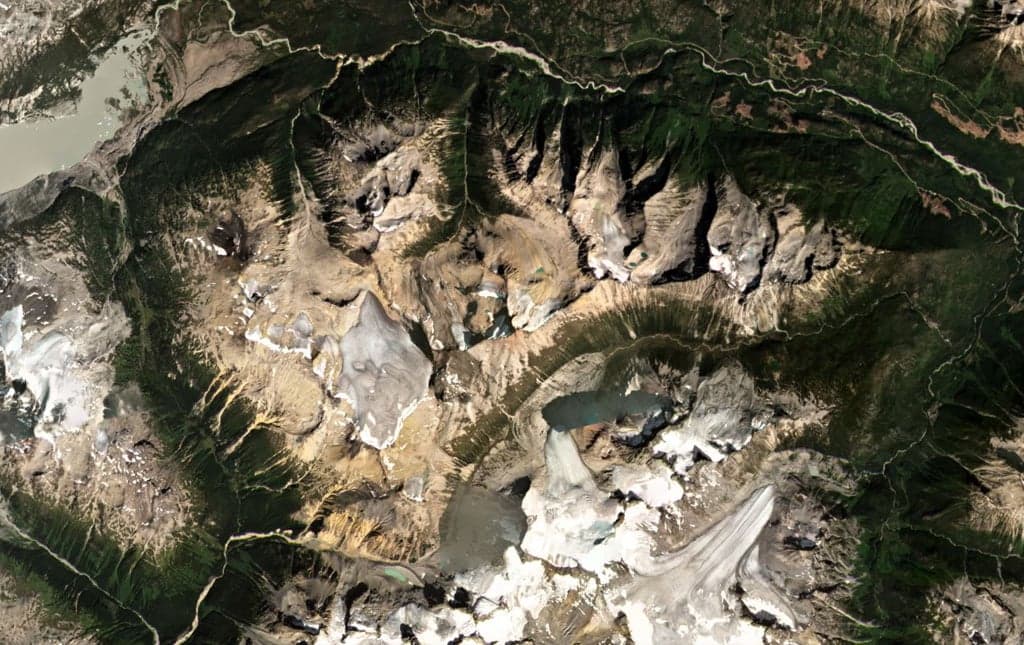
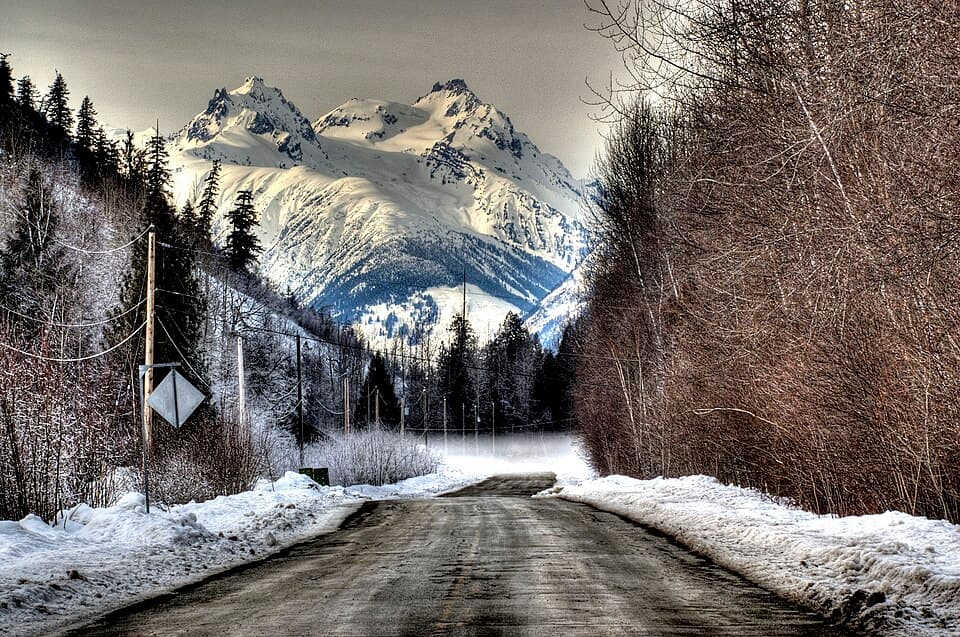
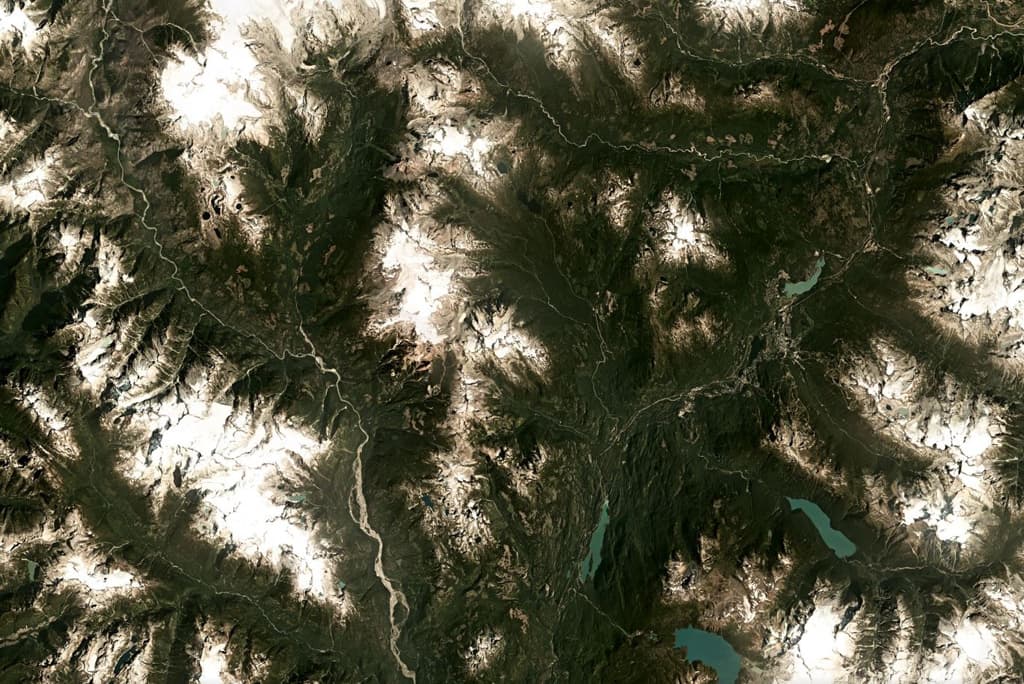
Wells Gray-Clearwater is located in Canada, within the Interior Western Canada Volcanic Province of the broader North America Volcanic Regions. Situated at 52.03° N, 120.11° W in the Northern Hemisphere, the volcano lies within a temperate climate zone. With a summit elevation of 950 meters above sea level, Wells Gray-Clearwater is a moderately sized peak that remains accessible to hikers and researchers for much of the year. The volcanic landform is characterized as a cluster, which describes the physical shape and structure of the volcanic edifice as observed from the surface.
Geological Context
Wells Gray-Clearwater is an intraplate volcano, meaning it formed away from any plate boundary. These volcanoes are often powered by hotspots — plumes of abnormally hot mantle material rising from deep within the Earth. Hotspot volcanoes like Wells Gray-Clearwater tend to produce effusive eruptions with lava flows that can be relatively predictable, giving nearby communities in Canada more time to prepare. However, they can also produce explosive phases, particularly when magma interacts with groundwater. The dominant rock type is basalt / picro-basalt, a dark, fine-grained volcanic rock that forms from rapidly cooling, low-viscosity lava. Basaltic eruptions tend to be less explosive and produce fluid lava flows that can travel long distances. While less immediately dangerous than explosive eruptions, basaltic lava flows can destroy structures and infrastructure in their path, and volcanic gases released during these eruptions can affect air quality over a wide area.
Eruption History Summary
Wells Gray-Clearwater has 2 recorded eruptions in the geological database, spanning from 5650 BCE to 1550 CE. These eruptions span roughly 7,200 years of volcanic history.
GVP Reference Summary
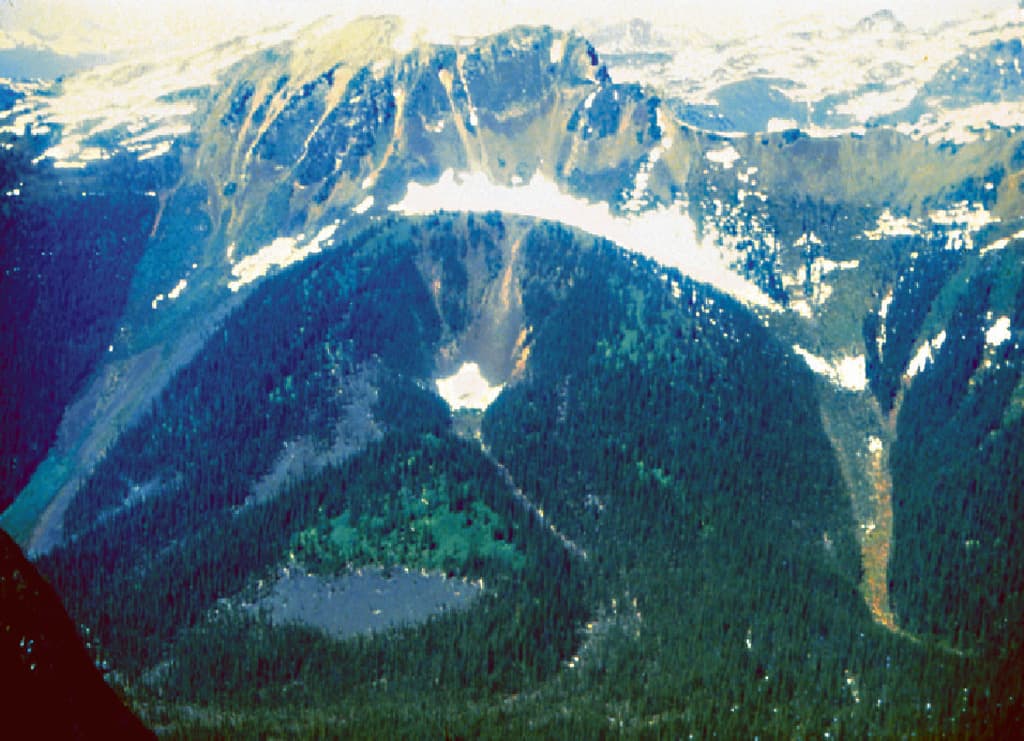
The Wells Gray-Clearwater volcanic field in the Quesnel Highland of east-central British Columbia contains basaltic cones and lava flows of early Pleistocene to Holocene age. Pleistocene deposits include plateau-capping lava flows, subglacial mounds and tuyas, and hyaloclastites. Buck Hill Cone was erupted during the latest Pleistocene during the waning stages of the Fraser glaciation. Holocene eruptions took place in the Spanish Creek, Ray Lake, and Kostal Lake areas (Hickson and Souther, 1984), forming cinder cones and producing lava flows that traveled up to 14 km. A lava flow from Dragon cone was radiocarbon dated at about 7,600 years ago, and flows from Flourmill, Kostal, and Spanish Lake Cones rest on glaciated bedrock without an intervening paleosol, suggesting an early Holocene age. The latest eruption took place from Kostal cone about 400 years ago (Hickson and Edwards, 2001).
— Smithsonian Institution, Global Volcanism Program
2 Recorded Eruptions
| Year | VEI | Type | Area |
|---|---|---|---|
| 1550 | — | Confirmed Eruption | Kostal Cone |
| 5650 BCE | — | Confirmed Eruption | Dragon Cone |
Real-Time Data
Frequently Asked Questions About Wells Gray-Clearwater
Is Wells Gray-Clearwater an active volcano?+
Wells Gray-Clearwater is not currently classified as active. Its activity evidence is listed as "Eruption Dated." The last known eruption was in 1550 CE. However, no volcano is ever considered permanently extinct.
When did Wells Gray-Clearwater last erupt?+
The most recent recorded eruption of Wells Gray-Clearwater occurred in 1550 CE. The eruption was classified as a "Confirmed Eruption." Wells Gray-Clearwater has 2 recorded eruptions in total.
How high is Wells Gray-Clearwater?+
Wells Gray-Clearwater has a summit elevation of 950 meters (3,117 feet) above sea level. At 950 meters, it is a relatively low-elevation volcano.
What type of volcano is Wells Gray-Clearwater?+
Wells Gray-Clearwater is classified as a Volcanic field. Volcanic fields consist of clusters of small volcanic vents and cinder cones spread across a region. Rather than a single central vent, eruptions can occur at many points across the field.
Where is Wells Gray-Clearwater located?+
Wells Gray-Clearwater is located in Canada, in the North America Volcanic Regions. More specifically, it lies within the Interior Western Canada Volcanic Province. Its exact coordinates are 52.031° latitude, -120.112° longitude.
Is it safe to visit Wells Gray-Clearwater?+
Wells Gray-Clearwater can generally be visited, but as with any volcano, visitors should check local conditions and any advisory notices before traveling. Canada may have specific regulations for accessing volcanic areas. Guided tours are often the safest and most informative way to experience a volcano.