About Sheveluch
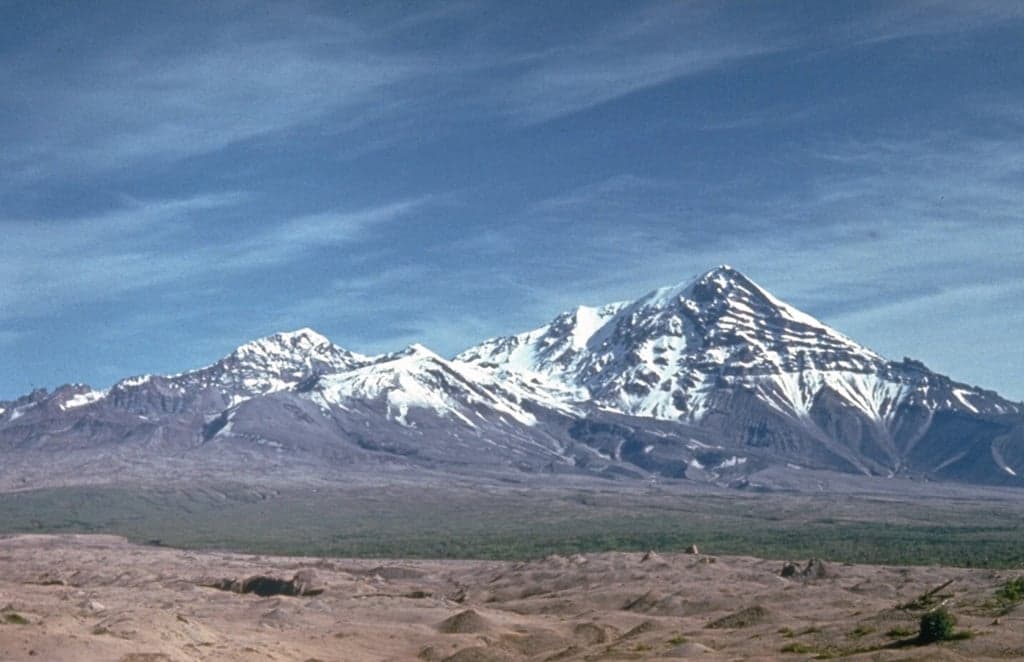
Sheveluch is a stratovolcano rising to 3,283 meters (10,772 feet) in Russia's Northwestern Pacific Volcanic Regions. The volcano is currently active, with its most recent eruption in 2025 CE. The volcano has produced 103 recorded eruptions, with a maximum Volcanic Explosivity Index (VEI) of 5.
Geography & Climate
Sheveluch is located in Russia, within the Eastern Kamchatka Volcanic Arc of the broader Northwestern Pacific Volcanic Regions. Situated at 56.65° N, 161.36° E in the Northern Hemisphere, the volcano lies within a subarctic climate zone. At 3,283 meters above sea level, Sheveluch rises above the surrounding terrain into montane or subalpine conditions. The elevation creates distinct ecological zones along its flanks, from forested lower slopes to exposed rocky terrain near the summit. The volcanic landform is characterized as a composite, which describes the physical shape and structure of the volcanic edifice as observed from the surface.
Geological Context
Sheveluch sits in a subduction zone, where one tectonic plate dives beneath another, creating intense heat and pressure that generates magma. Subduction zones are responsible for many of the world's most explosive volcanoes and deadliest eruptions. For communities in Russia near Sheveluch, this tectonic setting means the volcano is capable of producing powerful explosive eruptions, pyroclastic flows, and lahars that can threaten populated areas within tens of kilometers of the summit. The dominant rock type is andesite / basaltic andesite, a dark, fine-grained volcanic rock that forms from rapidly cooling, low-viscosity lava. Basaltic eruptions tend to be less explosive and produce fluid lava flows that can travel long distances. While less immediately dangerous than explosive eruptions, basaltic lava flows can destroy structures and infrastructure in their path, and volcanic gases released during these eruptions can affect air quality over a wide area.
Eruption History Summary
Sheveluch has 103 recorded eruptions in the geological database, spanning from 8500 BCE to 1999 CE. The most powerful recorded event was a paroxysmal eruption with devastating regional consequences in 1854 CE, reaching VEI 5 on the Volcanic Explosivity Index. Notable eruptions include 1999 CE (VEI 4), 1998 CE (VEI 3), 1990 CE (VEI 3). With an average interval of roughly 102 years between eruptions over a span of 10,499 years, this is one of the more frequently active volcanoes in the database. This persistent activity suggests a robust and well-supplied magma system beneath the volcano. The most recent eruption in 1999 CE places this volcano within the modern era of volcanological observation.
Significance
With a maximum recorded VEI of 5, Sheveluch has demonstrated the capacity for paroxysmal eruptions comparable to the 1980 eruption of Mount St. Helens. Eruptions of this scale can devastate areas within 20-30 kilometers and produce ash fall that disrupts aviation and agriculture across hundreds of kilometers. Its 103 recorded eruptions make it one of the most prolific volcanoes in the entire global volcanic record, reflecting an exceptionally persistent magma supply system that has sustained near-continuous eruptive activity over millennia. Given its recent activity, Sheveluch is closely monitored by geological survey organizations to provide early warning of future unrest.
GVP Reference Summary
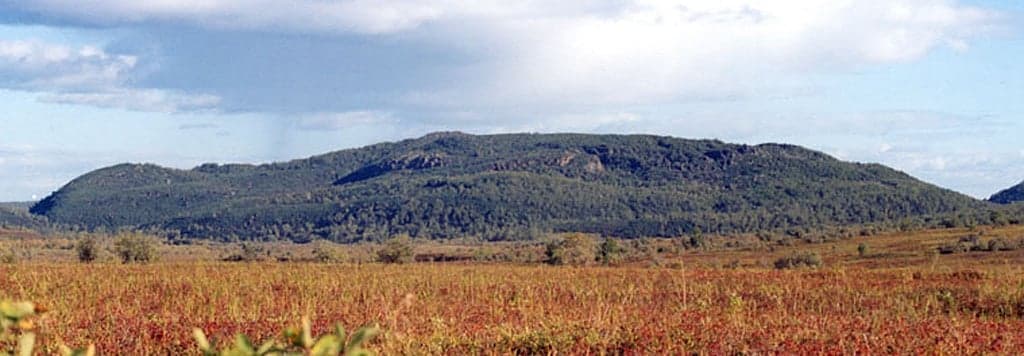
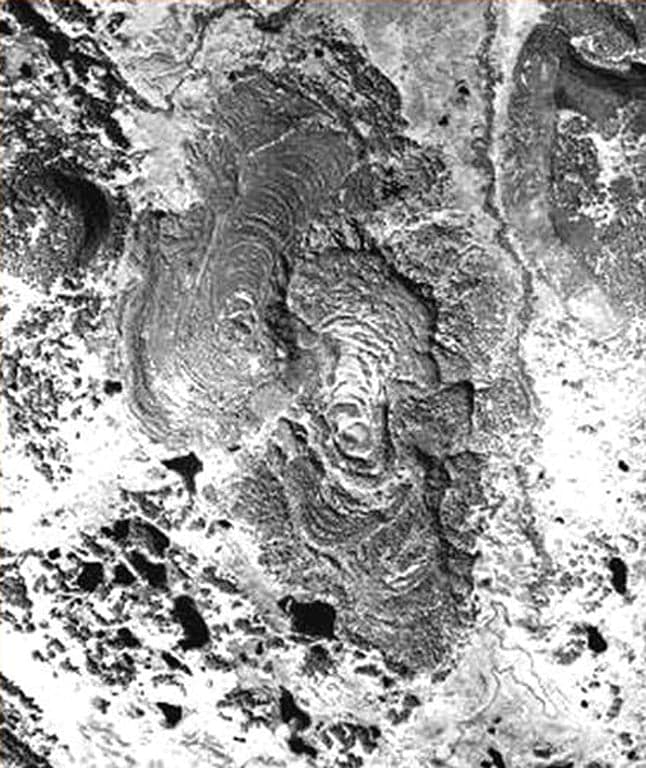
The high, isolated massif of Sheveluch volcano (also spelled Shiveluch) rises above the lowlands NNE of the Kliuchevskaya volcano group. The 1,300 km3 andesitic volcano is one of Kamchatka's largest and most active volcanic structures, with at least 60 large eruptions during the Holocene. The summit of roughly 65,000-year-old Stary Shiveluch is truncated by a broad 9-km-wide late-Pleistocene caldera breached to the south. Many lava domes occur on its outer flanks. The Molodoy Shiveluch lava dome complex was constructed during the Holocene within the large open caldera; Holocene lava dome extrusion also took place on the flanks of Stary Shiveluch. Widespread tephra layers from these eruptions have provided valuable time markers for dating volcanic events in Kamchatka. Frequent collapses of dome complexes, most recently in 1964, have produced debris avalanches whose deposits cover much of the floor of the breached caldera.
— Smithsonian Institution, Global Volcanism Program
103 Recorded Eruptions
How Sheveluch's 102 size-rated eruptions break down by Volcanic Explosivity Index. Select a bar to see what that size means.
Severe — plumes of 3–15 km with regional ashfall and pyroclastic flows.
Of Sheveluch's 102 size-rated eruptions on record, the most common was VEI 3 (48 of 102, 47%). Its record is centred on moderate explosive eruptions (VEI 2–3), with larger events far rarer. The largest on record reached VEI 5.
Based on the Smithsonian GVP eruption record. This describes Sheveluch's past eruptions only — it does not predict future activity. What is the VEI? · Most explosive volcanoes
| Year | VEI | Type | Area |
|---|---|---|---|
| 1999 | 2 | Confirmed Eruption | — |
| 1999 – 2025 | 4 | Confirmed Eruption | — |
| 1998 | 3 | Confirmed Eruption | — |
| 1997 | 2 | Confirmed Eruption | — |
| 1990 – 1995 | 3 | Confirmed Eruption | — |
| 1989 | 2 | Confirmed Eruption | — |
| 1988 | 2 | Confirmed Eruption | — |
| 1986 – 1988 | 3 | Confirmed Eruption | — |
| 1985 | 2 | Confirmed Eruption | — |
| 1984 | 2 | Confirmed Eruption | — |
| 1980 – 1981 | 1 | Confirmed Eruption | Center of 1964 crater |
| 1964 | 4 | Confirmed Eruption | Molodoy Sheveluch summit domes |
| 1944 – 1950 | 2 | Confirmed Eruption | Suelich |
| 1930 | 1 | Confirmed Eruption | — |
| 1928 – 1929 | 1 | Confirmed Eruption | — |
| 1905 | — | Confirmed Eruption | — |
| 1897 – 1898 | 2 | Confirmed Eruption | — |
| 1879 – 1883 | 3 | Confirmed Eruption | — |
| 1854 | 5 | Confirmed Eruption | — |
| 1800 | 3 | Uncertain Eruption | — |
| 1739 | 3 | Confirmed Eruption | — |
| 1700 | 3 | Confirmed Eruption | — |
| 1652 | 5 | Confirmed Eruption | — |
| 1550 | 3 | Confirmed Eruption | — |
| 1430 | 4 | Confirmed Eruption | — |
| 1150 | 3 | Confirmed Eruption | — |
| 1034 | 5 | Confirmed Eruption | — |
| 1020 | 3 | Confirmed Eruption | — |
| 970 | 4 | Confirmed Eruption | — |
| 750 | 3 | Confirmed Eruption | — |
| 700 | 3 | Confirmed Eruption | — |
| 650 | 5 | Confirmed Eruption | — |
| 630 | 3 | Confirmed Eruption | Western flank (Karan) |
| 600 | 5 | Confirmed Eruption | — |
| 580 | 4 | Confirmed Eruption | — |
| 530 | 3 | Confirmed Eruption | — |
| 500 | 4 | Confirmed Eruption | — |
| 380 | 3 | Confirmed Eruption | — |
| 250 | 4 | Confirmed Eruption | — |
| 230 | 3 | Confirmed Eruption | — |
| 170 | 3 | Confirmed Eruption | — |
| 120 | 3 | Confirmed Eruption | — |
| 100 | 4 | Confirmed Eruption | — |
| 10 BCE | 3 | Confirmed Eruption | — |
| 150 BCE | 3 | Confirmed Eruption | West flank (Karan) |
| 300 BCE | 4 | Confirmed Eruption | West flank (Karan) |
| 400 BCE | 3 | Confirmed Eruption | West flank (Karan) |
| 500 BCE | 4 | Confirmed Eruption | — |
| 650 BCE | 3 | Confirmed Eruption | — |
| 780 BCE | 4 | Confirmed Eruption | — |
| 900 BCE | 3 | Confirmed Eruption | — |
| 950 BCE | 5 | Confirmed Eruption | — |
| 1010 BCE | 3 | Confirmed Eruption | — |
| 1330 BCE | 3 | Confirmed Eruption | — |
| 1500 BCE | 3 | Confirmed Eruption | — |
| 1650 BCE | 3 | Confirmed Eruption | — |
| 1700 BCE | 4 | Confirmed Eruption | — |
| 2000 BCE | 5 | Confirmed Eruption | — |
| 2100 BCE | 5 | Confirmed Eruption | — |
| 2150 BCE | 3 | Confirmed Eruption | — |
| 2200 BCE | 4 | Confirmed Eruption | — |
| 2490 BCE | 3 | Confirmed Eruption | — |
| 2530 BCE | 3 | Confirmed Eruption | — |
| 2620 BCE | 5 | Confirmed Eruption | — |
| 2750 BCE | 3 | Confirmed Eruption | — |
| 2900 BCE | 3 | Confirmed Eruption | — |
| 3050 BCE | 3 | Confirmed Eruption | — |
| 3200 BCE | 4 | Confirmed Eruption | — |
| 3500 BCE | 5 | Confirmed Eruption | — |
| 3650 BCE | 5 | Confirmed Eruption | — |
| 4250 BCE | 3 | Confirmed Eruption | — |
| 4350 BCE | 3 | Confirmed Eruption | — |
| 4400 BCE | 5 | Confirmed Eruption | — |
| 4530 BCE | 3 | Confirmed Eruption | — |
| 4900 BCE | 3 | Confirmed Eruption | — |
| 5400 BCE | 3 | Confirmed Eruption | — |
| 5500 BCE | 5 | Confirmed Eruption | — |
| 6000 BCE | 3 | Confirmed Eruption | — |
| 6100 BCE | 3 | Confirmed Eruption | — |
| 6200 BCE | 3 | Confirmed Eruption | — |
| 6350 BCE | 4 | Confirmed Eruption | — |
| 6380 BCE | 4 | Confirmed Eruption | — |
| 6400 BCE | 4 | Confirmed Eruption | — |
| 6500 BCE | 3 | Confirmed Eruption | — |
| 6600 BCE | 4 | Confirmed Eruption | — |
| 6800 BCE | 5 | Confirmed Eruption | — |
| 7000 BCE | 3 | Confirmed Eruption | — |
| 7150 BCE | 5 | Confirmed Eruption | — |
| 7300 BCE | 5 | Confirmed Eruption | — |
| 7400 BCE | 5 | Confirmed Eruption | — |
| 7500 BCE | 4 | Confirmed Eruption | — |
| 7550 BCE | 3 | Confirmed Eruption | — |
| 7600 BCE | 4 | Confirmed Eruption | — |
| 7630 BCE | 4 | Confirmed Eruption | — |
| 7700 BCE | 4 | Confirmed Eruption | — |
| 7750 BCE | 3 | Confirmed Eruption | — |
| 7850 BCE | 3 | Confirmed Eruption | — |
| 7950 BCE | 4 | Confirmed Eruption | — |
| 8100 BCE | 4 | Confirmed Eruption | — |
| 8200 BCE | 4 | Confirmed Eruption | — |
| 8350 BCE | 4 | Confirmed Eruption | — |
| 8450 BCE | 3 | Confirmed Eruption | — |
| 8500 BCE | 3 | Confirmed Eruption | — |
Real-Time Data
Frequently Asked Questions About Sheveluch
Is Sheveluch an active volcano?+
Yes, Sheveluch is considered an active volcano. Its most recent eruption was in 2025 CE. The volcano is monitored by geological agencies, and its activity status is based on observed eruptions within recorded history.
When did Sheveluch last erupt?+
The most recent recorded eruption of Sheveluch occurred in 1999 CE with a Volcanic Explosivity Index (VEI) of 2. The eruption was classified as a "Confirmed Eruption." Sheveluch has 103 recorded eruptions in total.
How high is Sheveluch?+
Sheveluch has a summit elevation of 3,283 meters (10,772 feet) above sea level. At 3,283 meters, it is comparable in height to many significant mountain peaks and stands well above the tree line.
What type of volcano is Sheveluch?+
Sheveluch is classified as a Stratovolcano. Stratovolcanoes (also called composite volcanoes) are steep, conical volcanoes built up by many layers of hardened lava, tephra, and volcanic ash. They are among the most common and dangerous types, known for explosive eruptions.
Where is Sheveluch located?+
Sheveluch is located in Russia, in the Northwestern Pacific Volcanic Regions. More specifically, it lies within the Eastern Kamchatka Volcanic Arc. Its exact coordinates are 56.653° latitude, 161.360° longitude.
Is it safe to visit Sheveluch?+
Visiting Sheveluch requires checking current volcanic activity and alert levels. As an active volcano with eruptions as recent as 2025 CE, conditions can change rapidly. Always consult local geological authorities and follow official warnings before visiting. Many active volcanoes have designated safe viewing areas and guided tour options.