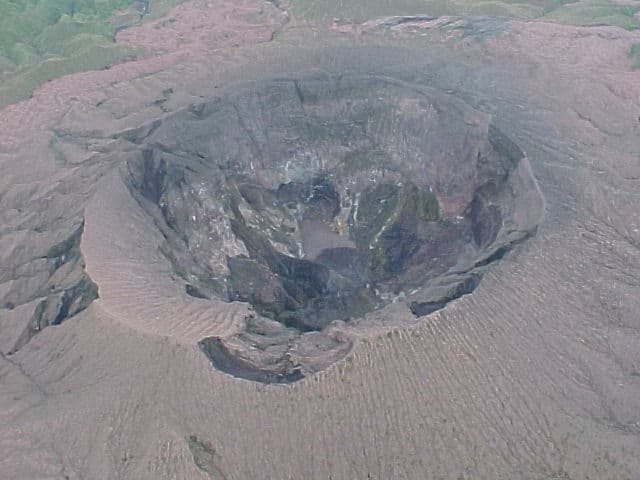
About Dukono
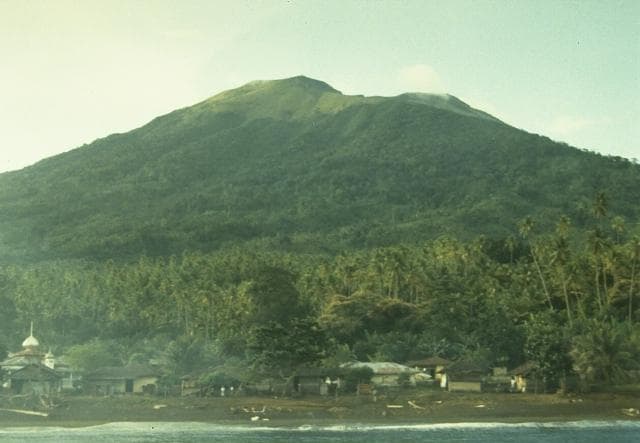
Dukono is a complex rising to 1,273 meters (4,177 feet) in Indonesia's Western Pacific Volcanic Regions. The volcano is currently active, with its most recent eruption in 2025 CE. The volcano has produced 5 recorded eruptions, with a maximum Volcanic Explosivity Index (VEI) of 3.
Geography & Climate
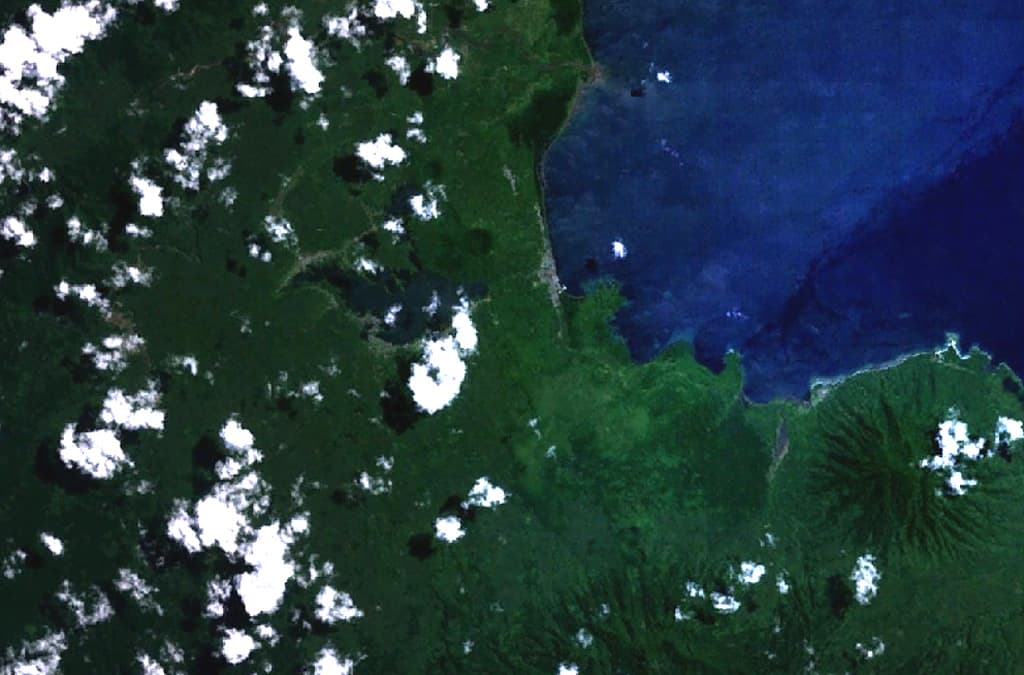
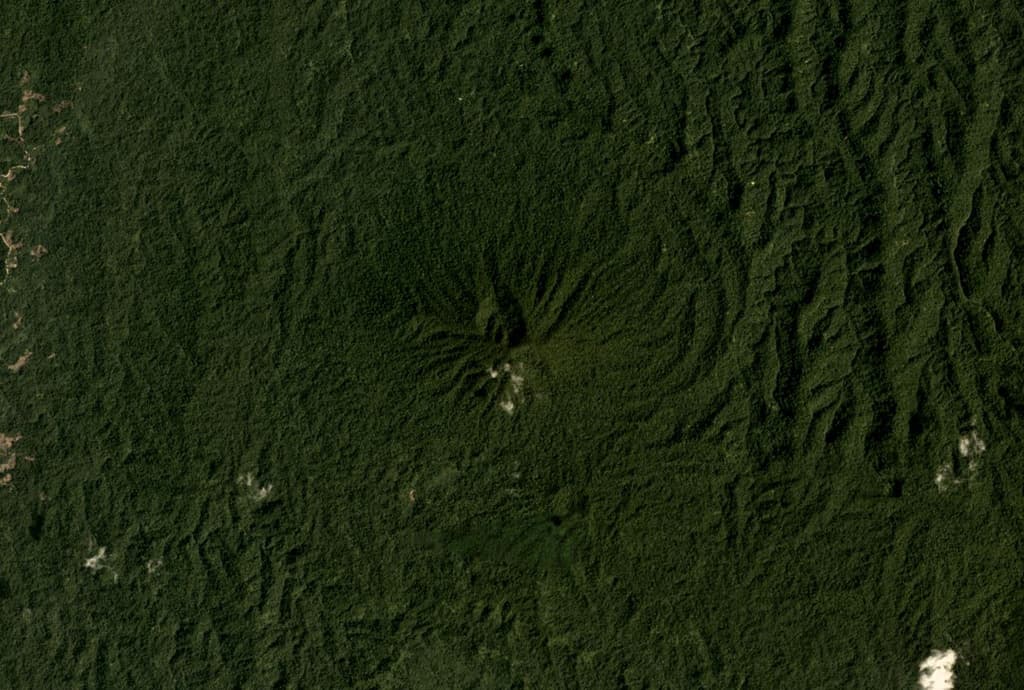
Dukono is located in Indonesia, within the Halmahera Volcanic Arc of the broader Western Pacific Volcanic Regions. Situated at 1.70° N, 127.88° E in the Northern Hemisphere, the volcano lies within a tropical climate zone. With a summit elevation of 1,273 meters above sea level, Dukono is a moderately sized peak that remains accessible to hikers and researchers for much of the year. The volcanic landform is characterized as a composite, which describes the physical shape and structure of the volcanic edifice as observed from the surface.
Geological Context
Dukono sits in a subduction zone, where one tectonic plate dives beneath another, creating intense heat and pressure that generates magma. Subduction zones are responsible for many of the world's most explosive volcanoes and deadliest eruptions. For communities in Indonesia near Dukono, this tectonic setting means the volcano is capable of producing powerful explosive eruptions, pyroclastic flows, and lahars that can threaten populated areas within tens of kilometers of the summit. The dominant rock type is andesite / basaltic andesite, a dark, fine-grained volcanic rock that forms from rapidly cooling, low-viscosity lava. Basaltic eruptions tend to be less explosive and produce fluid lava flows that can travel long distances. While less immediately dangerous than explosive eruptions, basaltic lava flows can destroy structures and infrastructure in their path, and volcanic gases released during these eruptions can affect air quality over a wide area.
Eruption History Summary
Dukono has 5 recorded eruptions in the geological database, spanning from 1550 CE to 2025 CE. The most powerful recorded event was a severe eruption capable of regional ash fall and pyroclastic flows in 1933 CE, reaching VEI 3 on the Volcanic Explosivity Index. Notable eruptions include 1933 CE (VEI 3), 1550 CE (VEI 3). This eruption frequency indicates a moderately active volcanic system with periodic reawakenings. With eruptive activity as recently as 2025 CE, Dukono remains an actively monitored volcano.
Significance
With a maximum recorded VEI of 3, Dukono has produced eruptions capable of generating pyroclastic flows and significant ash fall in the surrounding area. While not among the largest eruptions globally, VEI 3 events pose serious hazards to local populations and can disrupt regional air travel. With 5 recorded eruptions on file, Dukono has enough documented activity to help scientists identify patterns in its eruptive behavior.
GVP Reference Summary
The Dukono complex in northern Halmahera is on an edifice with a broad, low profile containing multiple peaks and overlapping craters. Almost continuous explosive eruptions, sometimes accompanied by lava flows, have occurred since 1933. During a major eruption in 1550 CE, a lava flow filled in the strait between Halmahera and the Gunung Mamuya cone, 10 km NE. Malupang Wariang, 1 km SW of the summit crater complex, contains a 700 x 570 m crater that has also had reported eruptions.
— Smithsonian Institution, Global Volcanism Program
5 Recorded Eruptions
How Dukono's 4 size-rated eruptions break down by Volcanic Explosivity Index. Select a bar to see what that size means.
Severe — plumes of 3–15 km with regional ashfall and pyroclastic flows.
Of Dukono's 4 size-rated eruptions on record, the most common was VEI 3 (2 of 4, 50%). Its record is centred on moderate explosive eruptions (VEI 2–3), with larger events far rarer. No eruption on record exceeded VEI 3.
Based on the Smithsonian GVP eruption record. This describes Dukono's past eruptions only — it does not predict future activity. What is the VEI? · Most explosive volcanoes
| Year | VEI | Type | Area |
|---|---|---|---|
| 1933 – 2025 | 3 | Confirmed Eruption | Malupang Magiwe and Malupang Warirang |
| 1901 | 2 | Confirmed Eruption | — |
| 1868 | 2 | Confirmed Eruption | — |
| 1719 | — | Confirmed Eruption | East flank of Tolo |
| 1550 | 3 | Confirmed Eruption | — |
Real-Time Data
Frequently Asked Questions About Dukono
Is Dukono an active volcano?+
Yes, Dukono is considered an active volcano. Its most recent eruption was in 2025 CE. The volcano is monitored by geological agencies, and its activity status is based on observed eruptions within recorded history.
When did Dukono last erupt?+
The most recent recorded eruption of Dukono began in 1933 CE and continued until 2025 CE with a Volcanic Explosivity Index (VEI) of 3. The eruption was classified as a "Confirmed Eruption." Dukono has 5 recorded eruptions in total.
How high is Dukono?+
Dukono has a summit elevation of 1,273 meters (4,177 feet) above sea level. At 1,273 meters, it is a moderately sized volcanic peak, roughly comparable to Mount Vesuvius (1,281m).
What type of volcano is Dukono?+
Dukono is classified as a Complex. Complex volcanoes have distinct geological characteristics that set them apart from other volcanic types.
Where is Dukono located?+
Dukono is located in Indonesia, in the Western Pacific Volcanic Regions. More specifically, it lies within the Halmahera Volcanic Arc. Its exact coordinates are 1.699° latitude, 127.878° longitude.
Is it safe to visit Dukono?+
Visiting Dukono requires checking current volcanic activity and alert levels. As an active volcano with eruptions as recent as 2025 CE, conditions can change rapidly. Always consult local geological authorities and follow official warnings before visiting. Many active volcanoes have designated safe viewing areas and guided tour options.