About Lake Turkana North Island
Lake Turkana North Island is a tuff cone(s) rising to 490 meters (1,608 feet) in Kenya's Eastern Africa Volcanic Regions. No historical eruptions have been recorded, though the volcano is classified based on geological evidence of past activity.
Geography & Climate
Lake Turkana North Island is located in Kenya, within the Kenyan Rift Volcanic Province of the broader Eastern Africa Volcanic Regions. Situated at 4.06° N, 36.05° E in the Northern Hemisphere, the volcano lies within a tropical climate zone. At just 490 meters above sea level, Lake Turkana North Island is a relatively low-elevation volcanic feature. Despite its modest height, it remains an active geological formation with the same underlying magmatic processes as its taller counterparts. The volcanic landform is characterized as a minor (basaltic), which describes the physical shape and structure of the volcanic edifice as observed from the surface.
Geological Context
Lake Turkana North Island is situated along a rift zone, where tectonic plates are pulling apart. As the crust thins and fractures, magma rises to fill the gap, creating volcanic activity. Rift volcanism typically produces more fluid lava flows rather than explosive blasts, which means communities near Lake Turkana North Island in Kenya generally face slower-moving hazards like lava flows and ground fissures rather than sudden pyroclastic events. However, rift volcanoes can still generate significant ash emissions and gas releases that affect local air quality. The dominant rock type is trachyandesite / basaltic trachyandesite, a dark, fine-grained volcanic rock that forms from rapidly cooling, low-viscosity lava. Basaltic eruptions tend to be less explosive and produce fluid lava flows that can travel long distances. While less immediately dangerous than explosive eruptions, basaltic lava flows can destroy structures and infrastructure in their path, and volcanic gases released during these eruptions can affect air quality over a wide area.
GVP Reference Summary
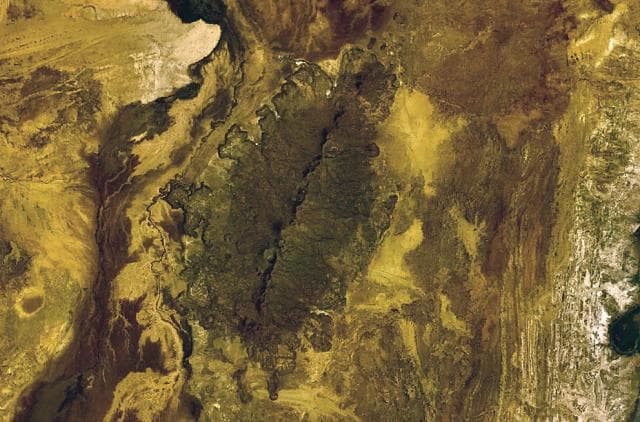
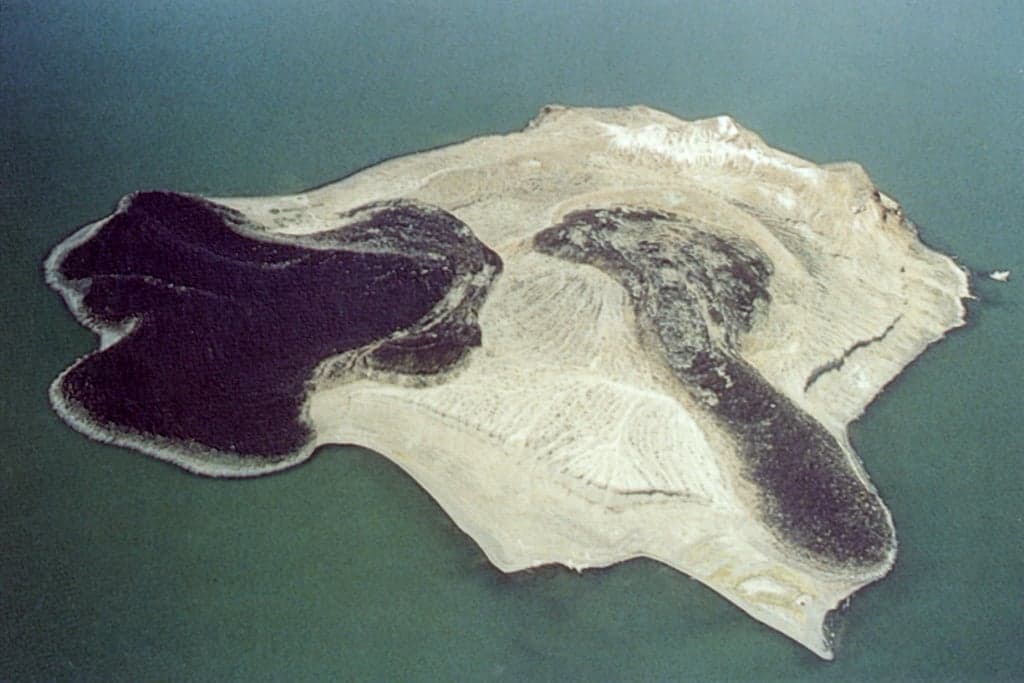
The 2-km-wide North Island in Lake Turkana is the northernmost and smallest of three volcanic islands in the lake. It is primarily composed of trachyandesitic-to-trachytic phreatomagmatic deposits from overlapping eroded tuff cones or tuff rings. The center of the island consists of a young tuff ring about 1 km in diameter nested inside an older tuff ring. Two fresh unvegetated lava flows that reach the lake shore from the central tuff ring form lava deltas on the N and W sides of the island; the northern delta is about 900 m wide. The two blocky lava flows are younger than a terrace that formed less than 10,000 years ago during the last major high-water level (Key and Watkins, 1988). Geothermal activity occurs along a curvilinear ridge on the S portion of the island and on wave-cut platforms and beaches on the SW shoreline.
— Smithsonian Institution, Global Volcanism Program
0 Recorded Eruptions
No eruption records available for Lake Turkana North Island.
Real-Time Data
Frequently Asked Questions About Lake Turkana North Island
Is Lake Turkana North Island an active volcano?+
Lake Turkana North Island is classified as active based on credible evidence of past eruptions. Although its last known eruption was in prehistoric times, volcanologists consider it capable of erupting again.
How high is Lake Turkana North Island?+
Lake Turkana North Island has a summit elevation of 490 meters (1,608 feet) above sea level. At 490 meters, it is a relatively low-elevation volcano.
What type of volcano is Lake Turkana North Island?+
Lake Turkana North Island is classified as a Tuff cone(s). Tuff cone(s) volcanoes have distinct geological characteristics that set them apart from other volcanic types.
Where is Lake Turkana North Island located?+
Lake Turkana North Island is located in Kenya, in the Eastern Africa Volcanic Regions. More specifically, it lies within the Kenyan Rift Volcanic Province. Its exact coordinates are 4.063° latitude, 36.046° longitude.
Is it safe to visit Lake Turkana North Island?+
Lake Turkana North Island can generally be visited, but as with any volcano, visitors should check local conditions and any advisory notices before traveling. Kenya may have specific regulations for accessing volcanic areas. Guided tours are often the safest and most informative way to experience a volcano.