About McDonald Islands
McDonald Islands is a complex rising to 263 meters (863 feet) in Australia's Somalian-Antarctic Volcanic Regions. It has been active in recent decades, with its last eruption in 2005 CE. The volcano has produced 5 recorded eruptions, with a maximum Volcanic Explosivity Index (VEI) of 1.
Geography & Climate
McDonald Islands is located in Australia, within the Kerguelen Hotspot Volcano Group of the broader Somalian-Antarctic Volcanic Regions. Situated at 53.04° S, 72.59° E in the Southern Hemisphere, the volcano lies within a temperate climate zone. At just 263 meters above sea level, McDonald Islands is a relatively low-elevation volcanic feature. Despite its modest height, it remains an active geological formation with the same underlying magmatic processes as its taller counterparts. The volcanic landform is characterized as a composite, which describes the physical shape and structure of the volcanic edifice as observed from the surface.
Geological Context
McDonald Islands is an intraplate volcano, meaning it formed away from any plate boundary. These volcanoes are often powered by hotspots — plumes of abnormally hot mantle material rising from deep within the Earth. Hotspot volcanoes like McDonald Islands tend to produce effusive eruptions with lava flows that can be relatively predictable, giving nearby communities in Australia more time to prepare. However, they can also produce explosive phases, particularly when magma interacts with groundwater. The dominant rock type is phonolite, an alkaline volcanic rock that indicates a distinct magma chemistry linked to unique tectonic conditions. This composition can produce both effusive and explosive eruptions, with magma viscosity depending on specific mineral content and gas concentrations at the time of eruption.
Eruption History Summary
McDonald Islands has 5 recorded eruptions in the geological database, spanning from 1992 CE to 2005 CE. The most powerful recorded event was a gentle, effusive event in 2004 CE, reaching VEI 1 on the Volcanic Explosivity Index. This eruption frequency indicates a moderately active volcanic system with periodic reawakenings. With eruptive activity as recently as 2005 CE, McDonald Islands remains an actively monitored volcano.
Significance
With 5 recorded eruptions on file, McDonald Islands has enough documented activity to help scientists identify patterns in its eruptive behavior. Given its recent activity, McDonald Islands is closely monitored by geological survey organizations to provide early warning of future unrest.
GVP Reference Summary
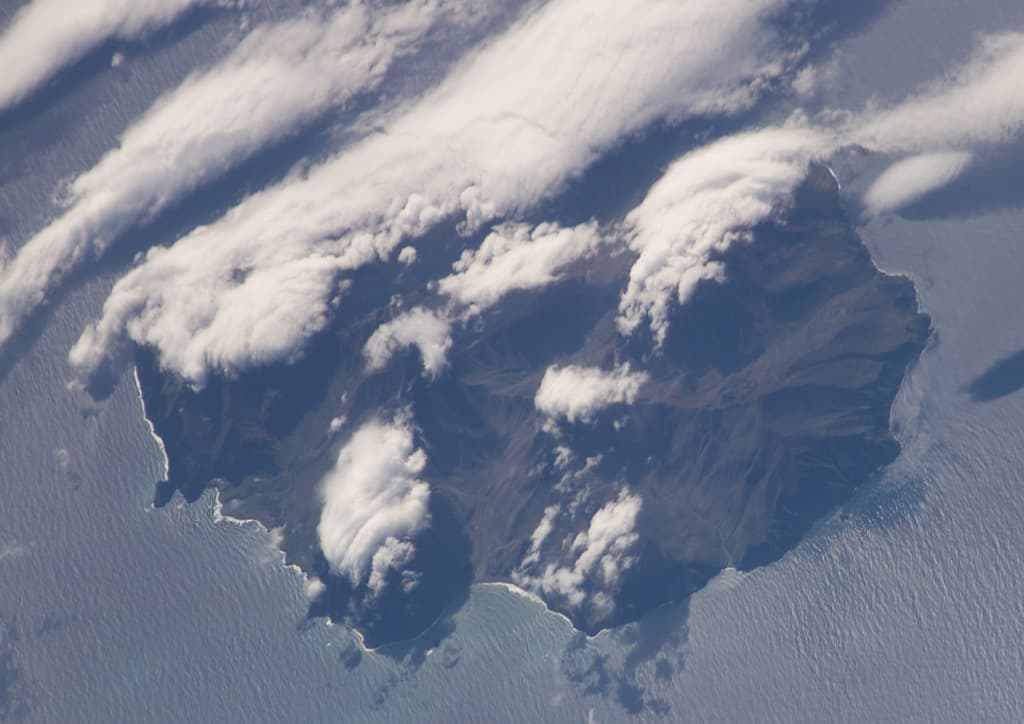
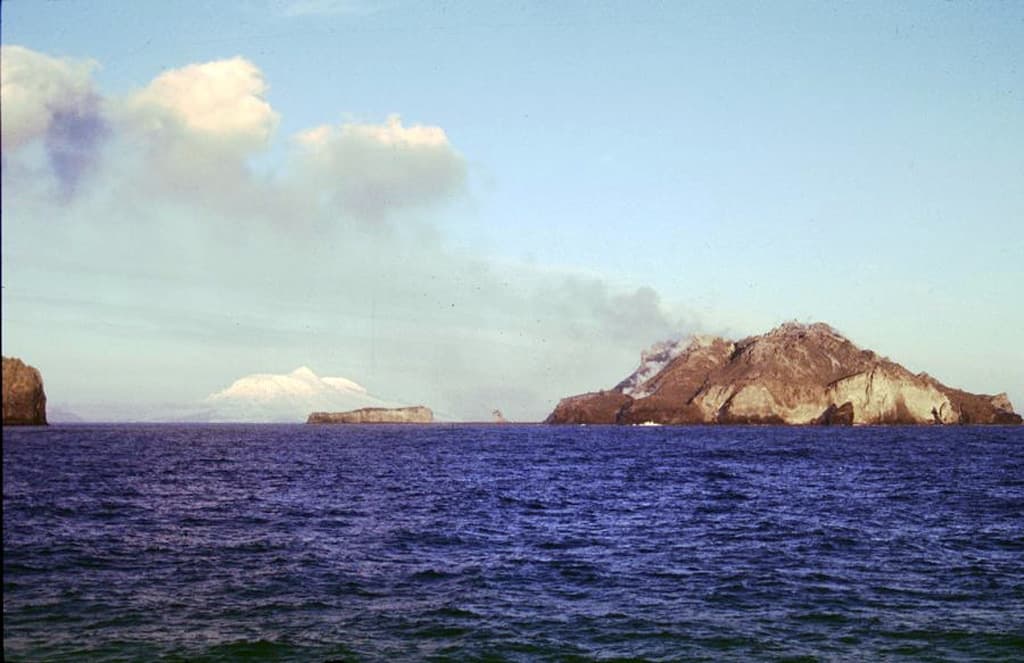
The McDonald Islands are located on the Kerguelen Plateau about 75 km W of Heard Island. The largest island, McDonald, is composed of a layered phonolitic tuff plateau cut by phonolitic dikes and lava domes. A possible nearby active submarine center was inferred from phonolitic pumice that washed up on Heard Island in 1992. Volcanic plumes were observed in December 1996 and January 1997 from McDonald Island. During March 1997 the crew of a vessel that sailed near the island noted vigorous steaming from a vent on the N side of the island along with possible pyroclastic deposits and lava flows. A satellite image taken in November 2001 showed the island to have more than doubled in area since previous reported observations in November 2000.
— Smithsonian Institution, Global Volcanism Program
5 Recorded Eruptions
How McDonald Islands's 5 size-rated eruptions break down by Volcanic Explosivity Index. Select a bar to see what that size means.
Gentle — small ash plumes, minor explosive activity.
Of McDonald Islands's 5 size-rated eruptions on record, the most common was VEI 1 (3 of 5, 60%). It is overwhelmingly effusive, erupting gently at nearly the same small size again and again — classic shield-building behaviour. No eruption on record exceeded VEI 1.
Based on the Smithsonian GVP eruption record. This describes McDonald Islands's past eruptions only — it does not predict future activity. What is the VEI? · Most explosive volcanoes
| Year | VEI | Type | Area |
|---|---|---|---|
| 2005 | 0 | Confirmed Eruption | — |
| 2004 | 1 | Uncertain Eruption | — |
| 2001 | 1 | Confirmed Eruption | — |
| 1996 – 1997 | 1 | Confirmed Eruption | Northern part of McDonald Island |
| 1992 | 0 | Confirmed Eruption | Submarine vent near McDonald Islands |
Real-Time Data
Frequently Asked Questions About McDonald Islands
Is McDonald Islands an active volcano?+
Yes, McDonald Islands is considered an active volcano. Its most recent eruption was in 2005 CE. The volcano is monitored by geological agencies, and its activity status is based on observed eruptions within recorded history.
When did McDonald Islands last erupt?+
The most recent recorded eruption of McDonald Islands occurred in 2005 CE with a Volcanic Explosivity Index (VEI) of 0. The eruption was classified as a "Confirmed Eruption." McDonald Islands has 5 recorded eruptions in total.
How high is McDonald Islands?+
McDonald Islands has a summit elevation of 263 meters (863 feet) above sea level. At 263 meters, it is a relatively low-elevation volcano.
What type of volcano is McDonald Islands?+
McDonald Islands is classified as a Complex. Complex volcanoes have distinct geological characteristics that set them apart from other volcanic types.
Where is McDonald Islands located?+
McDonald Islands is located in Australia, in the Somalian-Antarctic Volcanic Regions. More specifically, it lies within the Kerguelen Hotspot Volcano Group. Its exact coordinates are -53.039° latitude, 72.595° longitude.
Is it safe to visit McDonald Islands?+
Visiting McDonald Islands requires checking current volcanic activity and alert levels. As an active volcano with eruptions as recent as 2005 CE, conditions can change rapidly. Always consult local geological authorities and follow official warnings before visiting. Many active volcanoes have designated safe viewing areas and guided tour options.