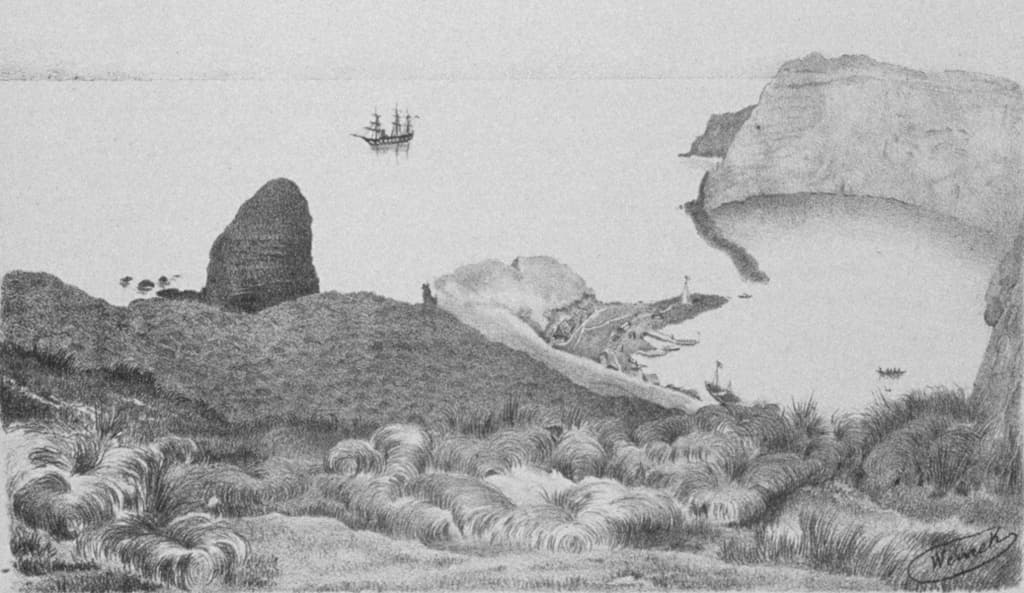
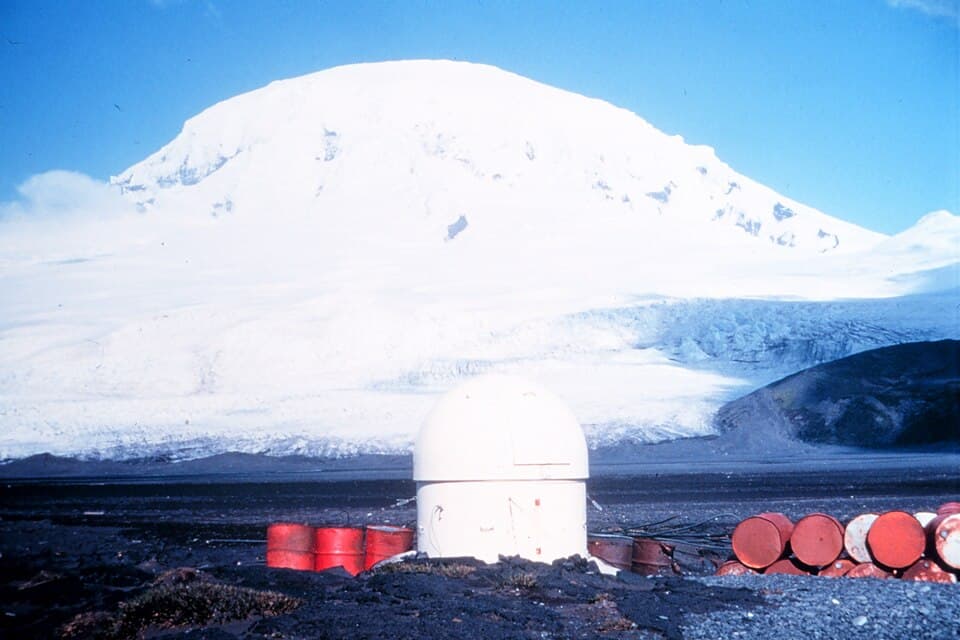
About Amsterdam Island
Amsterdam Island is a stratovolcano rising to 881 meters (2,891 feet) in France's Somalian-Antarctic Volcanic Regions. No historical eruptions have been recorded, though the volcano is classified based on geological evidence of past activity.
Geography & Climate
Amsterdam Island is located in France, within the Amsterdam-St. Paul Hotspot Volcano Group of the broader Somalian-Antarctic Volcanic Regions. Situated at 37.83° S, 77.52° E in the Southern Hemisphere, the volcano lies within a temperate climate zone. With a summit elevation of 881 meters above sea level, Amsterdam Island is a moderately sized peak that remains accessible to hikers and researchers for much of the year. The volcanic landform is characterized as a composite, which describes the physical shape and structure of the volcanic edifice as observed from the surface.
Geological Context
Amsterdam Island is situated along a rift zone, where tectonic plates are pulling apart. As the crust thins and fractures, magma rises to fill the gap, creating volcanic activity. Rift volcanism typically produces more fluid lava flows rather than explosive blasts, which means communities near Amsterdam Island in France generally face slower-moving hazards like lava flows and ground fissures rather than sudden pyroclastic events. However, rift volcanoes can still generate significant ash emissions and gas releases that affect local air quality. The dominant rock type is basalt / picro-basalt, a dark, fine-grained volcanic rock that forms from rapidly cooling, low-viscosity lava. Basaltic eruptions tend to be less explosive and produce fluid lava flows that can travel long distances. While less immediately dangerous than explosive eruptions, basaltic lava flows can destroy structures and infrastructure in their path, and volcanic gases released during these eruptions can affect air quality over a wide area.
GVP Reference Summary
The elliptical 7 x 10 km Amsterdam Island is the northernmost subaerial volcano on the Antarctic Plate. The basaltic volcano is located near the axis of the East Indian Ocean Ridge adjacent to the Indian Plate. Amsterdam volcano was formed during two episodes of cone growth accompanied by the formation of small calderas. The caldera of the youngest eruptive center, 2 km ENE of the earlier one, contained a lava lake that fed several stages of lava outflows. Minor late-stage eruptions formed more than two dozen scoria cones and many small lava flows. No observed eruptions are known, although the fresh morphology at Dumas Crater on the NE flank suggests it may have occurred as recently as a century ago (Nougier, 1982).
— Smithsonian Institution, Global Volcanism Program
0 Recorded Eruptions
No eruption records available for Amsterdam Island.
Real-Time Data
Frequently Asked Questions About Amsterdam Island
Is Amsterdam Island an active volcano?+
Amsterdam Island is classified as active based on credible evidence of past eruptions. Although its last known eruption was in prehistoric times, volcanologists consider it capable of erupting again.
How high is Amsterdam Island?+
Amsterdam Island has a summit elevation of 881 meters (2,891 feet) above sea level. At 881 meters, it is a relatively low-elevation volcano.
What type of volcano is Amsterdam Island?+
Amsterdam Island is classified as a Stratovolcano. Stratovolcanoes (also called composite volcanoes) are steep, conical volcanoes built up by many layers of hardened lava, tephra, and volcanic ash. They are among the most common and dangerous types, known for explosive eruptions.
Where is Amsterdam Island located?+
Amsterdam Island is located in France, in the Somalian-Antarctic Volcanic Regions. More specifically, it lies within the Amsterdam-St. Paul Hotspot Volcano Group. Its exact coordinates are -37.830° latitude, 77.520° longitude.
Is it safe to visit Amsterdam Island?+
Amsterdam Island can generally be visited, but as with any volcano, visitors should check local conditions and any advisory notices before traveling. France may have specific regulations for accessing volcanic areas. Guided tours are often the safest and most informative way to experience a volcano.