About Fani Maore
Fani Maore is a cone rising to -2,500 meters (-8,202 feet) in France's Somalian-Antarctic Volcanic Regions. It has been active in recent decades, with its last eruption in 2019 CE. The volcano has produced 1 recorded eruption.
Geography & Climate
Fani Maore is located in France, within the Madagascar-Comoros Volcanic Province of the broader Somalian-Antarctic Volcanic Regions. Situated at 12.91° S, 45.71° E in the Southern Hemisphere, the volcano lies within a tropical climate zone. With an elevation of -2,500 meters — below sea level — Fani Maore is a submarine or submerged volcanic feature. Submarine volcanoes make up the majority of Earth's volcanic activity, though most eruptions go unobserved beneath the ocean surface. The volcanic landform is characterized as a composite, which describes the physical shape and structure of the volcanic edifice as observed from the surface.
Geological Context
Fani Maore is an intraplate volcano, meaning it formed away from any plate boundary. These volcanoes are often powered by hotspots — plumes of abnormally hot mantle material rising from deep within the Earth. Hotspot volcanoes like Fani Maore tend to produce effusive eruptions with lava flows that can be relatively predictable, giving nearby communities in France more time to prepare. However, they can also produce explosive phases, particularly when magma interacts with groundwater.
Eruption History Summary
Fani Maore has 1 recorded eruption in the geological database, spanning from 2018 CE to 2019 CE. With eruptive activity as recently as 2019 CE, Fani Maore remains an actively monitored volcano.
GVP Reference Summary
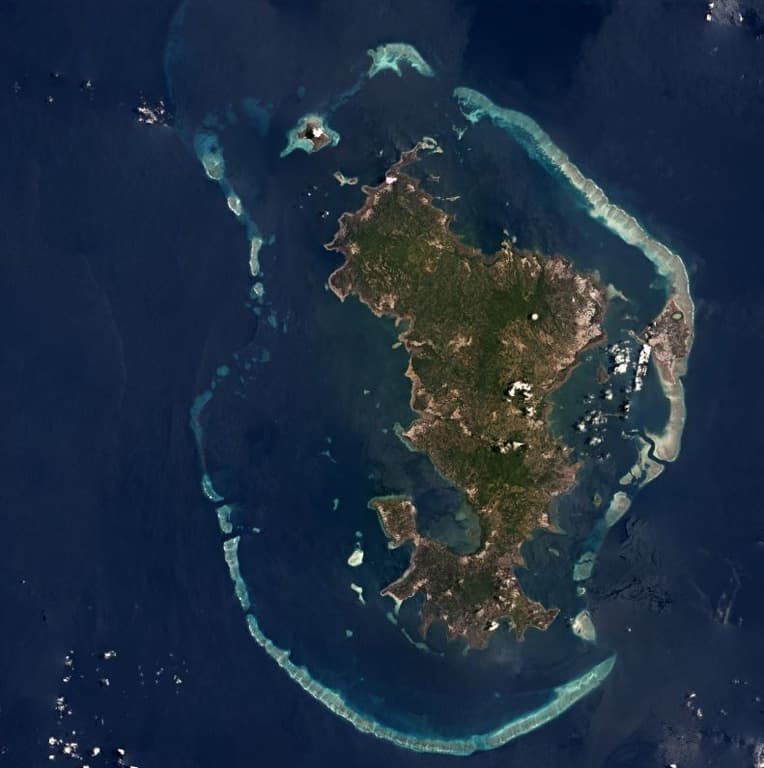
Activity that began in May 2018 consisted of seismicity and ground deformation occurring offshore E of Mayotte Island (Lemoine et al., 2019). One year later, in May 2019, a new subaqueous edifice, named Fani Maoré, and associated lava flows were observed 50 km E of Petite Terre during an oceanographic campaign.
— Smithsonian Institution, Global Volcanism Program
1 Recorded Eruption
| Year | VEI | Type | Area |
|---|---|---|---|
| 2018 – 2019 | 0 | Confirmed Eruption | About 50 km E of the eastern tip of Mayotte Island |
Real-Time Data
Frequently Asked Questions About Fani Maore
Is Fani Maore an active volcano?+
Yes, Fani Maore is considered an active volcano. Its most recent eruption was in 2019 CE. The volcano is monitored by geological agencies, and its activity status is based on observed eruptions within recorded history.
When did Fani Maore last erupt?+
The most recent recorded eruption of Fani Maore began in 2018 CE and continued until 2019 CE with a Volcanic Explosivity Index (VEI) of 0. The eruption was classified as a "Confirmed Eruption." Fani Maore has 1 recorded eruption in total.
How high is Fani Maore?+
Fani Maore has a summit elevation of -2,500 meters (-8,202 feet) above sea level. With an elevation of -2,500 meters (below sea level), this is a submarine or submerged volcanic feature.
What type of volcano is Fani Maore?+
Fani Maore is classified as a Cone. Cone volcanoes have distinct geological characteristics that set them apart from other volcanic types.
Where is Fani Maore located?+
Fani Maore is located in France, in the Somalian-Antarctic Volcanic Regions. More specifically, it lies within the Madagascar-Comoros Volcanic Province. Its exact coordinates are -12.912° latitude, 45.708° longitude.
Is it safe to visit Fani Maore?+
Visiting Fani Maore requires checking current volcanic activity and alert levels. As an active volcano with eruptions as recent as 2019 CE, conditions can change rapidly. Always consult local geological authorities and follow official warnings before visiting. Many active volcanoes have designated safe viewing areas and guided tour options.