About Malumalu
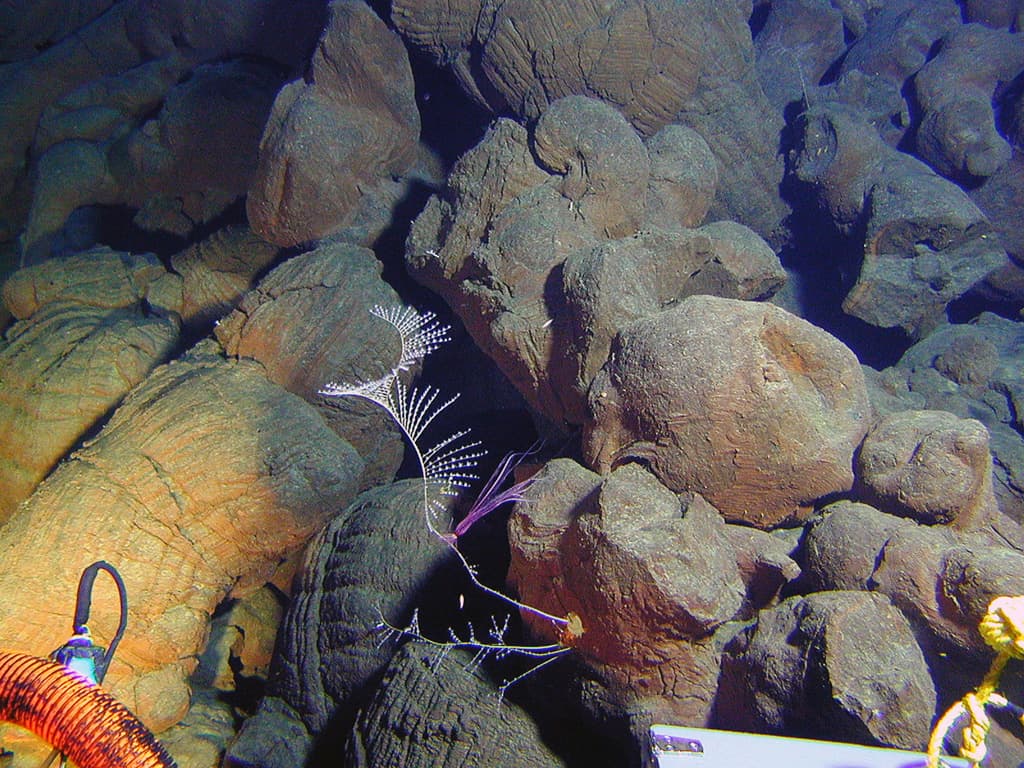
Malumalu is a stratovolcano rising to -145 meters (-476 feet) in United States's Southern Pacific Volcanic Regions. No historical eruptions have been recorded, though the volcano is classified based on geological evidence of past activity.
Geography & Climate
Malumalu is located in United States, within the Samoan Hotspot Volcano Group of the broader Southern Pacific Volcanic Regions. Situated at 14.60° S, 169.79° W in the Southern Hemisphere, the volcano lies within a tropical climate zone. With an elevation of -145 meters — below sea level — Malumalu is a submarine or submerged volcanic feature. Submarine volcanoes make up the majority of Earth's volcanic activity, though most eruptions go unobserved beneath the ocean surface. The volcanic landform is characterized as a composite, which describes the physical shape and structure of the volcanic edifice as observed from the surface.
Geological Context
Malumalu is an intraplate volcano, meaning it formed away from any plate boundary. These volcanoes are often powered by hotspots — plumes of abnormally hot mantle material rising from deep within the Earth. Hotspot volcanoes like Malumalu tend to produce effusive eruptions with lava flows that can be relatively predictable, giving nearby communities in United States more time to prepare. However, they can also produce explosive phases, particularly when magma interacts with groundwater.
GVP Reference Summary
The Malumalu seamount (also called Southeast Bank) is about 50 km SW of Ta'u Island and 90 km SSE of Tutuila in the Samoan Islands. The edifice, at the end of the Mula volcanic ridge that extends back to Tutuila, has basal diameter of about 25 km. Radiometric measurements were done by Sims et al. (2008), who reported that 230Th/238U, 231Pa/235U, and 226Ra/230Th data indicated at least three flows with maximum eruption ages in the last 350,000 years; one flow with excess 231Pa was inferred to be less than 150 ka, and another with an 226Ra excess was inferred to be less then 8 ka.
— Smithsonian Institution, Global Volcanism Program
0 Recorded Eruptions
No eruption records available for Malumalu.
Real-Time Data
Frequently Asked Questions About Malumalu
Is Malumalu an active volcano?+
Malumalu is classified as active based on credible evidence of past eruptions. Although its last known eruption was in prehistoric times, volcanologists consider it capable of erupting again.
How high is Malumalu?+
Malumalu has a summit elevation of -145 meters (-476 feet) above sea level. With an elevation of -145 meters (below sea level), this is a submarine or submerged volcanic feature.
What type of volcano is Malumalu?+
Malumalu is classified as a Stratovolcano. Stratovolcanoes (also called composite volcanoes) are steep, conical volcanoes built up by many layers of hardened lava, tephra, and volcanic ash. They are among the most common and dangerous types, known for explosive eruptions.
Where is Malumalu located?+
Malumalu is located in United States, in the Southern Pacific Volcanic Regions. More specifically, it lies within the Samoan Hotspot Volcano Group. Its exact coordinates are -14.601° latitude, -169.787° longitude.
Is it safe to visit Malumalu?+
Malumalu can generally be visited, but as with any volcano, visitors should check local conditions and any advisory notices before traveling. United States may have specific regulations for accessing volcanic areas. Guided tours are often the safest and most informative way to experience a volcano.