About Witori
Witori is a caldera rising to 724 meters (2,375 feet) in Papua New Guinea's Southwestern Pacific Volcanic Regions. It has been active in recent decades, with its last eruption in 2012 CE. The volcano has produced 20 recorded eruptions, with a maximum Volcanic Explosivity Index (VEI) of 6.
Geography & Climate
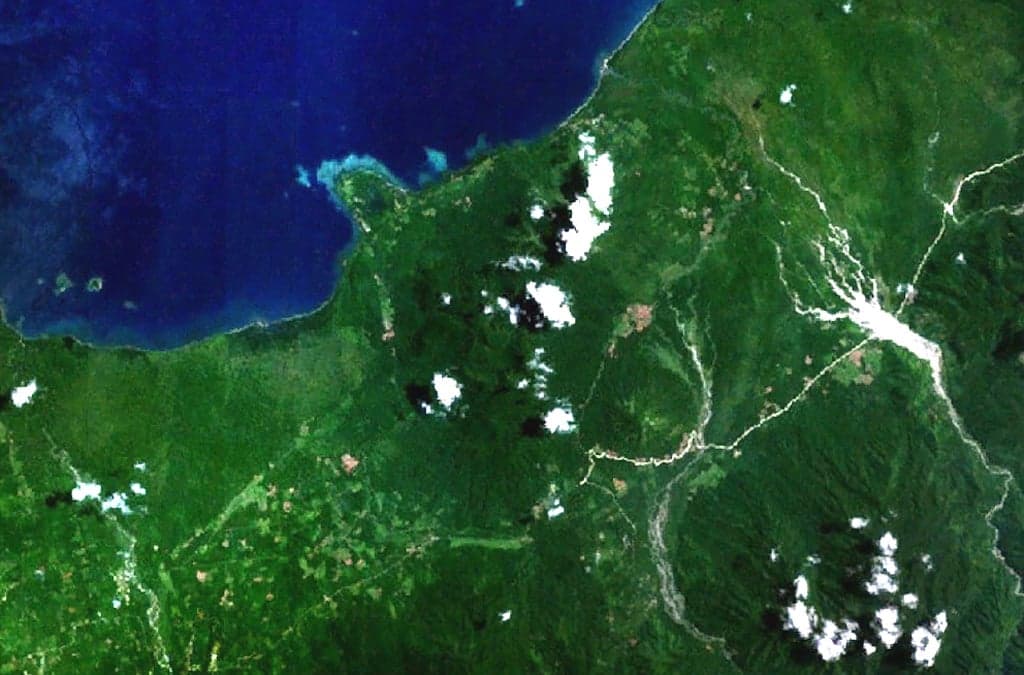
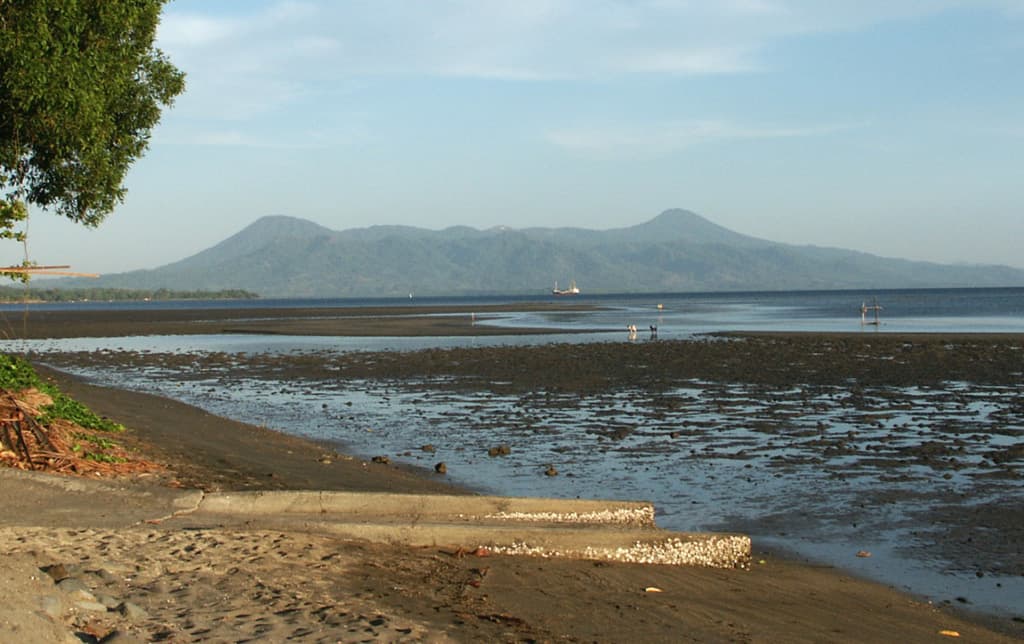
Witori is located in Papua New Guinea, within the Bismarck Volcanic Arc of the broader Southwestern Pacific Volcanic Regions. Situated at 5.57° S, 150.52° E in the Southern Hemisphere, the volcano lies within a tropical climate zone. With a summit elevation of 724 meters above sea level, Witori is a moderately sized peak that remains accessible to hikers and researchers for much of the year. The volcanic landform is characterized as a caldera, which describes the physical shape and structure of the volcanic edifice as observed from the surface.
Geological Context
Witori sits in a subduction zone, where one tectonic plate dives beneath another, creating intense heat and pressure that generates magma. Subduction zones are responsible for many of the world's most explosive volcanoes and deadliest eruptions. For communities in Papua New Guinea near Witori, this tectonic setting means the volcano is capable of producing powerful explosive eruptions, pyroclastic flows, and lahars that can threaten populated areas within tens of kilometers of the summit. The dominant rock type is dacite, an intermediate to silica-rich volcanic rock. This composition typically produces more viscous magma, leading to more explosive eruptions with ash columns and pyroclastic flows. Andesitic and dacitic magmas build pressure before erupting, which is why volcanoes with this rock chemistry are often associated with Plinian-style eruptions that can send ash tens of kilometers into the atmosphere and disrupt aviation across entire regions.
Eruption History Summary
Witori has 20 recorded eruptions in the geological database, spanning from 7510 BCE to 2012 CE. The most powerful recorded event was a colossal eruption capable of affecting global climate for years in 710 CE, reaching VEI 6 on the Volcanic Explosivity Index. Notable eruptions include 2002 CE (VEI 3), 1911 CE (VEI 3), 1800 CE (VEI 4). With an average interval of roughly 476 years between eruptions over a span of 9,522 years, this is one of the more frequently active volcanoes in the database. This persistent activity suggests a robust and well-supplied magma system beneath the volcano. With eruptive activity as recently as 2012 CE, Witori remains an actively monitored volcano.
Significance
Witori has produced at least one eruption of VEI 6 or higher, placing it among the most powerful volcanic systems on Earth. Eruptions of this magnitude inject massive quantities of sulfur dioxide into the stratosphere, affecting global climate by lowering average temperatures for one to three years after the event. Its 20 recorded eruptions make it one of the most prolific volcanoes in our database, reflecting a persistent and well-documented eruptive history that has provided volcanologists with extensive data for understanding eruption patterns and forecasting future activity. Given its recent activity, Witori is closely monitored by geological survey organizations to provide early warning of future unrest.
GVP Reference Summary
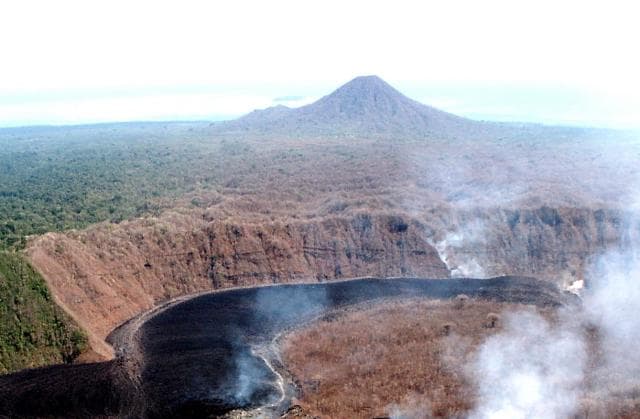
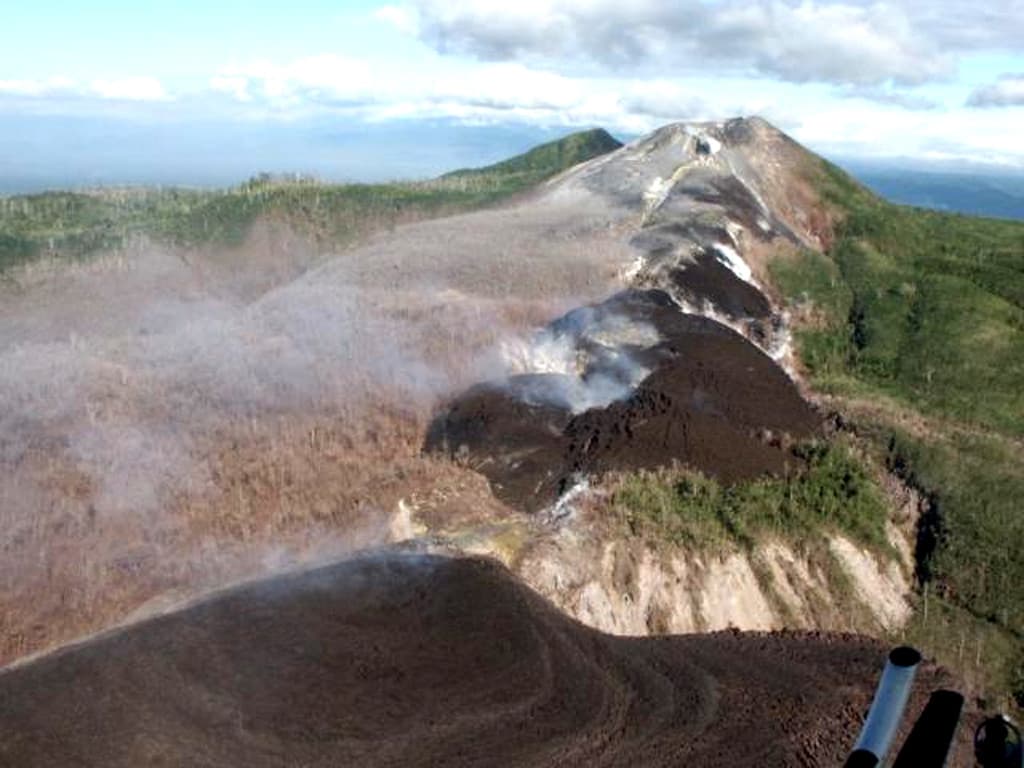
The active Pago cone has grown within the Witori caldera (5.5 x 7.5 km) on the northern coast of central New Britain contains the active Pago cone. The gently sloping outer caldera flanks consist primarily of dacitic pyroclastic-flow and airfall deposits produced during a series of five major explosive eruptions from about 5,600 to 1,200 years ago, many of which may have been associated with caldera formation. Pago cone may have formed less than 350 years ago; it has grown to a height above the caldera rim, and a series of ten dacitic lava flows from it covers much of the caldera floor. The youngest of these was erupted during 2002-2003 from vents extending from the summit nearly to the NW caldera wall. The Buru caldera cuts the SW flank.
— Smithsonian Institution, Global Volcanism Program
20 Recorded Eruptions
How Witori's 14 size-rated eruptions break down by Volcanic Explosivity Index. Select a bar to see what that size means.
Colossal — on the scale of Pinatubo 1991, with a measurable climate effect.
Of Witori's 14 size-rated eruptions on record, the most common was VEI 6 (3 of 14, 21%). Most of its rated eruptions were large (VEI 4+), a violent-end size profile. The largest on record reached VEI 6.
Based on the Smithsonian GVP eruption record. This describes Witori's past eruptions only — it does not predict future activity. What is the VEI? · Most explosive volcanoes
| Year | VEI | Type | Area |
|---|---|---|---|
| 2012 | 2 | Confirmed Eruption | Pago |
| 2007 | 1 | Confirmed Eruption | Pago |
| 2004 | 1 | Uncertain Eruption | Pago |
| 2002 – 2003 | 3 | Confirmed Eruption | Pago (summit and NW flank) |
| 1933 | 2 | Confirmed Eruption | Pago |
| 1920 | 0 | Confirmed Eruption | Pago |
| 1911 – 1918 | 3 | Confirmed Eruption | Pago |
| 1800 | 4 | Confirmed Eruption | — |
| 1730 | — | Confirmed Eruption | — |
| 1550 | 4 | Confirmed Eruption | — |
| 1450 | — | Confirmed Eruption | — |
| 1050 | — | Confirmed Eruption | — |
| 950 | — | Confirmed Eruption | — |
| 710 | 6 | Confirmed Eruption | — |
| 690 | 5 | Confirmed Eruption | — |
| 310 | 5 | Confirmed Eruption | — |
| 640 BCE | — | Confirmed Eruption | — |
| 1370 BCE | 6 | Confirmed Eruption | — |
| 4000 BCE | 6 | Confirmed Eruption | — |
| 7510 BCE | — | Confirmed Eruption | Witori |
Real-Time Data
Frequently Asked Questions About Witori
Is Witori an active volcano?+
Yes, Witori is considered an active volcano. Its most recent eruption was in 2012 CE. The volcano is monitored by geological agencies, and its activity status is based on observed eruptions within recorded history.
When did Witori last erupt?+
The most recent recorded eruption of Witori occurred in 2012 CE with a Volcanic Explosivity Index (VEI) of 2. The eruption was classified as a "Confirmed Eruption." Witori has 20 recorded eruptions in total.
How high is Witori?+
Witori has a summit elevation of 724 meters (2,375 feet) above sea level. At 724 meters, it is a relatively low-elevation volcano.
What type of volcano is Witori?+
Witori is classified as a Caldera. Calderas are large volcanic depressions formed when a volcano erupts so powerfully that its magma chamber collapses, creating a basin that can be kilometers wide. They are often sites of some of Earth's largest eruptions.
Where is Witori located?+
Witori is located in Papua New Guinea, in the Southwestern Pacific Volcanic Regions. More specifically, it lies within the Bismarck Volcanic Arc. Its exact coordinates are -5.574° latitude, 150.516° longitude.
Is it safe to visit Witori?+
Visiting Witori requires checking current volcanic activity and alert levels. As an active volcano with eruptions as recent as 2012 CE, conditions can change rapidly. Always consult local geological authorities and follow official warnings before visiting. Many active volcanoes have designated safe viewing areas and guided tour options.