About Deception Island
Deception Island is a caldera rising to 602 meters (1,975 feet) in Antarctica's Antarctic-Scotia Volcanic Regions. It last erupted in 1970 CE, and volcanologists consider it an active volcanic system. The volcano has produced 27 recorded eruptions, with a maximum Volcanic Explosivity Index (VEI) of 3.
Geography & Climate
Deception Island is located in Antarctica, within the South Shetlands Volcanic Arc of the broader Antarctic-Scotia Volcanic Regions. Situated at 62.96° S, 60.64° W in the Southern Hemisphere, the volcano lies within a subarctic climate zone. With a summit elevation of 602 meters above sea level, Deception Island is a moderately sized peak that remains accessible to hikers and researchers for much of the year. The volcanic landform is characterized as a caldera, which describes the physical shape and structure of the volcanic edifice as observed from the surface.
Geological Context
Deception Island is an intraplate volcano, meaning it formed away from any plate boundary. These volcanoes are often powered by hotspots — plumes of abnormally hot mantle material rising from deep within the Earth. Hotspot volcanoes like Deception Island tend to produce effusive eruptions with lava flows that can be relatively predictable, giving nearby communities in Antarctica more time to prepare. However, they can also produce explosive phases, particularly when magma interacts with groundwater. The dominant rock type is basalt / picro-basalt, a dark, fine-grained volcanic rock that forms from rapidly cooling, low-viscosity lava. Basaltic eruptions tend to be less explosive and produce fluid lava flows that can travel long distances. While less immediately dangerous than explosive eruptions, basaltic lava flows can destroy structures and infrastructure in their path, and volcanic gases released during these eruptions can affect air quality over a wide area.
Eruption History Summary
Deception Island has 27 recorded eruptions in the geological database, spanning from 6750 BCE to 1987 CE. The most powerful recorded event was a severe eruption capable of regional ash fall and pyroclastic flows in 1970 CE, reaching VEI 3 on the Volcanic Explosivity Index. Notable eruptions include 1970 CE (VEI 3), 1969 CE (VEI 3), 1967 CE (VEI 3). With an average interval of roughly 324 years between eruptions over a span of 8,737 years, this is one of the more frequently active volcanoes in the database. This persistent activity suggests a robust and well-supplied magma system beneath the volcano. The most recent eruption in 1987 CE places this volcano within the modern era of volcanological observation.
Significance
With a maximum recorded VEI of 3, Deception Island has produced eruptions capable of generating pyroclastic flows and significant ash fall in the surrounding area. While not among the largest eruptions globally, VEI 3 events pose serious hazards to local populations and can disrupt regional air travel. Its 27 recorded eruptions make it one of the most prolific volcanoes in our database, reflecting a persistent and well-documented eruptive history that has provided volcanologists with extensive data for understanding eruption patterns and forecasting future activity. Given its recent activity, Deception Island is closely monitored by geological survey organizations to provide early warning of future unrest.
GVP Reference Summary
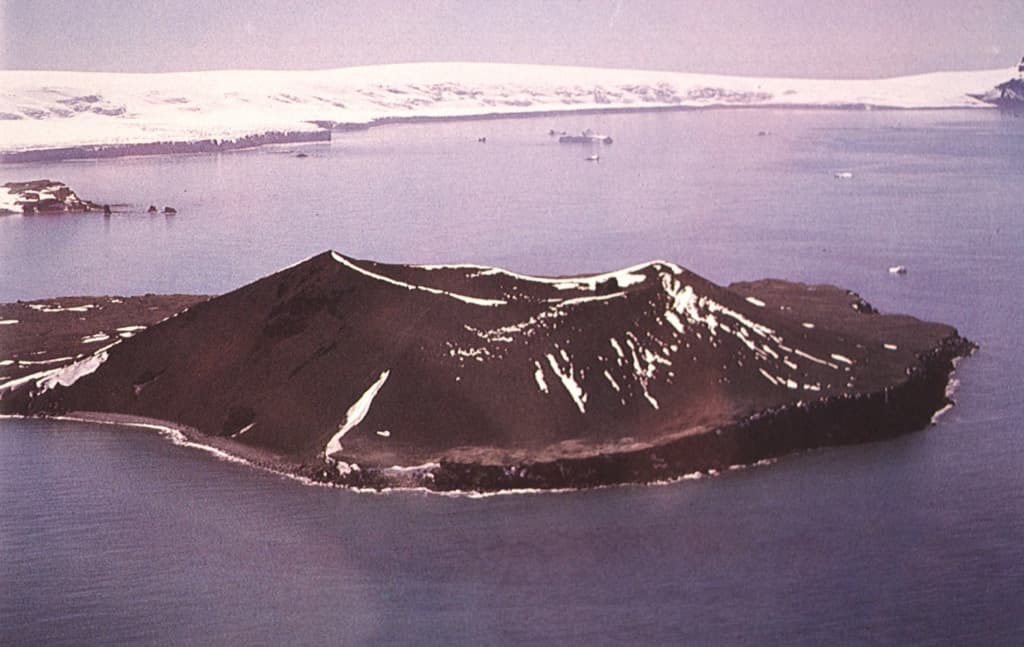
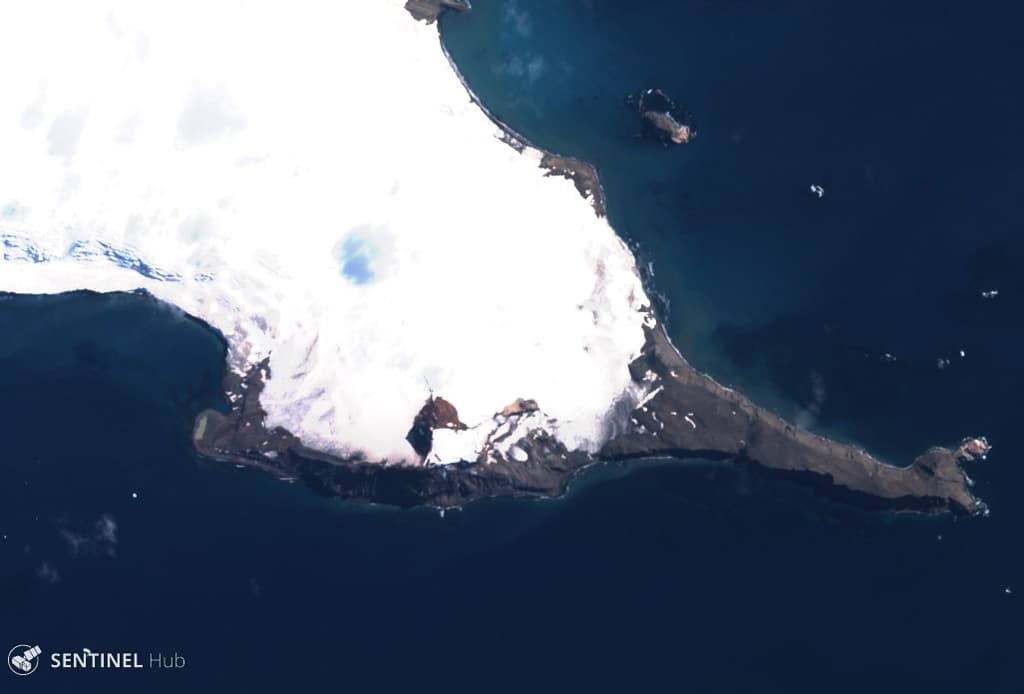
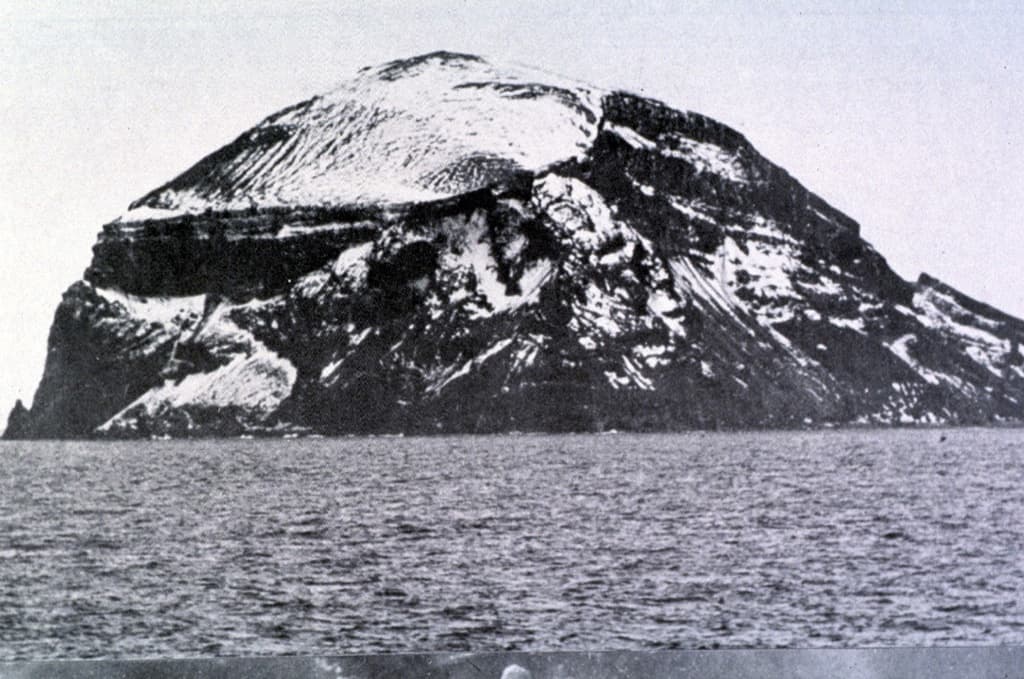
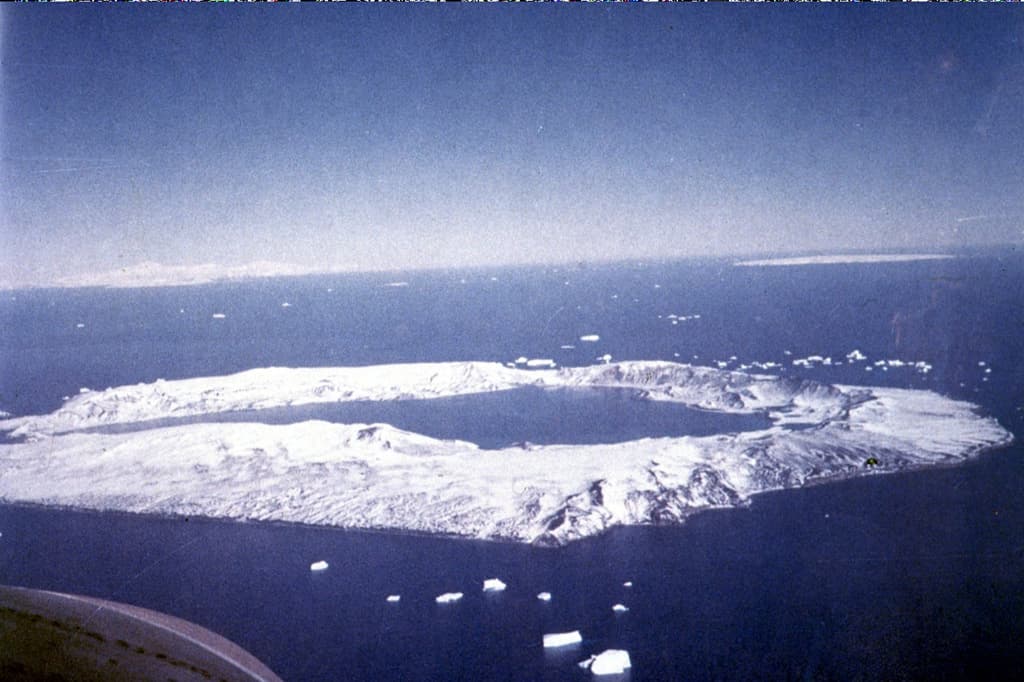
Ring-shaped Deception Island, at the SW end of the South Shetland Islands, NE of Graham Land Peninsula, was constructed along the axis of the Bransfield Rift spreading center. A narrow passageway named Neptunes Bellows provides an entrance to a natural harbor within the 8.5 x 10 km caldera that was utilized as an Antarctic whaling station. Numerous vents along ring fractures circling the low 14-km-wide island have been reported active for more than 200 years. Maars line the shores of 190-m-deep Port Foster caldera bay. Among the largest of these maars is 1-km-wide Whalers Bay, at the entrance to the harbor. Eruptions during the past 8,700 years have been dated from ash layers in lake sediments on the Antarctic Peninsula and neighboring islands.
— Smithsonian Institution, Global Volcanism Program
27 Recorded Eruptions
How Deception Island's 5 size-rated eruptions break down by Volcanic Explosivity Index. Select a bar to see what that size means.
Severe — plumes of 3–15 km with regional ashfall and pyroclastic flows.
Of Deception Island's 5 size-rated eruptions on record, the most common was VEI 3 (4 of 5, 80%). It is strikingly consistent, erupting at close to the same size again and again. No eruption on record exceeded VEI 3.
Based on the Smithsonian GVP eruption record. This describes Deception Island's past eruptions only — it does not predict future activity. What is the VEI? · Most explosive volcanoes
| Year | VEI | Type | Area |
|---|---|---|---|
| 1987 | — | Uncertain Eruption | — |
| 1972 | — | Uncertain Eruption | — |
| 1970 | 3 | Confirmed Eruption | NE of Telefon Bay |
| 1969 | 3 | Confirmed Eruption | West side of Mount Pond |
| 1967 | 3 | Confirmed Eruption | North side (Telefon Bay, Yelcho I) |
| 1912 | 3 | Confirmed Eruption | SW part of island |
| 1871 | — | Confirmed Eruption | SE side of caldera bay (Kroner Lake) |
| 1842 | 2 | Confirmed Eruption | S caldera rim (flanks of Mt Kirkwood) |
| 1839 | — | Uncertain Eruption | Crater Lake, Mt. Kirkwood area |
| 1827 | — | Confirmed Eruption | NE side caldera bay (Pendulum Cove) |
| 1800 | — | Confirmed Eruption | N side caldera bay (near Telefon Bay) |
| 1641 | — | Confirmed Eruption | — |
| 1500 | — | Confirmed Eruption | — |
| 1200 | — | Confirmed Eruption | — |
| 900 | — | Confirmed Eruption | — |
| 600 | — | Confirmed Eruption | — |
| 100 | — | Confirmed Eruption | — |
| 100 BCE | — | Confirmed Eruption | — |
| 250 BCE | — | Confirmed Eruption | — |
| 550 BCE | — | Confirmed Eruption | — |
| 700 BCE | — | Confirmed Eruption | — |
| 750 BCE | — | Confirmed Eruption | — |
| 800 BCE | — | Confirmed Eruption | — |
| 1550 BCE | — | Confirmed Eruption | — |
| 2750 BCE | — | Confirmed Eruption | — |
| 3250 BCE | — | Confirmed Eruption | — |
| 6750 BCE | — | Confirmed Eruption | — |
Real-Time Data
Frequently Asked Questions About Deception Island
Is Deception Island an active volcano?+
Yes, Deception Island is considered an active volcano. Its most recent eruption was in 1970 CE. The volcano is monitored by geological agencies, and its activity status is based on observed eruptions within recorded history.
When did Deception Island last erupt?+
The most recent recorded eruption of Deception Island occurred in 1987 CE. The eruption was classified as a "Uncertain Eruption." Deception Island has 27 recorded eruptions in total.
How high is Deception Island?+
Deception Island has a summit elevation of 602 meters (1,975 feet) above sea level. At 602 meters, it is a relatively low-elevation volcano.
What type of volcano is Deception Island?+
Deception Island is classified as a Caldera. Calderas are large volcanic depressions formed when a volcano erupts so powerfully that its magma chamber collapses, creating a basin that can be kilometers wide. They are often sites of some of Earth's largest eruptions.
Where is Deception Island located?+
Deception Island is located in Antarctica, in the Antarctic-Scotia Volcanic Regions. More specifically, it lies within the South Shetlands Volcanic Arc. Its exact coordinates are -62.957° latitude, -60.637° longitude.
Is it safe to visit Deception Island?+
Visiting Deception Island requires checking current volcanic activity and alert levels. As an active volcano with eruptions as recent as 1970 CE, conditions can change rapidly. Always consult local geological authorities and follow official warnings before visiting. Many active volcanoes have designated safe viewing areas and guided tour options.