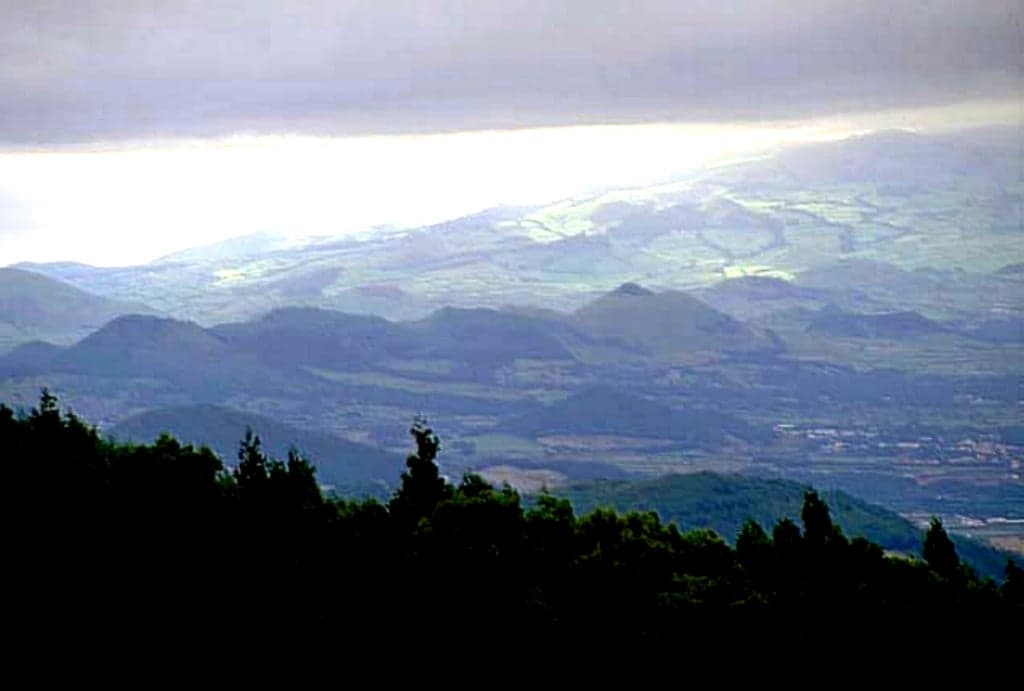
About Agua de Pau
Agua de Pau is a stratovolcano rising to 947 meters (3,107 feet) in Portugal's Atlantic Ocean Volcanic Regions. Its last known eruption was in 1564 CE. The volcano has produced 10 recorded eruptions, with a maximum Volcanic Explosivity Index (VEI) of 5.
Geography & Climate
Agua de Pau is located in Portugal, within the Azores-Terceira Rift Volcanic Province of the broader Atlantic Ocean Volcanic Regions. Situated at 37.77° N, 25.47° W in the Northern Hemisphere, the volcano lies within a temperate climate zone. With a summit elevation of 947 meters above sea level, Agua de Pau is a moderately sized peak that remains accessible to hikers and researchers for much of the year. The volcanic landform is characterized as a composite, which describes the physical shape and structure of the volcanic edifice as observed from the surface.
Geological Context
Agua de Pau is situated along a rift zone, where tectonic plates are pulling apart. As the crust thins and fractures, magma rises to fill the gap, creating volcanic activity. Rift volcanism typically produces more fluid lava flows rather than explosive blasts, which means communities near Agua de Pau in Portugal generally face slower-moving hazards like lava flows and ground fissures rather than sudden pyroclastic events. However, rift volcanoes can still generate significant ash emissions and gas releases that affect local air quality. The dominant rock type is trachyte / trachydacite, an intermediate to silica-rich volcanic rock. This composition typically produces more viscous magma, leading to more explosive eruptions with ash columns and pyroclastic flows. Andesitic and dacitic magmas build pressure before erupting, which is why volcanoes with this rock chemistry are often associated with Plinian-style eruptions that can send ash tens of kilometers into the atmosphere and disrupt aviation across entire regions.
Eruption History Summary
Agua de Pau has 10 recorded eruptions in the geological database, spanning from 6750 BCE to 1564 CE. The most powerful recorded event was a paroxysmal eruption with devastating regional consequences in 1563 CE, reaching VEI 5 on the Volcanic Explosivity Index. Notable eruptions include 1563 CE (VEI 5), 1290 BCE (VEI 4), 1850 BCE (VEI 3). This level of eruptive frequency indicates a persistently active volcanic system that warrants ongoing monitoring.
Significance
With a maximum recorded VEI of 5, Agua de Pau has demonstrated the capacity for paroxysmal eruptions comparable to the 1980 eruption of Mount St. Helens. Eruptions of this scale can devastate areas within 20-30 kilometers and produce ash fall that disrupts aviation and agriculture across hundreds of kilometers. With 10 recorded eruptions, Agua de Pau has a substantial eruptive history that provides valuable data for understanding volcanic behavior and assessing future hazards in the Atlantic Ocean Volcanic Regions region.
GVP Reference Summary
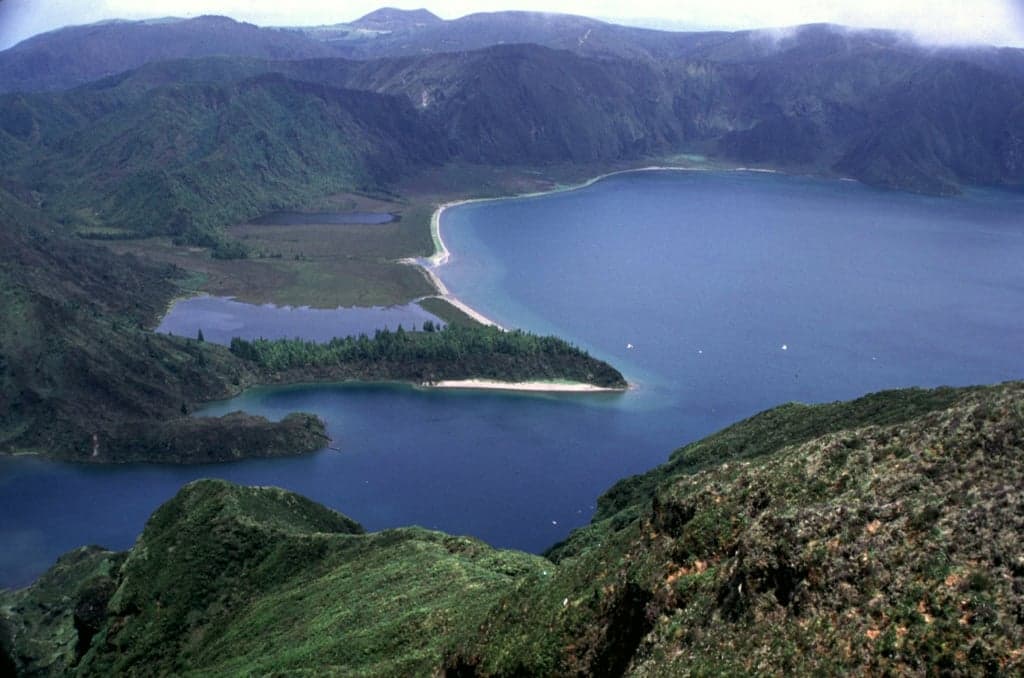
The Agua de Pau stratovolcano in central Sao Miguel Island contains an outer 4 x 7 km caldera formed about 30,000-45,000 years ago and an inner 2.5 x 3 km caldera that was created about 15,000 years ago. The younger caldera is partially filled by the Lagoa do Fogo caldera lake. Several post-caldera lava domes were emplaced on the northern and western flanks, but activity in the caldera did not resume until about 5000 years ago. The 3 km3 Fogo-A plinian pumice fall deposit was emplaced at this time. Numerous flank cinder cones mark radial and concentric fissures, some of which have been active during historical time. The latest trachytic explosive eruption took place during 1563. Prominent hot springs are located on the NW flank.
— Smithsonian Institution, Global Volcanism Program
10 Recorded Eruptions
How Agua de Pau's 5 size-rated eruptions break down by Volcanic Explosivity Index. Select a bar to see what that size means.
Paroxysmal — on the scale of Mount St. Helens in 1980.
Of Agua de Pau's 5 size-rated eruptions on record, the most common was VEI 5 (2 of 5, 40%). Most of its rated eruptions were large (VEI 4+), a violent-end size profile. The largest on record reached VEI 5.
Based on the Smithsonian GVP eruption record. This describes Agua de Pau's past eruptions only — it does not predict future activity. What is the VEI? · Most explosive volcanoes
| Year | VEI | Type | Area |
|---|---|---|---|
| 1564 | 2 | Confirmed Eruption | Lagoa do Fogo caldera |
| 1563 | 5 | Confirmed Eruption | Caldera, NW flank (Cerro Queimado) |
| 700 | — | Confirmed Eruption | WNW flank (Mos) |
| 160 | — | Confirmed Eruption | NW flank (251 m) |
| 1290 BCE | 4 | Confirmed Eruption | Lagoa do Fogo caldera |
| 1850 BCE | 3 | Confirmed Eruption | East flank (Lagoa do Congro) |
| 2210 BCE | — | Confirmed Eruption | East flank (East Congo maar) |
| 2990 BCE | 5 | Confirmed Eruption | Lagoa do Fogo caldera and north flank |
| 4550 BCE | — | Confirmed Eruption | SW flank (449 m) |
| 6750 BCE | — | Confirmed Eruption | West flank (Pico Joao Fernandes) |
Real-Time Data
Frequently Asked Questions About Agua de Pau
Is Agua de Pau an active volcano?+
Agua de Pau is classified as active based on credible evidence of past eruptions. Although its last known eruption was in 1564 CE, volcanologists consider it capable of erupting again.
When did Agua de Pau last erupt?+
The most recent recorded eruption of Agua de Pau occurred in 1564 CE with a Volcanic Explosivity Index (VEI) of 2. The eruption was classified as a "Confirmed Eruption." Agua de Pau has 10 recorded eruptions in total.
How high is Agua de Pau?+
Agua de Pau has a summit elevation of 947 meters (3,107 feet) above sea level. At 947 meters, it is a relatively low-elevation volcano.
What type of volcano is Agua de Pau?+
Agua de Pau is classified as a Stratovolcano. Stratovolcanoes (also called composite volcanoes) are steep, conical volcanoes built up by many layers of hardened lava, tephra, and volcanic ash. They are among the most common and dangerous types, known for explosive eruptions.
Where is Agua de Pau located?+
Agua de Pau is located in Portugal, in the Atlantic Ocean Volcanic Regions. More specifically, it lies within the Azores-Terceira Rift Volcanic Province. Its exact coordinates are 37.770° latitude, -25.470° longitude.
Is it safe to visit Agua de Pau?+
Agua de Pau can generally be visited, but as with any volcano, visitors should check local conditions and any advisory notices before traveling. Portugal may have specific regulations for accessing volcanic areas. Guided tours are often the safest and most informative way to experience a volcano.