About Katla
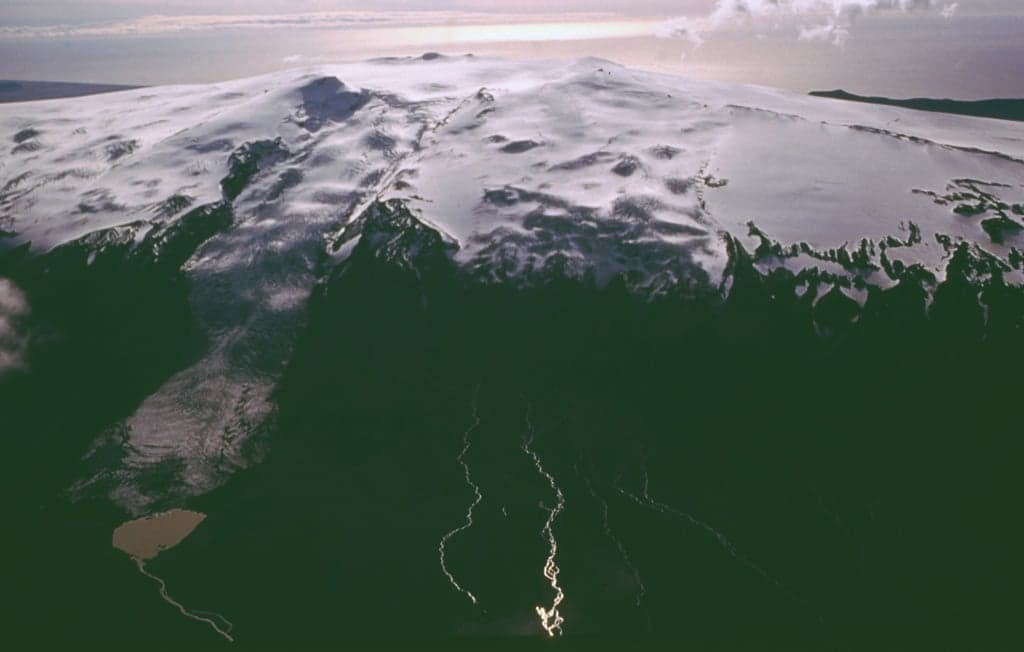
Katla is a fissure vent(s) rising to 1,490 meters (4,889 feet) in Iceland's Atlantic Ocean Volcanic Regions. It last erupted in 1918 CE, and volcanologists consider it an active volcanic system. The volcano has produced 131 recorded eruptions, with a maximum Volcanic Explosivity Index (VEI) of 5.
Geography & Climate
Katla is located in Iceland, within the Iceland Neovolcanic Rift Volcanic Province of the broader Atlantic Ocean Volcanic Regions. Situated at 63.63° N, 19.08° W in the Northern Hemisphere, the volcano lies within a subarctic climate zone. With a summit elevation of 1,490 meters above sea level, Katla is a moderately sized peak that remains accessible to hikers and researchers for much of the year. The volcanic landform is characterized as a cluster, which describes the physical shape and structure of the volcanic edifice as observed from the surface.
Geological Context
Katla is situated along a rift zone, where tectonic plates are pulling apart. As the crust thins and fractures, magma rises to fill the gap, creating volcanic activity. Rift volcanism typically produces more fluid lava flows rather than explosive blasts, which means communities near Katla in Iceland generally face slower-moving hazards like lava flows and ground fissures rather than sudden pyroclastic events. However, rift volcanoes can still generate significant ash emissions and gas releases that affect local air quality. The dominant rock type is basalt / picro-basalt, a dark, fine-grained volcanic rock that forms from rapidly cooling, low-viscosity lava. Basaltic eruptions tend to be less explosive and produce fluid lava flows that can travel long distances. While less immediately dangerous than explosive eruptions, basaltic lava flows can destroy structures and infrastructure in their path, and volcanic gases released during these eruptions can affect air quality over a wide area.
Eruption History Summary
Katla has 131 recorded eruptions in the geological database, spanning from 6380 BCE to 1999 CE. The most powerful recorded event was a paroxysmal eruption with devastating regional consequences in 1755 CE, reaching VEI 5 on the Volcanic Explosivity Index. Notable eruptions include 1918 CE (VEI 4), 1860 CE (VEI 4), 1823 CE (VEI 3). With an average interval of roughly 64 years between eruptions over a span of 8,379 years, this is one of the more frequently active volcanoes in the database. This persistent activity suggests a robust and well-supplied magma system beneath the volcano. The most recent eruption in 1999 CE places this volcano within the modern era of volcanological observation.
Significance
With a maximum recorded VEI of 5, Katla has demonstrated the capacity for paroxysmal eruptions comparable to the 1980 eruption of Mount St. Helens. Eruptions of this scale can devastate areas within 20-30 kilometers and produce ash fall that disrupts aviation and agriculture across hundreds of kilometers. Its 131 recorded eruptions make it one of the most prolific volcanoes in the entire global volcanic record, reflecting an exceptionally persistent magma supply system that has sustained near-continuous eruptive activity over millennia. Given its recent activity, Katla is closely monitored by geological survey organizations to provide early warning of future unrest.
GVP Reference Summary
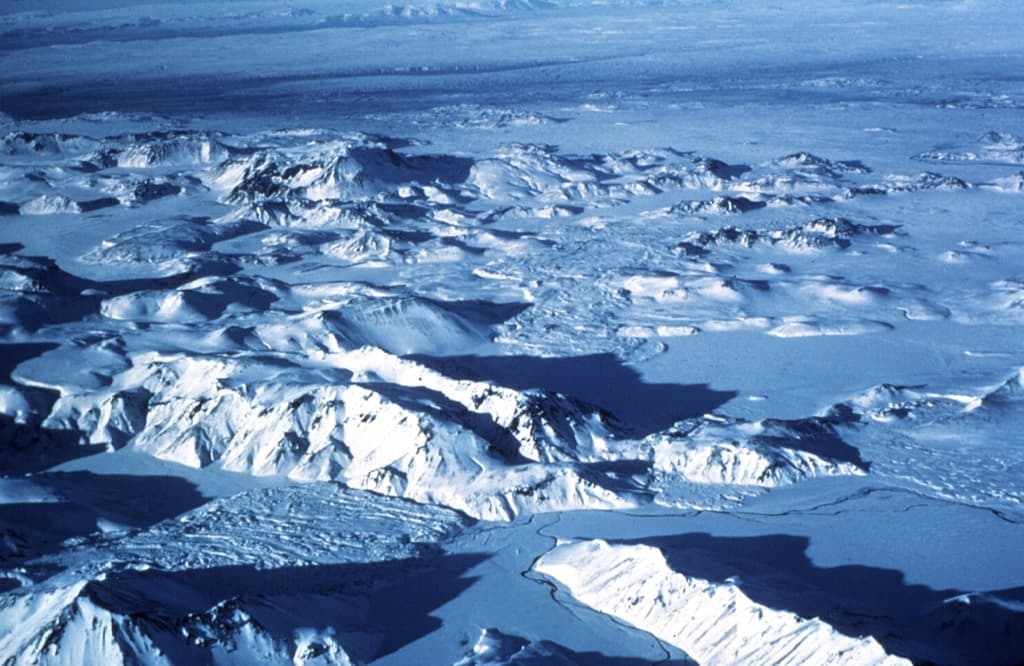
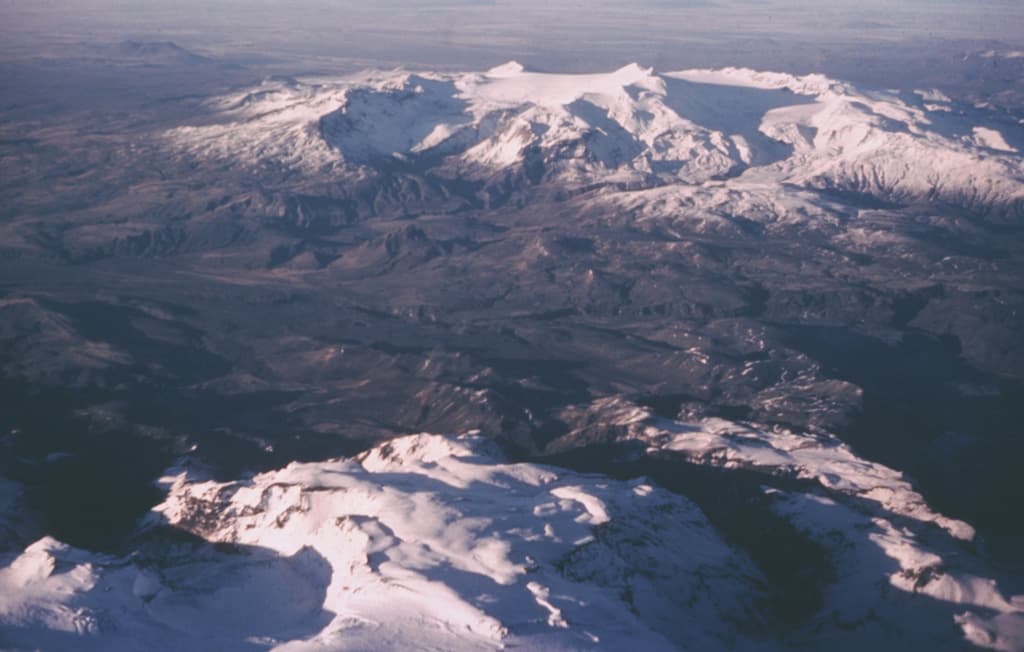
Katla volcano, located near the southern end of Iceland's eastern volcanic zone, is hidden beneath the Myrdalsjökull icecap. The subglacial basaltic-to-rhyolitic volcano is one of Iceland's most active and is a frequent producer of damaging jökulhlaups, or glacier-outburst floods. A large 10 x 14 km subglacial caldera with a long axis in a NW-SE direction is up to 750 m deep. Its high point reaches 1380 m, and three major outlet glaciers have breached its rim. Although most recorded eruptions have taken place from fissures inside the caldera, the Eldgjá fissure system, which extends about 60 km to the NE from the current ice margin towards Grímsvötn volcano, has been the source of major Holocene eruptions. An eruption from the Eldgjá fissure system about 934 CE produced a voluminous lava flow of about 18 km3, one of the world's largest known Holocene lava flows. Katla has been the source of frequent subglacial basaltic explosive eruptions that have been among the largest tephra-producers in Iceland during historical time and has also produced numerous dacitic explosive eruptions during the Holocene.
— Smithsonian Institution, Global Volcanism Program
131 Recorded Eruptions
How Katla's 29 size-rated eruptions break down by Volcanic Explosivity Index. Select a bar to see what that size means.
Cataclysmic — ash columns of 10–25 km reaching the stratosphere.
Of Katla's 29 size-rated eruptions on record, the most common was VEI 4 (17 of 29, 59%). Most of its rated eruptions were large (VEI 4+), a violent-end size profile. The largest on record reached VEI 5.
Based on the Smithsonian GVP eruption record. This describes Katla's past eruptions only — it does not predict future activity. What is the VEI? · Most explosive volcanoes
| Year | VEI | Type | Area |
|---|---|---|---|
| 1999 | 0 | Uncertain Eruption | W, S, and E margins of caldera |
| 1955 | 0 | Uncertain Eruption | East side of caldera |
| 1918 | 4 | Confirmed Eruption | South side of caldera |
| 1860 | 4 | Confirmed Eruption | — |
| 1823 | 3 | Confirmed Eruption | Arcuate fissure in south part of caldera |
| 1755 – 1756 | 5 | Confirmed Eruption | E-W fissure in center of caldera |
| 1721 | 5 | Confirmed Eruption | — |
| 1660 – 1661 | 4 | Confirmed Eruption | — |
| 1625 | 5 | Confirmed Eruption | — |
| 1612 | 4 | Confirmed Eruption | — |
| 1580 | 4 | Confirmed Eruption | — |
| 1550 | 4 | Confirmed Eruption | — |
| 1500 | 4 | Confirmed Eruption | — |
| 1450 | — | Confirmed Eruption | — |
| 1440 | 4 | Confirmed Eruption | — |
| 1416 | 4 | Confirmed Eruption | — |
| 1357 | 4 | Confirmed Eruption | SW of Kotlugja |
| 1311 | — | Confirmed Eruption | — |
| 1262 | 5 | Confirmed Eruption | — |
| 1245 | 4 | Confirmed Eruption | — |
| 1210 | 4 | Confirmed Eruption | — |
| 1177 | 3 | Confirmed Eruption | — |
| 1150 | — | Confirmed Eruption | — |
| 960 | 3 | Confirmed Eruption | — |
| 950 | — | Confirmed Eruption | — |
| 934 – 940 | 4 | Confirmed Eruption | Eldgjá fissure system (NE flank) |
| 920 | 4 | Confirmed Eruption | — |
| 904 | — | Uncertain Eruption | — |
| 820 | — | Confirmed Eruption | — |
| 780 | — | Confirmed Eruption | — |
| 680 | — | Confirmed Eruption | — |
| 610 | — | Confirmed Eruption | — |
| 590 | — | Confirmed Eruption | — |
| 540 | — | Confirmed Eruption | — |
| 500 | — | Confirmed Eruption | — |
| 400 | — | Confirmed Eruption | — |
| 290 | — | Confirmed Eruption | — |
| 270 | 3 | Confirmed Eruption | — |
| 260 | — | Confirmed Eruption | — |
| 200 | — | Confirmed Eruption | — |
| 130 | — | Confirmed Eruption | — |
| 30 | — | Confirmed Eruption | — |
| 80 BCE | — | Confirmed Eruption | — |
| 250 BCE | — | Confirmed Eruption | — |
| 370 BCE | — | Confirmed Eruption | — |
| 430 BCE | — | Confirmed Eruption | — |
| 530 BCE | — | Confirmed Eruption | — |
| 550 BCE | — | Confirmed Eruption | — |
| 560 BCE | — | Confirmed Eruption | — |
| 600 BCE | — | Confirmed Eruption | — |
| 650 BCE | — | Confirmed Eruption | — |
| 700 BCE | — | Confirmed Eruption | — |
| 740 BCE | — | Confirmed Eruption | — |
| 780 BCE | — | Confirmed Eruption | — |
| 850 BCE | 4 | Confirmed Eruption | — |
| 860 BCE | — | Confirmed Eruption | — |
| 920 BCE | — | Confirmed Eruption | — |
| 990 BCE | — | Confirmed Eruption | — |
| 1160 BCE | — | Confirmed Eruption | — |
| 1190 BCE | — | Confirmed Eruption | — |
| 1220 BCE | 3 | Confirmed Eruption | — |
| 1280 BCE | — | Confirmed Eruption | — |
| 1290 BCE | — | Confirmed Eruption | — |
| 1440 BCE | 4 | Confirmed Eruption | — |
| 1540 BCE | — | Confirmed Eruption | — |
| 1640 BCE | — | Confirmed Eruption | — |
| 1670 BCE | — | Confirmed Eruption | — |
| 1700 BCE | — | Confirmed Eruption | — |
| 1850 BCE | — | Confirmed Eruption | — |
| 1910 BCE | — | Confirmed Eruption | — |
| 1920 BCE | 4 | Confirmed Eruption | — |
| 1950 BCE | — | Confirmed Eruption | — |
| 2000 BCE | — | Confirmed Eruption | — |
| 2020 BCE | — | Confirmed Eruption | — |
| 2050 BCE | — | Confirmed Eruption | — |
| 2110 BCE | — | Confirmed Eruption | — |
| 2160 BCE | — | Confirmed Eruption | — |
| 2190 BCE | — | Confirmed Eruption | — |
| 2220 BCE | — | Confirmed Eruption | — |
| 2250 BCE | — | Confirmed Eruption | — |
| 2420 BCE | — | Confirmed Eruption | — |
| 2480 BCE | — | Confirmed Eruption | — |
| 2540 BCE | — | Confirmed Eruption | — |
| 2680 BCE | — | Confirmed Eruption | — |
| 2850 BCE | — | Confirmed Eruption | — |
| 2920 BCE | 3 | Confirmed Eruption | — |
| 3180 BCE | — | Confirmed Eruption | — |
| 3280 BCE | — | Confirmed Eruption | — |
| 3370 BCE | — | Confirmed Eruption | — |
| 3390 BCE | — | Confirmed Eruption | — |
| 3480 BCE | — | Confirmed Eruption | — |
| 3510 BCE | — | Confirmed Eruption | — |
| 3640 BCE | — | Confirmed Eruption | — |
| 3670 BCE | — | Confirmed Eruption | — |
| 3720 BCE | — | Confirmed Eruption | — |
| 3790 BCE | — | Confirmed Eruption | — |
| 3810 BCE | — | Confirmed Eruption | — |
| 3930 BCE | — | Confirmed Eruption | — |
| 4060 BCE | — | Confirmed Eruption | — |
| 4210 BCE | — | Confirmed Eruption | — |
| 4240 BCE | — | Confirmed Eruption | — |
| 4280 BCE | — | Confirmed Eruption | — |
| 4370 BCE | — | Confirmed Eruption | — |
| 4430 BCE | — | Confirmed Eruption | — |
| 4610 BCE | — | Confirmed Eruption | — |
| 4660 BCE | — | Confirmed Eruption | — |
| 4750 BCE | — | Confirmed Eruption | — |
| 4810 BCE | — | Confirmed Eruption | — |
| 4880 BCE | — | Confirmed Eruption | — |
| 5020 BCE | — | Confirmed Eruption | — |
| 5040 BCE | — | Confirmed Eruption | — |
| 5070 BCE | — | Confirmed Eruption | — |
| 5180 BCE | — | Confirmed Eruption | — |
| 5230 BCE | — | Confirmed Eruption | — |
| 5360 BCE | — | Confirmed Eruption | — |
| 5460 BCE | — | Confirmed Eruption | — |
| 5470 BCE | — | Confirmed Eruption | — |
| 5550 BCE | — | Confirmed Eruption | NE flank |
| 5560 BCE | — | Confirmed Eruption | — |
| 5630 BCE | — | Confirmed Eruption | — |
| 5710 BCE | — | Confirmed Eruption | — |
| 5720 BCE | — | Confirmed Eruption | — |
| 5730 BCE | — | Confirmed Eruption | — |
| 5850 BCE | — | Confirmed Eruption | — |
| 5890 BCE | — | Confirmed Eruption | — |
| 5960 BCE | — | Confirmed Eruption | — |
| 6050 BCE | — | Confirmed Eruption | — |
| 6170 BCE | — | Confirmed Eruption | — |
| 6200 BCE | — | Confirmed Eruption | — |
| 6230 BCE | — | Confirmed Eruption | — |
| 6380 BCE | — | Confirmed Eruption | — |
Real-Time Data
Frequently Asked Questions About Katla
Is Katla an active volcano?+
Yes, Katla is considered an active volcano. Its most recent eruption was in 1918 CE. The volcano is monitored by geological agencies, and its activity status is based on observed eruptions within recorded history.
When did Katla last erupt?+
The most recent recorded eruption of Katla occurred in 1999 CE with a Volcanic Explosivity Index (VEI) of 0. The eruption was classified as a "Uncertain Eruption." Katla has 131 recorded eruptions in total.
How high is Katla?+
Katla has a summit elevation of 1,490 meters (4,889 feet) above sea level. At 1,490 meters, it is a moderately sized volcanic peak, roughly comparable to Mount Vesuvius (1,281m).
What type of volcano is Katla?+
Katla is classified as a Fissure vent(s). Fissure vent(s) volcanoes have distinct geological characteristics that set them apart from other volcanic types.
Where is Katla located?+
Katla is located in Iceland, in the Atlantic Ocean Volcanic Regions. More specifically, it lies within the Iceland Neovolcanic Rift Volcanic Province. Its exact coordinates are 63.633° latitude, -19.083° longitude.
Is it safe to visit Katla?+
Visiting Katla requires checking current volcanic activity and alert levels. As an active volcano with eruptions as recent as 1918 CE, conditions can change rapidly. Always consult local geological authorities and follow official warnings before visiting. Many active volcanoes have designated safe viewing areas and guided tour options.