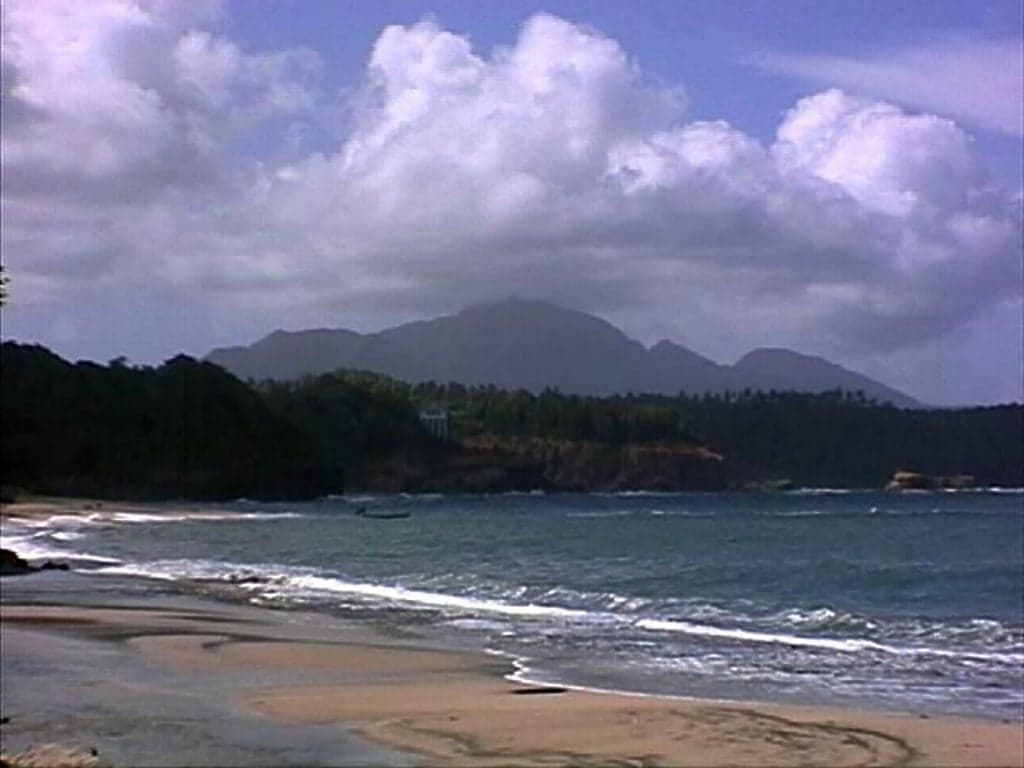
About Diables, Morne aux
Diables, Morne aux is a lava dome(s) rising to 861 meters (2,825 feet) in Dominica's Middle America-Caribbean Volcanic Regions. No historical eruptions have been recorded, though the volcano is classified based on geological evidence of past activity.
Geography & Climate
Diables, Morne aux is located in Dominica, within the Lesser Antilles Volcanic Arc of the broader Middle America-Caribbean Volcanic Regions. Situated at 15.61° N, 61.43° W in the Northern Hemisphere, the volcano lies within a tropical climate zone. With a summit elevation of 861 meters above sea level, Diables, Morne aux is a moderately sized peak that remains accessible to hikers and researchers for much of the year. The volcanic landform is characterized as a minor, which describes the physical shape and structure of the volcanic edifice as observed from the surface.
Geological Context
Diables, Morne aux sits in a subduction zone, where one tectonic plate dives beneath another, creating intense heat and pressure that generates magma. Subduction zones are responsible for many of the world's most explosive volcanoes and deadliest eruptions. For communities in Dominica near Diables, Morne aux, this tectonic setting means the volcano is capable of producing powerful explosive eruptions, pyroclastic flows, and lahars that can threaten populated areas within tens of kilometers of the summit. The dominant rock type is andesite / basaltic andesite, a dark, fine-grained volcanic rock that forms from rapidly cooling, low-viscosity lava. Basaltic eruptions tend to be less explosive and produce fluid lava flows that can travel long distances. While less immediately dangerous than explosive eruptions, basaltic lava flows can destroy structures and infrastructure in their path, and volcanic gases released during these eruptions can affect air quality over a wide area.
GVP Reference Summary
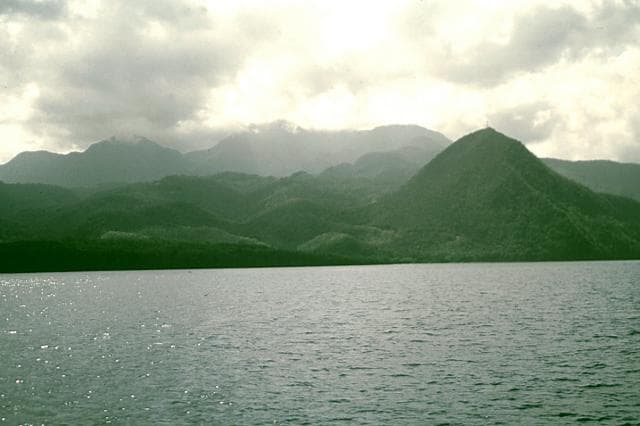
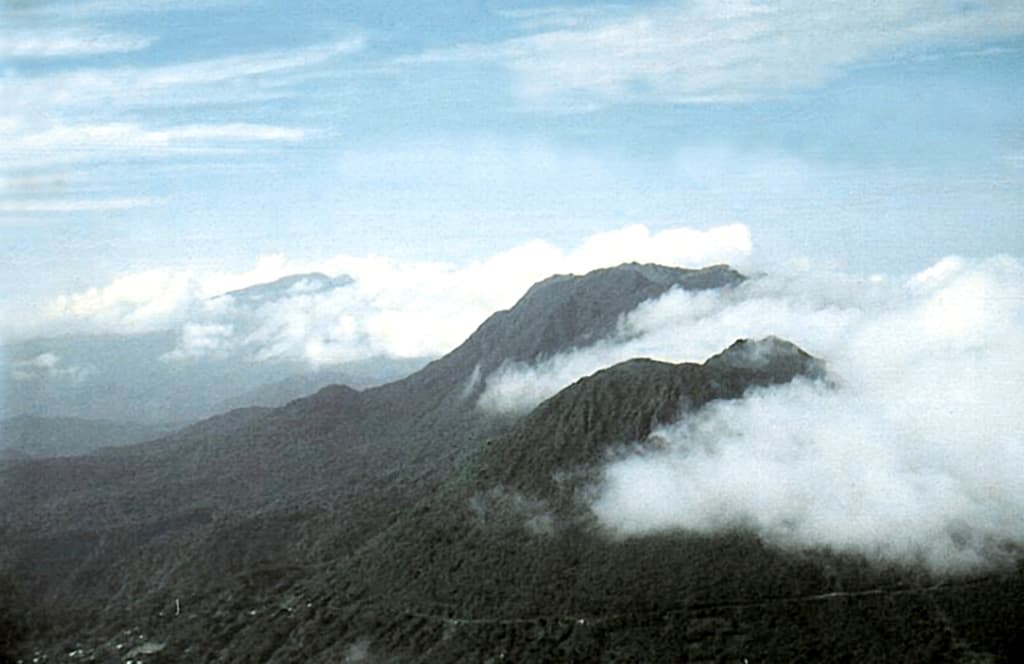
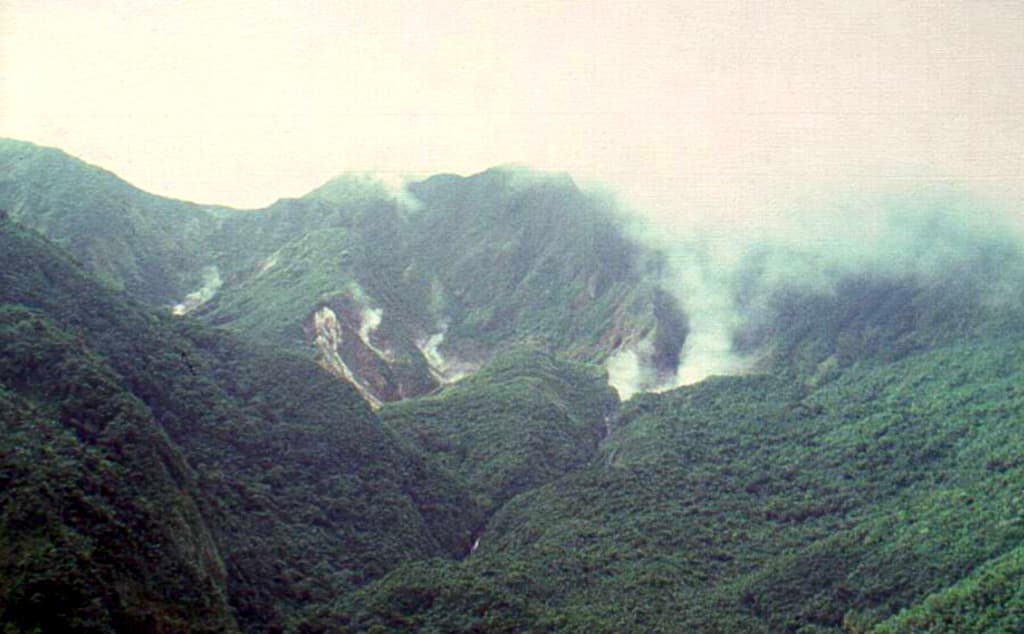
The lava dome complex of Morne aux Diables (Devils Peak) forms the northern tip of the island of Dominica. Several nested craters and a 90-m-high, 335-m-wide lava dome are located within a larger 1.2-km-wide crater. The complex overall includes seven andesitic lava domes with a central depression where a cold soufriere is located. A chain of lava domes, two of which form a peninsula on the SW flank, form an E-W belt across the S flank. Bathymetry shows a double-peaked lava dome off the northern coast, truncated by a 4-km-long fault-bounded cliff. No eruptions have been recorded, but the most recent lava domes may be late Pleistocene to Holocene. The youngest (NW) summit crater contains an active thermal area with bubbling springs. Severe earthquake swarms in 1841 and 1893 were associated with either Morne aux Diables or Morne Diablotins to the south. Shallow volcano-tectonic seismicity was detected 2009-2010.
— Smithsonian Institution, Global Volcanism Program
0 Recorded Eruptions
No eruption records available for Diables, Morne aux.
Real-Time Data
Frequently Asked Questions About Diables, Morne aux
Is Diables, Morne aux an active volcano?+
Diables, Morne aux is classified as active based on credible evidence of past eruptions. Although its last known eruption was in prehistoric times, volcanologists consider it capable of erupting again.
How high is Diables, Morne aux?+
Diables, Morne aux has a summit elevation of 861 meters (2,825 feet) above sea level. At 861 meters, it is a relatively low-elevation volcano.
What type of volcano is Diables, Morne aux?+
Diables, Morne aux is classified as a Lava dome(s). Lava domes are mounds of viscous lava that pile up around a volcanic vent. They grow by expansion from within and can collapse to produce dangerous pyroclastic flows.
Where is Diables, Morne aux located?+
Diables, Morne aux is located in Dominica, in the Middle America-Caribbean Volcanic Regions. More specifically, it lies within the Lesser Antilles Volcanic Arc. Its exact coordinates are 15.612° latitude, -61.430° longitude.
Is it safe to visit Diables, Morne aux?+
Diables, Morne aux can generally be visited, but as with any volcano, visitors should check local conditions and any advisory notices before traveling. Dominica may have specific regulations for accessing volcanic areas. Guided tours are often the safest and most informative way to experience a volcano.