About Maderas
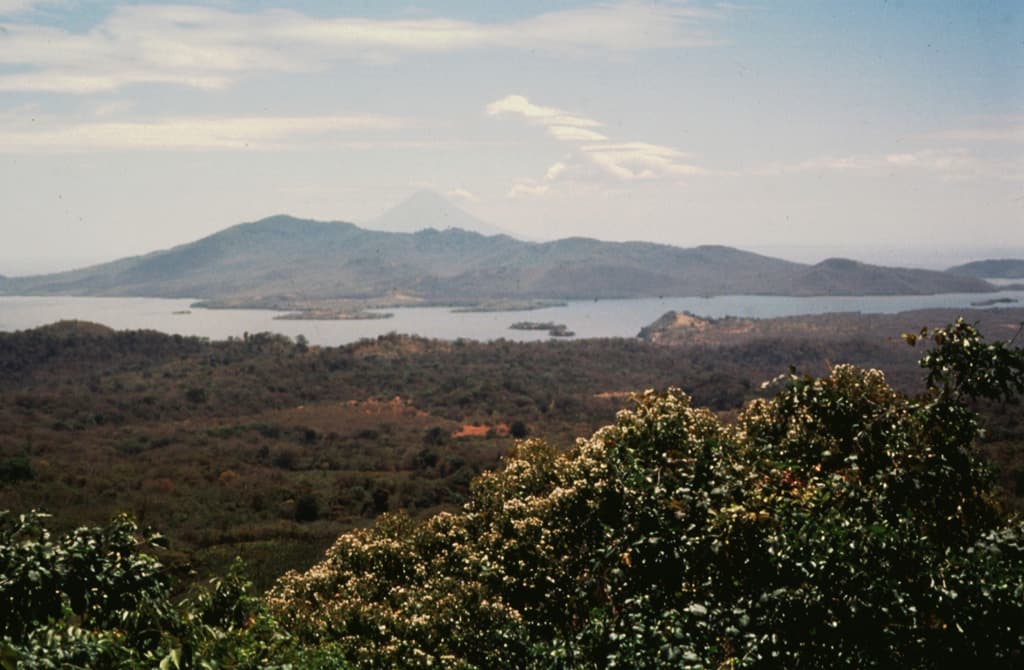
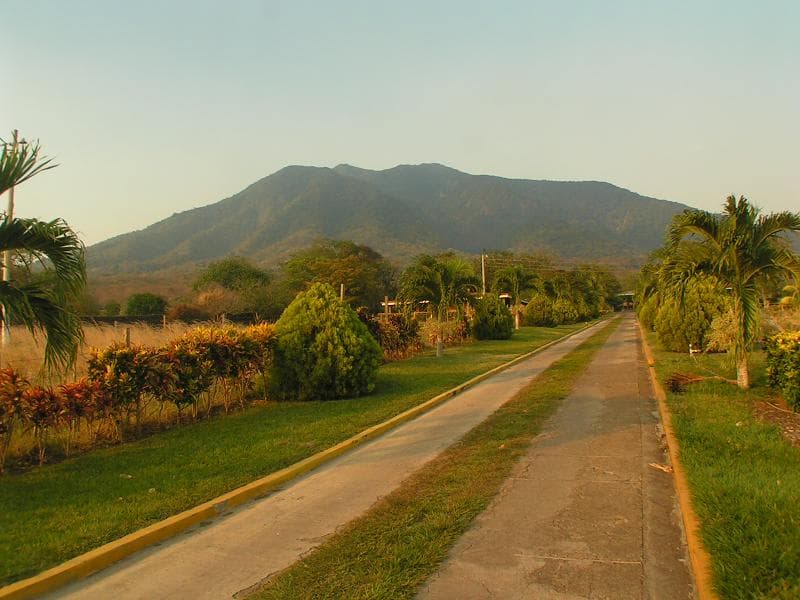
Maderas is a stratovolcano rising to 1,394 meters (4,574 feet) in Nicaragua's Middle America-Caribbean Volcanic Regions. No historical eruptions have been recorded, though the volcano is classified based on geological evidence of past activity. The volcano has produced 2 recorded eruptions.
Geography & Climate
Maderas is located in Nicaragua, within the Central America Volcanic Arc of the broader Middle America-Caribbean Volcanic Regions. Situated at 11.45° N, 85.52° W in the Northern Hemisphere, the volcano lies within a tropical climate zone. With a summit elevation of 1,394 meters above sea level, Maderas is a moderately sized peak that remains accessible to hikers and researchers for much of the year. The volcanic landform is characterized as a composite, which describes the physical shape and structure of the volcanic edifice as observed from the surface.
Eruption History Summary
Maderas has 2 recorded eruptions in the geological database, spanning from 1996 CE to 1999 CE. These eruptions span roughly 3 years of volcanic history. The most recent eruption in 1999 CE places this volcano within the modern era of volcanological observation.
GVP Reference Summary
Volcán Maderas is a roughly conical stratovolcano that forms the SE end of the dumbbell-shaped Ometepe island in Lake Nicaragua. The basaltic-to-trachydacitic edifice is cut by numerous faults and grabens, the largest of which is a NW-SE-oriented graben that cuts the summit and has at least 140 m of vertical displacement. The small Laguna de Maderas lake occupies the bottom of the 800-m-wide summit crater, which is located at the western side of the central graben. The SW side of the edifice has been affected by large-scale slumping. Several pyroclastic cones, some of which may have originated from littoral explosions produced by lava flow entry into Lake Nicaragua, are situated on the lower NE flank down to the level of Lake Nicaragua. The latest period of major growth was considered to have taken place more than 3000 years ago, but later detailed mapping has shown that the most recent dated eruptive activity took place about 70,000 years ago and that it has likely been inactive for tens of thousands of years (Kapelanczyk et al., 2012). A lahar in September 1996 killed six people in an E-flank village, but associated volcanic activity was not confirmed.
— Smithsonian Institution, Global Volcanism Program
2 Recorded Eruptions
| Year | VEI | Type | Area |
|---|---|---|---|
| 1999 | — | Uncertain Eruption | — |
| 1996 | — | Uncertain Eruption | — |
Real-Time Data
Frequently Asked Questions About Maderas
Is Maderas an active volcano?+
Maderas is not currently classified as active. Its activity evidence is listed as "unknown." No recorded eruptions have been documented. However, no volcano is ever considered permanently extinct.
When did Maderas last erupt?+
The most recent recorded eruption of Maderas occurred in 1999 CE. The eruption was classified as a "Uncertain Eruption." Maderas has 2 recorded eruptions in total.
How high is Maderas?+
Maderas has a summit elevation of 1,394 meters (4,574 feet) above sea level. At 1,394 meters, it is a moderately sized volcanic peak, roughly comparable to Mount Vesuvius (1,281m).
What type of volcano is Maderas?+
Maderas is classified as a Stratovolcano. Stratovolcanoes (also called composite volcanoes) are steep, conical volcanoes built up by many layers of hardened lava, tephra, and volcanic ash. They are among the most common and dangerous types, known for explosive eruptions.
Where is Maderas located?+
Maderas is located in Nicaragua, in the Middle America-Caribbean Volcanic Regions. More specifically, it lies within the Central America Volcanic Arc. Its exact coordinates are 11.446° latitude, -85.515° longitude.
Is it safe to visit Maderas?+
Maderas can generally be visited, but as with any volcano, visitors should check local conditions and any advisory notices before traveling. Nicaragua may have specific regulations for accessing volcanic areas. Guided tours are often the safest and most informative way to experience a volcano.