About Toluca, Nevado de
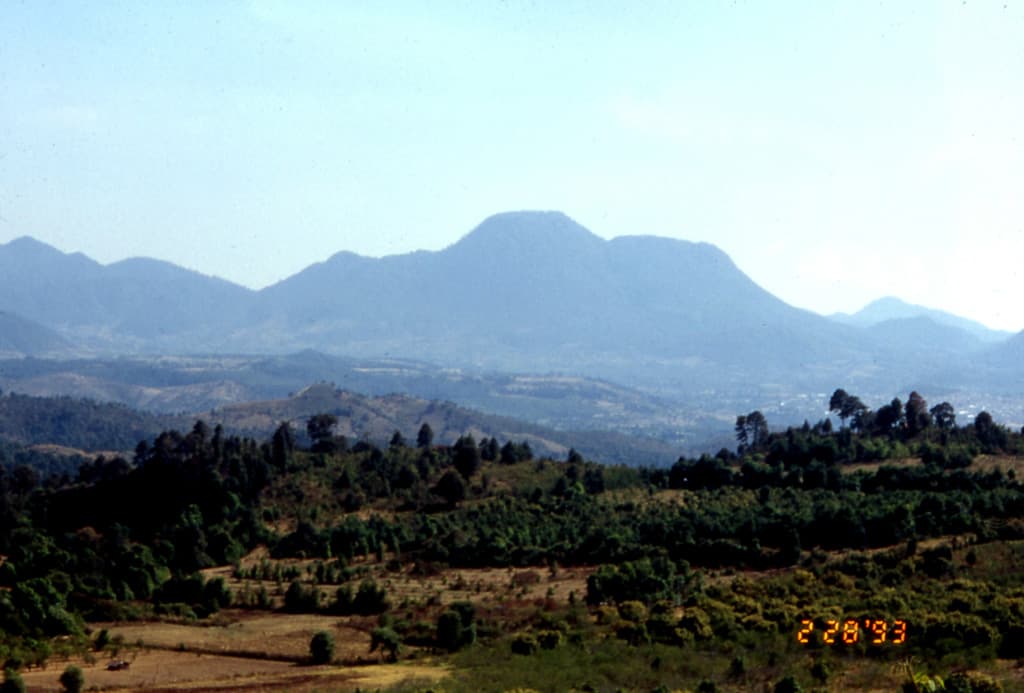
Toluca, Nevado de is a stratovolcano rising to 4,680 meters (15,355 feet) in Mexico's Middle America-Caribbean Volcanic Regions. Its last known eruption dates to 1350 BCE, in prehistoric times. The volcano has produced 1 recorded eruption.
Geography & Climate
Toluca, Nevado de is located in Mexico, within the Trans-Mexican Volcanic Arc of the broader Middle America-Caribbean Volcanic Regions. Situated at 19.11° N, 99.76° W in the Northern Hemisphere, the volcano lies within a tropical climate zone. Standing at 4,680 meters above sea level, Toluca, Nevado de towers above the alpine zone, where vegetation gives way to bare rock, snow, and ice for much of the year. The high elevation means the upper slopes experience significantly colder temperatures than surrounding lowlands. The volcanic landform is characterized as a composite, which describes the physical shape and structure of the volcanic edifice as observed from the surface.
Geological Context
Toluca, Nevado de sits in a subduction zone, where one tectonic plate dives beneath another, creating intense heat and pressure that generates magma. Subduction zones are responsible for many of the world's most explosive volcanoes and deadliest eruptions. For communities in Mexico near Toluca, Nevado de, this tectonic setting means the volcano is capable of producing powerful explosive eruptions, pyroclastic flows, and lahars that can threaten populated areas within tens of kilometers of the summit. The dominant rock type is andesite / basaltic andesite, a dark, fine-grained volcanic rock that forms from rapidly cooling, low-viscosity lava. Basaltic eruptions tend to be less explosive and produce fluid lava flows that can travel long distances. While less immediately dangerous than explosive eruptions, basaltic lava flows can destroy structures and infrastructure in their path, and volcanic gases released during these eruptions can affect air quality over a wide area.
Eruption History Summary
Toluca, Nevado de has 1 recorded eruption in the geological database, spanning from 1350 BCE to 1350 BCE.
GVP Reference Summary
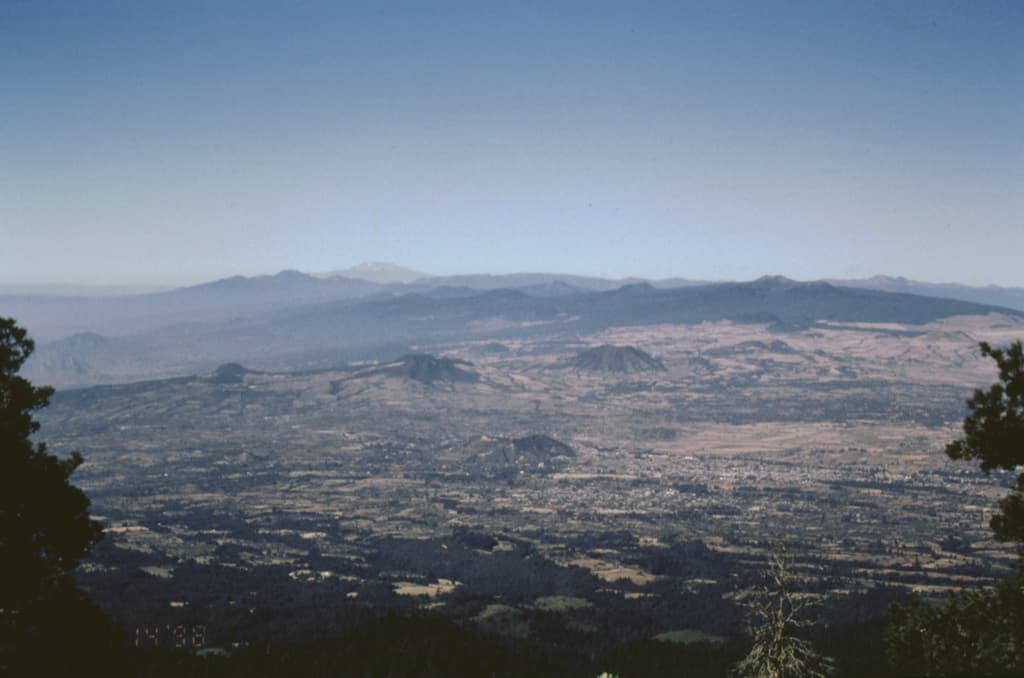
Nevado de Toluca, México's fourth highest peak, rises above the Toluca basin about 80 km W of Mexico City. The broad, complex andesitic-dacitic stratovolcano, also known by the Nahuatl Indian name Xinantécatl, has a 1.5-km-wide summit crater open to the east. A large dacitic lava dome in the crater separates two lakes, known as the lakes of the Sun and Moon. At least three major edifice collapses during the Pleistocene produced large debris avalanche and lahar deposits that affected broad areas below the volcano. Four major explosive eruptions during the late Pleistocene produced widespread ashfall and pyroclastic-flow deposits at about 36,000, 21,700, 12,100, and 10,500 years ago (uncalibrated 14C), producing the Ochre and the Lower, Middle, and Upper Toluca Pumice deposits, respectively. Recent work has revealed evidence for at least one Holocene eruption, about 3,300 years ago, that produced pyroclastic flows and surges.
— Smithsonian Institution, Global Volcanism Program
1 Recorded Eruption
| Year | VEI | Type | Area |
|---|---|---|---|
| 1350 BCE | — | Confirmed Eruption | — |
Real-Time Data
Frequently Asked Questions About Toluca, Nevado de
Is Toluca, Nevado de an active volcano?+
Toluca, Nevado de is not currently classified as active. Its activity evidence is listed as "Eruption Dated." The last known eruption was in 1350 BCE. However, no volcano is ever considered permanently extinct.
When did Toluca, Nevado de last erupt?+
The most recent recorded eruption of Toluca, Nevado de occurred in 1350 BCE. The eruption was classified as a "Confirmed Eruption." Toluca, Nevado de has 1 recorded eruption in total.
How high is Toluca, Nevado de?+
Toluca, Nevado de has a summit elevation of 4,680 meters (15,355 feet) above sea level. At 4,680 meters, it stands taller than Mount Rainier (4,392m) and is among the world's major volcanic peaks.
What type of volcano is Toluca, Nevado de?+
Toluca, Nevado de is classified as a Stratovolcano. Stratovolcanoes (also called composite volcanoes) are steep, conical volcanoes built up by many layers of hardened lava, tephra, and volcanic ash. They are among the most common and dangerous types, known for explosive eruptions.
Where is Toluca, Nevado de located?+
Toluca, Nevado de is located in Mexico, in the Middle America-Caribbean Volcanic Regions. More specifically, it lies within the Trans-Mexican Volcanic Arc. Its exact coordinates are 19.108° latitude, -99.758° longitude.
Is it safe to visit Toluca, Nevado de?+
Toluca, Nevado de can generally be visited, but as with any volcano, visitors should check local conditions and any advisory notices before traveling. Mexico may have specific regulations for accessing volcanic areas. Guided tours are often the safest and most informative way to experience a volcano.